Minimalist
Onyx
Urban Form: Christ at the Column
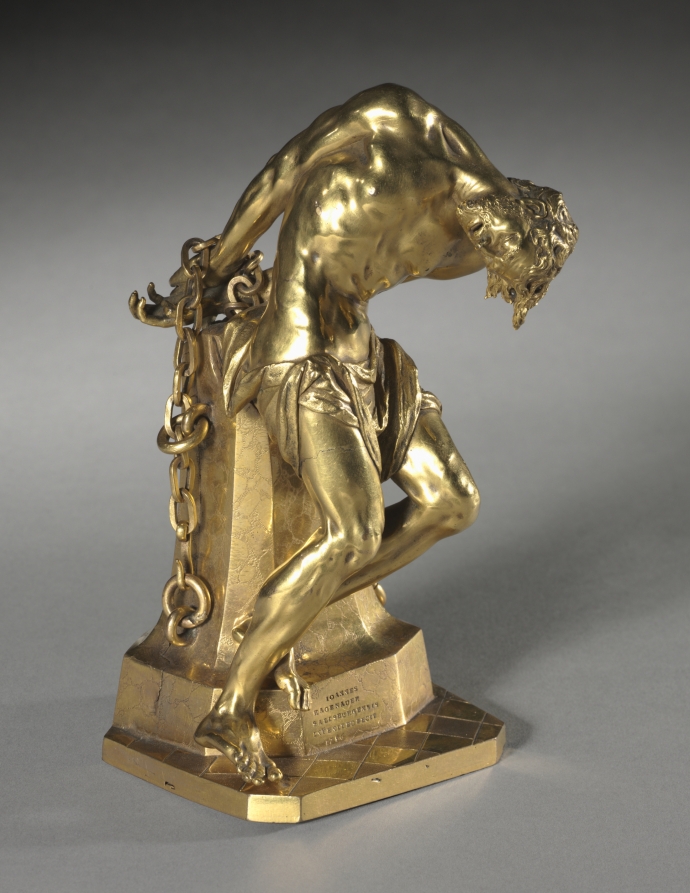
Formal Deconstruction: The Dialectic of Mercy and Authority in Urban Silhouette
The subject, *Christ at the Column*, is not a literal iconographic reference but a conceptual pivot—a moment of suspended tension between suffering and transcendence, restraint and release. When filtered through the dual DNA sources of the *Bodhisattva* (compassion as form) and the *Bovine-Headed Amulet* (protection as structure), the resulting urban silhouette for Addison Fashion NYC must negotiate a binary: the soft, flowing line of spiritual openness versus the rigid, armored geometry of worldly defense. This is not a stylistic exercise; it is a semiotic architecture for the 2026 executive woman who operates in a city that demands both vulnerability and impermeability.I. The Bodhisattva Principle: Fluidity as Strategic Softness
The *Bodhisattva* archetype—characterized by draped textiles, uninterrupted contours, and a downward gaze—translates into tailoring that prioritizes *continuous surface* over segmentation. In practical terms, this means a shift away from the hard-shouldered, nipped-waist power suit of the previous decade. Instead, the 2026 Addison silhouette employs **bias-cut outer layers** and **unstructured shoulder lines** that mimic the fall of monastic robes, but executed in high-tensile technical fabrics (wool-cashmere blends with micro-elasticity, or bonded crepe) to retain a crisp urban edge. The key technical detail is the **absence of visible darts**. Where traditional tailoring uses darts to create a three-dimensional fit, the Bodhisattva-informed approach uses *internal seam taping* and *molded panels* that follow the body’s natural axis without interrupting the fabric’s visual flow. This creates a silhouette that reads as both draped and precise—a paradox that signals emotional intelligence (the ability to bend) without sacrificing executive authority (the ability to hold form). The hemline drops to a deliberate mid-calf or ankle-grazing length, echoing the *sthapati* (sacred geometry) of Buddhist iconography, where the lower body anchors the upper body’s spiritual weight. Color, in this register, is not decorative but functional. We select **Onyx**—not as a flat black, but as a spectral depth achieved through double-dyeing with a matte finish. Onyx absorbs light rather than reflecting it, creating a visual vacuum that draws the eye inward, much like the meditative gaze of a bodhisattva. This is critical for the executive who must command a boardroom without shouting; the fabric’s light-absorption creates a gravitational pull, making the wearer the still point in a chaotic visual field.II. The Amulet Principle: Armature as Invisible Power
The *Bovine-Headed Amulet* introduces the second layer: **protective structure**. Unlike the Bodhisattva’s yielding flow, this element demands a rigid exoskeleton—but one that is *concealed*, not displayed. The 2026 Addison silhouette incorporates this through **internal corsetry** and **laser-cut polymer boning** sewn into the lining of coats, vests, and even trousers. This is not the visible armor of a runway statement; it is a hidden architecture that corrects posture, distributes weight, and creates a stance of rootedness. The wearer appears relaxed, but her body is held in a state of readiness—the physical equivalent of the amulet’s promise to ward off external harm. The most innovative application is in the **trouser silhouette**. Rather than a conventional straight or tapered leg, we introduce a *bovine-hip* cut: a high-rise waist with a subtle flare from the knee downward, but with a hidden vertical seam that runs from the hip bone to the hem. This seam is not decorative; it is a channel for a thin, flexible steel rod that prevents the fabric from collapsing into wrinkles, even after hours of sitting. The result is a line that remains pristine from morning meetings to evening events—an armor of appearance that requires no conscious maintenance. The amulet’s bovine head—representing brute force—is abstracted into **angular shoulder caps** on outerwear. These are not padded in the traditional sense; they are constructed from multiple layers of bonded jersey that create a slight, almost imperceptible lift at the acromion. This raises the visual center of gravity, making the wearer appear taller and more commanding, while the softness of the material ensures the effect is felt, not seen. It is a gesture of power that whispers, never shouts.III. Chromatic Strategy: Onyx as the Unifying Field
The choice of Onyx is deliberate, not default. In the context of *Christ at the Column*, the column itself is a vertical, unadorned structure—a symbol of endurance under pressure. Onyx replicates this in chromatic terms: it is a color that does not flinch, that holds its depth whether in harsh fluorescent light or the dim glow of a gallery. For the 2026 executive wardrobe, this means a **monochromatic system** where tonal variation comes from texture, not hue. We propose three Onyx variants: - **Matte Onyx** for base layers (shell tops, knit polos) to absorb light and create a flat, calm surface. - **Satin Onyx** for accent panels (cuffs, collars, interior plackets) to catch light only when the wearer moves, suggesting latent energy. - **Crinkled Onyx** for outerwear, where the fabric’s irregular surface mimics the weathered stone of the column—a nod to imperfection as strength. This chromatic discipline eliminates the need for color-blocking or accessory-based differentiation. The executive’s power is expressed through *form alone*, which is the ultimate minimalist statement. It also aligns with the Buddhist principle of *sunyata* (emptiness): by stripping away color, the silhouette becomes a vessel for the wearer’s presence, not a distraction from it.IV. Synthesis: The Column as Wearable Architecture
The final silhouette is a vertical composition that mirrors the column’s structural logic. The Bodhisattva’s fluidity is confined to the *interior* layers—a silk-blend camisole with a draped neckline, or a jersey bodysuit that moves with the body. The Amulet’s rigidity is reserved for the *exterior* shell—a long, single-breasted coat with hidden boning, or a cropped jacket with the angular shoulder caps. The space between these layers is the *column’s void*: a negative space that allows for breath, movement, and the subtle suggestion of vulnerability beneath the armor. For the 2026 NYC executive, this translates into a three-piece system: 1. **Base**: A matte Onyx shell with a high, rounded neckline (Bodhisattva’s downward gaze, redirected forward). 2. **Core**: A satin Onyx vest with internal corsetry, worn over the shell (the amulet’s protective embrace). 3. **Shell**: A crinkled Onyx coat with angular shoulders and a hidden steel-rod seam, open or closed (the column’s unyielding surface). This system is modular, allowing the executive to shed layers as the day’s power dynamics shift—from a morning of negotiation (full armor) to an evening of networking (base and core only). The silhouette remains constant: a vertical, unbroken line that reads as both contemplative and commanding.V. Conclusion: The Ethics of Form
The urban silhouette for Addison Fashion NYC, derived from *Christ at the Column* and the dual Buddhist sources, is not about aesthetics alone. It is an ethical proposition: that the executive woman can embody compassion (the Bodhisattva’s flow) without sacrificing authority (the Amulet’s structure), and that she can endure the column’s pressure without breaking. Onyx is the chromatic manifestation of this endurance—a color that absorbs all, reflects nothing, and remains unmarked by the city’s chaos. In 2026, the Addison woman does not wear clothes; she wears *principles*. Her silhouette is a manifesto: soft where it matters, hard where it must, and always, always vertical. This is the technical deconstruction of form as power—minimalist in execution, maximal in intent.
Technical Insight
NYC Perspective: Translating Onyx tones into Minimalist silhouettes.