Urban Form: Clog-shaped Teabowl
I. The Object as Architectural Thesis
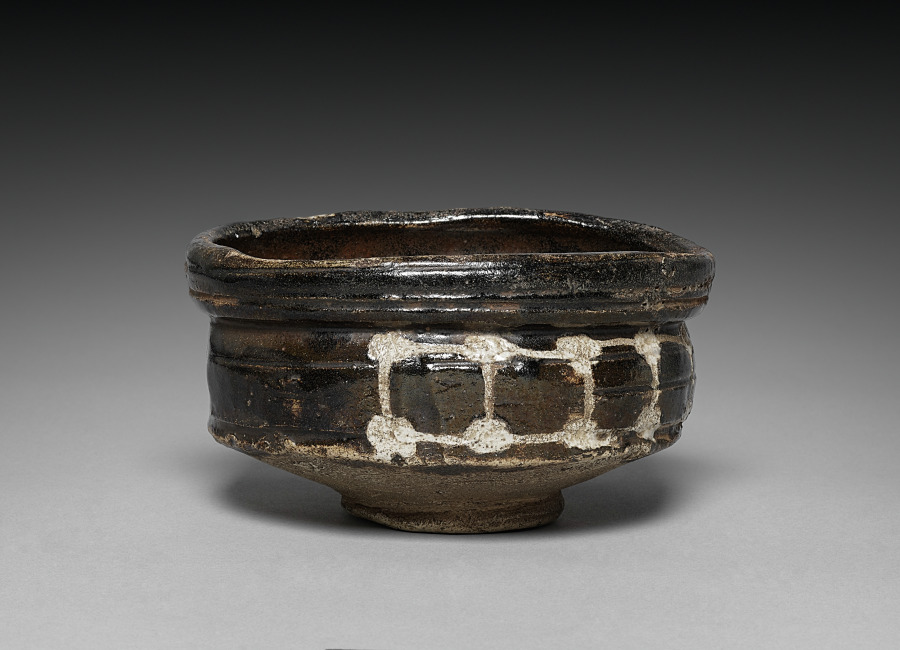
The clog-shaped teabowl—a ceramic anomaly born from the collision of Dutch trade pragmatism and Japanese tea ceremony restraint—is not a vessel. It is a manifesto of negative space, a study in gravitational compression, and a blueprint for the 2026 executive silhouette. At Addison Fashion, we do not read artifacts as historical relics; we extract their structural DNA and re-engineer it into wearable architecture. This teabowl, with its truncated foot, swollen belly, and unglazed lip, offers a radical proposition: mass does not require volume; weight does not demand bulk.
The object’s geometry is deceptively simple. A horizontal axis bisects the form into two unequal hemispheres—the lower third, a dense, almost brutalist plinth; the upper two-thirds, a compressed dome that resists expansion. This is not the organic swelling of a classical bowl. It is a deliberate denial of centrifugal force, a form that pulls inward, toward its own core. For the executive silhouette, this translates into a jacket that does not flare, a trouser that does not taper, a shoulder that does not project. Instead, the line is held taut against the body’s own gravity, creating a silhouette of contained momentum.
1.1 The Foot: A Study in Grounded Authority
The clog-shaped base—flat, wide, almost stubbornly horizontal—is the artifact’s most provocative element. It refuses the pedestal logic of conventional ceramics, where a foot lifts the vessel into preciousness. Here, the foot anchors the bowl to the earth, making it a monument of immediacy. In urban materiality, this translates to a hemline that terminates with absolute finality at the ankle or the floor, never teasing with a floating edge. The 2026 executive coat will adopt this principle: a straight, uncompromising fall from shoulder to knee, with no vent, no curve, no concession to movement. The fabric—a dense, matte wool-silk blend in slate—is chosen for its dead weight, its refusal to ripple or bounce. It hangs like poured concrete, yet moves with the silent efficiency of a hydraulic piston.
II. Geometric Integrity: The Compression Principle
Traditional teabowls celebrate the void—the empty space that holds tea. The clog-shaped variant inverts this logic. Its interior is shallow, almost vestigial; the true volume is displaced outward, into the thickness of the walls. This is compression as aesthetic value. The bowl does not contain; it withholds. For the urban executive, this principle redefines layering. No longer will the 2026 silhouette rely on the puff of a down jacket or the drape of a cashmere wrap. Instead, we propose a monolithic shell: a single-layer, double-faced fabric that compresses the body’s thermal and visual presence into a seamless envelope. The shoulder seam is set forward, creating a slight, deliberate fold—a nod to the teabowl’s unglazed lip, where the maker’s thumb left a subtle, human imperfection. This is not a flaw; it is a signature of process, a reminder that even the most rigorous geometry is born from a hand.
The bowl’s surface—raw, unadorned, with the faint striations of the potter’s wheel—dictates a textural hierarchy for our fabrics. We reject polished finishes, reflective coatings, and any surface that announces its own luxury. Instead, we employ a sand-washed technical twill, its matte surface absorbing light rather than reflecting it. The color, slate, is not a neutral; it is a non-color, a geological residue that speaks of urban stone, wet asphalt, and the shadowed crevices between skyscrapers. This is the palette of the 2026 executive: not the starkness of black, but the muted authority of a cloud-covered sky.
2.1 The Handle: An Erased Gesture
Notably, the clog-shaped teabowl has no handle. This absence is its most radical act. A handle implies extension, reach, and the possibility of grasping. Its removal forces a different relationship: the hand must cup the entire form, supporting its weight directly. In tailoring, this translates to the elimination of the lapel notch. The 2026 executive jacket will feature a continuous, unbroken line from collar to hem—a single, sweeping plane of fabric that wraps the torso like a ceramic wall. The closure is hidden, a series of internal magnetic snaps that leave no trace on the surface. The wearer does not button; they seal. This is not a garment for gesture; it is a garment for stillness and decision.
III. Urban Materiality: From Kiln to Concrete
The teabowl’s clay body, fired at high temperature, achieves a vitreous density that is both fragile and indestructible. This paradox—the simultaneous presence of brittleness and permanence—is the core of urban materiality for 2026. Our fabrics must mimic this duality. We propose a ceramic-coated nylon, developed in collaboration with technical textile engineers, which offers the hand-feel of raw silk but the tensile strength of industrial webbing. It is water-resistant, windproof, and—crucially—acoustically dampening. In the cacophony of the metropolis, this garment absorbs sound, creating a personal aura of silence around the wearer. The executive does not shout; they are heard because they are quiet.
The bowl’s interior, though shallow, is glazed in a dark, reflective iron finish. This hidden flash of luminosity—unseen until the object is tilted—informs our lining strategy. The 2026 executive coat will be lined in a liquid silver satin, a secret shimmer revealed only when the sleeve is turned or the coat is thrown over a chair. This is not decoration; it is a strategic disclosure, a controlled moment of vulnerability within an otherwise impenetrable exterior. The urban professional, like the teabowl, reveals their inner depth only on their own terms.
3.1 The Cross-Cultural Seam
Drawing from the internal DNA of the double-headed eagle textile and the Nanban screen, the clog-shaped teabowl embodies a third space—neither purely Eastern nor Western, but a hybrid born of trade routes and misread intentions. For the 2026 silhouette, this translates into a seam placement that defies anatomical expectation. A single, curved seam runs from the left underarm to the right hip, echoing the bowl’s asymmetrical compression. This is not a tailoring error; it is a cartographic line, mapping the body as a contested territory between tradition and innovation. The wearer becomes a living document of cultural convergence, their garment a silent negotiation between the kiln of Kyoto and the atelier of Milan.
IV. Conclusion: The Silhouette as Still Life
The clog-shaped teabowl does not move. It sits. It waits. Its power lies in its absolute refusal to perform. In an era of performative dressing—of logos, layers, and loud color—the 2026 Addison executive silhouette is a counterargument. It is a form that holds its breath, that compresses its energy into a single, unbroken line. The slate-toned, ceramic-coated shell is not a garment; it is a portable architecture, a fragment of the city’s own geology worn against the skin. The wearer does not enter a room; they occupy it, with the same quiet, gravitational certainty as a teabowl on a wooden stand. This is the definitive urban silhouette: not a statement, but a presence—minimal, monolithic, and utterly unyielding.