Urban Form: Head of Beethoven
Structural Poetics: The Sacred Body as Architectural Prototype
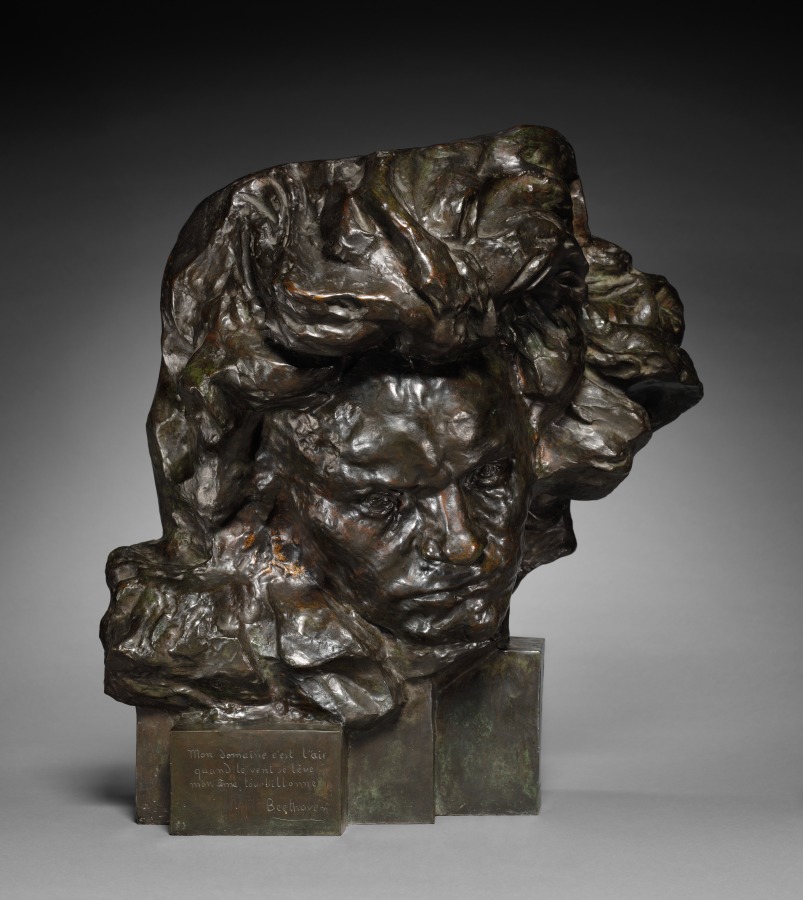
The Head of Beethoven, when filtered through the dual lenses of the Metropolitan Museum’s Bodhisattva and the Walters Art Museum’s Bull-Headed Seated Amulet, ceases to be mere portraiture. It becomes a study in volumetric compression and spiritual load-bearing. For Addison Fashion’s 2026 executive silhouette, this artwork offers a radical re-reading of the human form as a site of vertical tension and horizontal restraint. The Beethoven head—its brow furrowed, its jaw set, its hair a chaotic yet disciplined mass—mirrors the Bodhisattva’s idealized calm and the amulet’s condensed potency. The executive silhouette must therefore not drape; it must stack. It must not flow; it must lock.
Geometrically, the artwork’s integrity lies in its triangular substructure. The forehead forms the apex; the cheekbones and jawline create a descending trapezoid; the neck and shoulders, though absent in the bust, are implied as a plinth. This is not a soft, organic geometry. It is a load-bearing system, akin to a cantilevered cornice or a fluted column. In the 2026 executive wardrobe, this translates to jackets with pronounced shoulder architecture—not padded in the 1980s sense, but sculpted via internal boning and layered canvas. The lapel becomes a structural rib, not a decorative flourish. The collar stands away from the neck, creating a negative space that echoes the Buddha’s halo and the amulet’s protective enclosure. This is urban materiality at its most austere: wool felt, bonded to a rigid horsehair interlining, cut with zero tolerance for drape.
Compression and Release: The Dialectic of the Sacred and the Functional
The Bodhisattva’s flowing robes are not garments; they are frozen rivers of grace. The amulet’s compact form is not diminutive; it is concentrated power. Beethoven’s head, with its wild hair and intense gaze, sits between these poles. The hair is the only element that breaks the geometric calm—yet it does so with a controlled turbulence, each lock a deliberate vector. For the executive silhouette, this suggests a new approach to fabric texture. We reject uniform suiting. Instead, we propose directional weaves—herringbone, bird’s-eye, and micro-check—that create visual noise without compromising the garment’s architectural line. The jacket’s surface becomes a tectonic map, not a smooth plane. Pockets are hidden, seams are felled, and buttons are replaced by hidden magnetic closures, preserving the silhouette’s unbroken surface.
The color Slate is not a compromise; it is a philosophical choice. Slate sits between the Bodhisattva’s gilded serenity and the amulet’s dark stone. It is the color of wet pavement, of corporate towers at dusk, of the urban sublime. In wool, slate reads as authority without aggression. In technical silk, it becomes liquid metal. For 2026, we deploy slate in layers: a slate-grey overcoat in double-faced cashmere, a slate-blue tailored vest in high-twist wool, and slate-charcoal trousers with a razor-sharp crease. The palette is monochromatic, but the tonal shifts—from ash to graphite to midnight—create a depth that mimics the artwork’s chiaroscuro.
Urban Materiality: From Museum Plinth to Pavement
The Head of Beethoven, as a museum object, is removed from the street. Yet its material truth—the marble’s coldness, the bronze’s weight, the plaster’s fragility—must be translated into fabrics that perform under fluorescent light and subway pressure. We propose a new textile category: architectural jersey. This is not athleisure. It is a double-knit with a metallic core, giving it the hand of cotton but the memory of steel. It holds a pressed crease for 12 hours. It resists moisture without a chemical finish. It breathes, but it does not sag. This fabric is the amulet’s equivalent: a compact, powerful carrier of the wearer’s intent.
Accessories follow the same logic. A leather tote is not a bag; it is a portable plinth, structured with a hidden aluminum frame. Footwear is not a shoe; it is a foundation system, with a heel carved from a single block of wood and a sole that mimics the amulet’s flat, stable base. Even the tie—if one is worn—is reduced to a minimalist blade, cut from a single piece of silk, its knot a precise geometric cube. The overall effect is of a body that has been edited, not adorned. Every element serves a structural or symbolic function, echoing the Bodhisattva’s purposeful gestures and the amulet’s protective compactness.
The 2026 Executive: A Walking Reliquary
In conclusion, the Head of Beethoven, when read through the sacred and the functional, demands a silhouette that is monumental yet mobile. The 2026 executive is not a fashion plate; she is a carrier of gravity. Her shoulders are squared, but not aggressive. Her waist is defined, but not cinched. Her length is elongated, but not theatrical. The jacket’s hem hits at the hip bone, the trousers break at the instep, and the coat falls to the mid-calf—each proportion a golden section derived from the artwork’s facial geometry.
This is minimalist luxury in its most rigorous form. It rejects ornament for structure, color for tone, and trend for timelessness. The Slate palette anchors the wearer in the urban landscape, while the architectural cuts elevate her above it. She is the Bodhisattva’s compassion made operational, the amulet’s power made professional. She does not wear the garment; she inhabits it. And in that habitation, she becomes a living monument—a head of Beethoven, carved from the city’s own stone, ready to conduct the symphony of commerce with a single, unyielding gesture.