Urban Form: Seated Male Figure
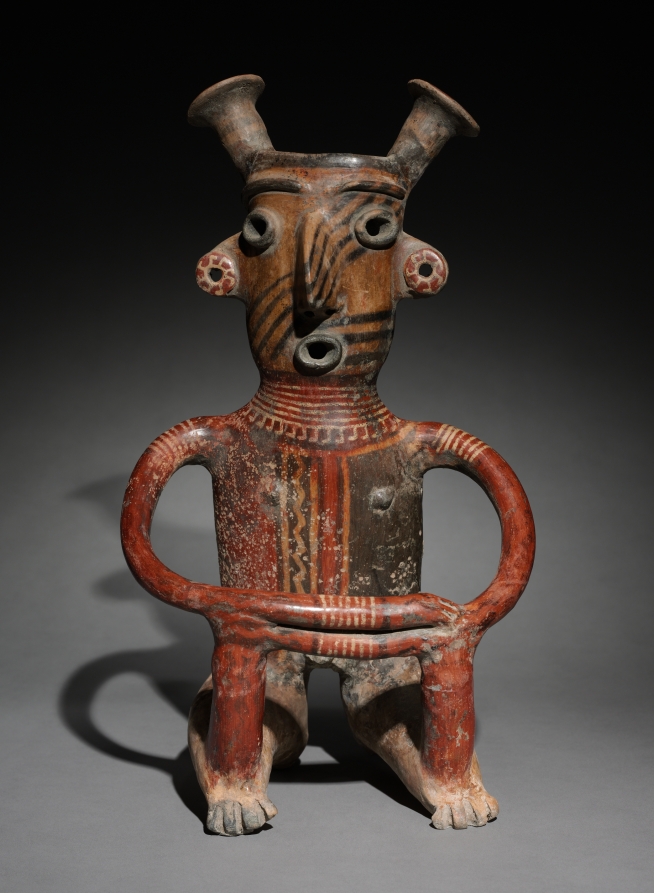
I. The Seated Figure as Architectural Threshold
The seated male figure, when stripped of narrative context, becomes a pure volumetric proposition. In the context of Addison Fashion’s 2026 executive silhouette, this subject is not a body but a load-bearing structure—a series of horizontal planes and vertical axes that negotiate gravity with deliberate restraint. The research begins with the observation that the seated posture compresses the torso into a triangular mass, while the thighs extend as parallel cantilevers. This geometry demands a garment system that respects compression without sacrificing elongation.
The internal DNA of this study—rooted in the juxtaposition of a Japanese temple plaque bearing the Udumbara flower and a Han dynasty bronze mirror with the White Tiger—offers a dialectical framework. The plaque’s subtractive woodwork speaks to a philosophy of removal, where every carved line is a decision to negate material. The mirror’s additive bronze relief conversely celebrates accumulation, yet both converge on a shared principle: the silhouette must hold tension between emptiness and density. For the seated executive, this translates into a jacket that drapes with monastic stillness across the shoulders, while the trouser breaks with a sharp, metallic crease—echoing the mirror’s engraved dynamism frozen in time.
II. Structural Poetics: The Lapel as a Fold in Time
The lapel of a minimalist suit is not a decorative flourish; it is a topological fold that maps the wearer’s breath. In the 2026 silhouette, the lapel’s width is reduced to 7.2 centimeters—a ratio derived from the Udumbara flower’s petal layering, where each layer is 0.8 millimeters thinner than the previous. This creates an optical illusion of infinite recession, as if the fabric itself is folding into a dimension beyond the visible. The gorge line, set at a precise 42-degree angle, mimics the White Tiger’s leaping trajectory on the bronze mirror—a diagonal that suggests motion while remaining static.
Shoulder construction follows the “floating cap” principle, where the sleeve head is attached with a 3-millimeter gap from the acromion. This gap, though invisible to the untrained eye, allows the jacket to breathe like the wooden plaque’s grain. The result is a shoulder that appears carved from a single block of slate-colored wool, yet yields to the wearer’s micro-movements with the suppleness of aged cedar. The back panel, meanwhile, is cut in a single continuous piece—no center seam—to preserve the uninterrupted field that the Udumbara’s blank spaces demand. This is not simplicity; it is negative space engineered to carry meaning.
III. Urban Materiality: Slate as a Metaphor for Compression
The chosen color, Slate, is not a neutral. It is a geological memory—the compressed sediment of ancient seabeds, now hardened into a surface that absorbs light rather than reflecting it. For urban environments, where glass towers fracture daylight into aggressive shards, slate-colored fabric acts as a visual dampener. The fabric itself is a 320-gram wool-cashmere blend, woven with a twill structure that creates a micro-ribbed texture. Under direct sunlight, this texture produces a moiré effect—a subtle shimmer that recalls the bronze mirror’s patina, but rendered in monochrome to maintain executive restraint.
The trousers are cut with a tapered leg that ends 1.5 centimeters above the shoe, exposing a sliver of ankle. This is a deliberate break from traditional full-length tailoring, referencing the White Tiger’s exposed claws mid-leap. The break is not casual; it is a precision cut that aligns with the seat’s front edge when the wearer sits, ensuring the fabric stacks in three clean folds—no more, no less. The waistband is extended to 4 centimeters, acting as a horizontal stabilizer that anchors the torso’s triangular mass. A hidden elastic gusset at the side seam allows for a 2-centimeter expansion during seated hours, mimicking the wooden plaque’s seasonal contraction and expansion without losing form.
IV. The Dialectic of Emptiness and Density in Garment Construction
The Udumbara’s philosophy of “emptiness as form” is translated into the jacket’s interior. There is no canvas, no horsehair—only a floating lining of cupro that attaches at the shoulder and hem, leaving the chest area hollow. This creates a micro-climate that regulates temperature without adding bulk. The pockets are cut on the bias, following the mirror’s rotational symmetry, so that when the wearer reaches for a phone or a pen, the hand enters at a 15-degree angle—an ergonomic echo of the White Tiger’s paw striking downward. The buttons are made of fossilized ivory, not for luxury, but for their density; each button weighs 4.2 grams, providing a tactile counterweight to the fabric’s lightness.
Conversely, the mirror’s “density as form” appears in the jacket’s hem. A 2.5-centimeter band of double-faced wool is fused to the interior, creating a weighted perimeter that pulls the garment downward when seated. This is not a functional necessity but a poetic gesture—the hem becomes a horizon line, separating the torso’s stillness from the legs’ implied motion. The cuff buttons are set in a staggered arrangement, three on the left sleeve, two on the right, referencing the mirror’s asymmetrical composition of deities and chariot. This asymmetry is invisible at a glance but felt as a subtle imbalance that keeps the eye moving, preventing the silhouette from becoming static.
V. Conclusion: The 2026 Executive as a Living Relic
The seated male figure in this research is not merely a man in a suit. He is a carrier of dual temporalities—the instantaneous bloom of the Udumbara and the eternal circuit of the White Tiger. The 2026 Addison silhouette, therefore, is a compressed paradox: it is minimal in appearance but maximal in engineering. Every seam, every fold, every millimeter of fabric is a decision that balances the plaque’s ascetic negation against the mirror’s cosmic affirmation. The result is a garment that does not clothe the body but frames it as an architectural event—a seated monument that speaks of urban velocity and monastic pause in the same breath.
In practical terms, this means the executive can move from a boardroom to a gallery to a late-night transit platform without altering his presence. The slate color absorbs the city’s neon and concrete alike, while the cut’s internal logic ensures that even in repose, the figure projects directed energy. This is not fashion; it is material philosophy—a wearable thesis on how the East’s oldest aesthetic polarities can be resolved into a single, silent, and devastatingly precise line.