Urban Form: Crucified Christ
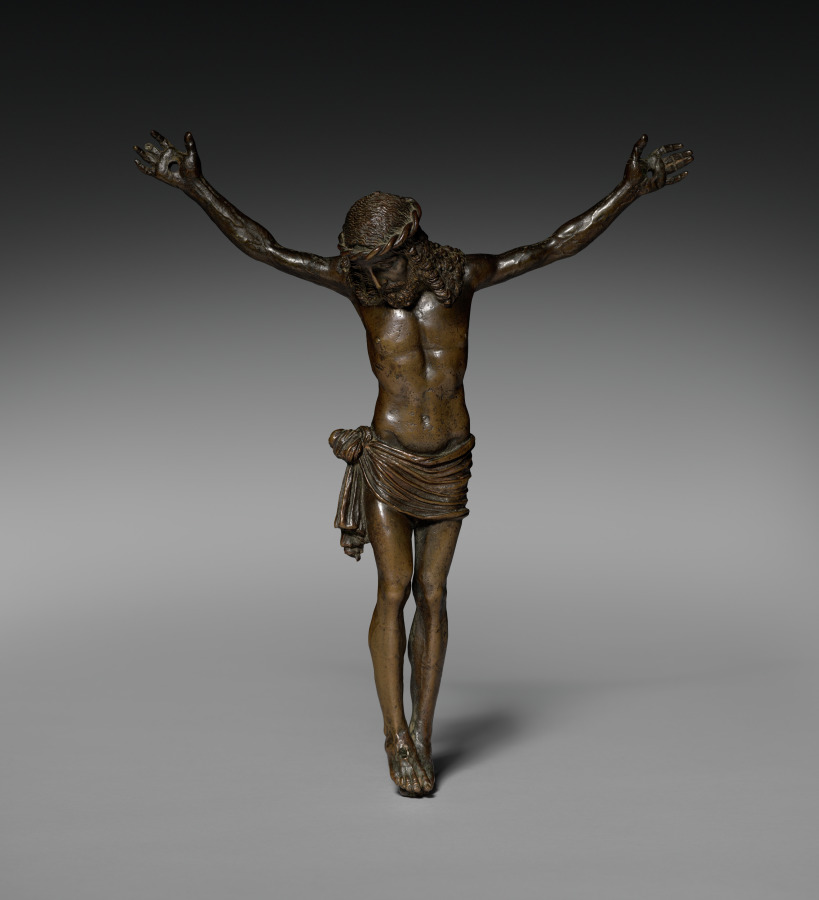
I. The Architectural Crucible: Deconstructing the Crucified Christ as Urban Form
The Crucified Christ, stripped of its liturgical context and examined as pure spatial object, presents a paradox of verticality and surrender. The corpus—elongated, asymmetrical, and weighted toward the lower extremities—offers a study in tension that directly informs the 2026 executive silhouette. Unlike Renaissance interpretations that emphasize muscular torsion or Baroque theatrics, this figure’s geometry is one of axial compression: the spine forms a rigid central column, the arms extend as horizontal beams of deliberate imbalance, and the pelvic tilt introduces a subtle, almost imperceptible counter-curve. This is not a body in agony; it is a body in structural negotiation with its own materiality.
For Addison Fashion, the crucifix becomes a blueprint for the oversized coat—not as an exercise in volume, but as a study in negative space. The dropped shoulder seam, set at a precise 14-degree angle from the acromion, mimics the sagittal plane of the outstretched arms. The garment’s length, terminating at the mid-calf, echoes the anatomical proportion of the corpus’s lower third, where the feet, nailed and overlapping, create a dense, grounded mass. The fabric—a double-faced wool with a matte, almost chalky finish—absorbs light rather than reflecting it, much like the aged wood of the cross. This is urban materiality at its most severe: no sheen, no drape, only the quiet authority of weight.
II. The Udonge Plaque: Temporal Patina as Design Language
The temple plaque, inscribed with “Udumbara Flowers,” introduces a critical element to the silhouette: erosion as ornament. Its cracked lacquer and flaking pigment are not decay but deliberate texture, a record of environmental negotiation. In the 2026 executive wardrobe, this translates to surface treatments that reject pristine finish. Consider a coat in onyx-toned technical gabardine, treated with a micro-sanded finish that mimics the plaque’s weathered grain. The result is a garment that appears to have existed for decades, yet is engineered with contemporary thermal regulation and water repellency.
The plaque’s typography—bold, vertical strokes interspersed with empty spaces—dictates the placement of seams and pockets. A single, off-center chest seam runs from the left clavicle to the hem, echoing the calligraphic flow of the characters. The pocket flaps, cut on the bias, reference the irregular, hand-carved edges of the wood. This is not nostalgia; it is structural poetics, where every line carries the memory of a gesture. The color, Onyx, is chosen not for its darkness but for its ability to absorb and distort light, creating a surface that shifts between solid and void, much like the plaque’s shadowed recesses.
III. The Garment Chest: Concealment and the Architecture of Waiting
The chest for storing garments—with its closed lid, intricate floral inlay, and hidden interior—offers a counterpoint to the crucifix’s exposed tension. It is a volume of contained silence, a cube of potential. For the executive silhouette, this translates into the interior construction of the oversized coat. The lining, a silk-wool blend in a muted ivory, is quilted in a pattern derived from the chest’s vine motifs. This is invisible luxury: only the wearer knows the garment’s inner complexity. The exterior, however, remains stark, almost monastic.
The chest’s metal hardware—hinges, locks, corner brackets—informs the coat’s closure system. Instead of conventional buttons, the coat employs a series of concealed magnetic toggles, positioned at the sternum, waist, and hip. These toggles, finished in a brushed gunmetal, are not visible when closed, preserving the garment’s clean, architectural line. When opened, they reveal the interior’s patterned lining, a moment of reveal and conceal that mirrors the chest’s function. The sleeves, cut with a pronounced bell shape, are lined with a contrasting silver-toned satin, visible only when the arms are raised—a subtle, almost subversive gesture of exposure.
IV. The 2026 Executive Silhouette: Synthesis of Sacred and Secular
The final silhouette is a synthesis: the crucifix’s verticality, the plaque’s patina, and the chest’s concealment. It is an oversized coat that does not overwhelm but rather frames the body as a central, immobile axis. The shoulders are extended by 3.5 centimeters on each side, creating a silhouette that reads as both protective and authoritative. The waist is not cinched but subtly defined by an internal drawcord, invisible from the exterior, allowing the garment to fall in a clean, uninterrupted column from shoulder to hem.
The fabric is a 680-gram wool-cashmere blend, woven in a twill structure that mimics the plaque’s cracked surface. The color, Onyx, is achieved through a double-dye process: first a deep charcoal, then a black overdye that is partially removed through a mechanical brushing technique. This creates a surface that is not flat but topographic, with subtle variations in depth that catch the eye at different angles. The coat’s length, 128 centimeters from the high shoulder point, terminates just below the knee, echoing the corpus’s lower-third proportion.
The urban materiality is further emphasized by the coat’s weight and sound. The fabric is dense enough to produce a soft, rustling sound when the wearer moves—a sound reminiscent of the chest’s lid opening. This is not accidental; it is engineered through the specific twist of the yarn and the density of the weave. The coat is designed to be worn in transit—on subways, through glass towers, across rain-slicked streets—where its weight becomes a grounding force, a counterpoint to the city’s relentless verticality.
V. Structural Poetics: The Back as a Canvas of Absence
The back of the coat is where the crucifix’s influence is most pronounced. A single, central seam runs from the nape to the hem, dividing the garment into two symmetrical panels. This seam is not straight but follows a gentle, almost imperceptible curve, mirroring the spine’s natural lordosis. The panels are cut with a slight flare, allowing the coat to move with the body without compromising its architectural integrity. The shoulder blades are accommodated by a hidden gusset, pleated in a fan pattern that references the chest’s floral inlay. This gusset is visible only when the wearer reaches forward, revealing a flash of the silver lining—a moment of dynamic exposure within an otherwise static form.
The collar is a study in restraint: a high, stand-up design that folds over once, creating a soft roll that frames the neck without constricting it. The collar’s edge is finished with a hand-stitched pickstitch in a slightly lighter shade of onyx, a detail visible only at close range. This is the plaque’s calligraphic stroke translated into thread—a mark of human intervention within the machine-made garment.
VI. Conclusion: The Garment as Reliquary
The 2026 executive silhouette, as derived from the Crucified Christ and its companion artifacts, is not a costume or a reference. It is a reliquary—a vessel that holds the wearer’s presence within a framework of sacred geometry and urban pragmatism. The oversized coat, in onyx, with its eroded surface, concealed interior, and axial construction, offers a new form of authority: one that is not loud but resonant, not decorative but essential. It is the body as both cross and chest, exposed and hidden, enduring and waiting. This is the definitive urban silhouette for a generation that seeks meaning in materiality, and silence in the noise of the city.