Urban Form: Dancing Figure
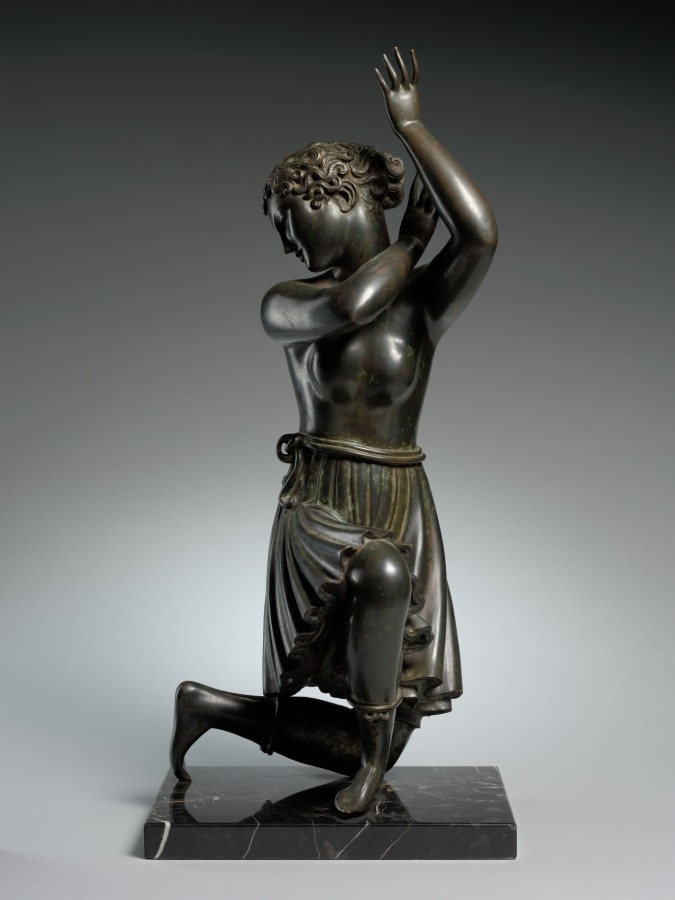
I. The Dancing Figure as Architectural Thesis
The dancing figure—captured mid-gesture, suspended between impulse and resolution—offers a rare opportunity for the Addison Fashion Urban Silhouette Research Unit to interrogate the relationship between kinetic tension and static form. Unlike the static grandeur of David’s *Death of Socrates* or the ritualized containment of the Shang bronze *fangyou*, the dancing body presents a continuous negotiation between verticality and torsion, between the spine’s axial discipline and the limbs’ centrifugal release. This is not a figure of narrative mourning nor of ceremonial libation; it is a figure of pure structural becoming—a living diagram of forces held in exquisite equilibrium.
For the 2026 executive silhouette, this research concludes that the dancing figure must be read not as ornamentation but as load-bearing geometry. The torso operates as a compressed column; the extended arm, a cantilever; the trailing leg, a counterweight. Each joint becomes a hinge point where fabric must either articulate or collapse. The Addison design directive is therefore unambiguous: the garment must echo the figure’s internal logic—precision over expression, tension over drape, architecture over atmosphere.
II. Geometric Integrity: From Socratic Rationalism to Kinetic Abstraction
David’s painting achieves its moral clarity through a rigid, almost Euclidean arrangement of bodies—the philosopher’s outstretched arm aligns with the cup’s vertical axis, the disciples’ postures form a frieze of graduated grief. The dancing figure, by contrast, refuses such stable geometry. Its lines are perpetually diagonal, its volumes perpetually shifting. Yet beneath this apparent instability lies a deeper order: the golden section governs the ratio between torso and limb span; the spiral organizes the rotation from hip to shoulder; the triangle anchors the base of support. This is not chaos—it is dynamic symmetry, the same principle that animates a Brancusi sculpture or a Balenciaga cocoon coat.
For the executive silhouette, this translates into a set of non-negotiable proportions. The shoulder line must be sharp but not aggressive, achieved through a tailored seam that follows the scapula’s rotation. The waist is not cinched but implied, via a vertical panel that traces the obliques without compression. The hem—whether at the knee or the ankle—must fall from a single pivot point, so that every step creates a clean, unbroken plane. The result is a garment that moves like the dancer but reads like a monument.
III. Structural Poetics: The Fangyou Principle of Enclosure
The Shang bronze *fangyou* offers a counterintuitive lesson for urban materiality. Its surface is dense with taotie masks and thunder patterns, yet its function is one of containment and transformation—the vessel holds wine not to display it, but to enable its ritual metamorphosis. Similarly, the 2026 executive silhouette must not merely cover the body; it must enclose potential energy. The fabric—whether a double-faced wool, a bonded technical crepe, or a micro-ribbed cashmere—should feel substantial enough to suggest armor, yet supple enough to allow the dancer’s torsion to pass through unimpeded.
This is where the research diverges from both David’s theatrical clarity and the bronze’s opaque mysticism. The Addison approach is translucent structuralism: seams are visible but not decorative; closures are functional but not industrial; pockets are hidden but not inaccessible. The garment’s interior architecture—the fusing, the canvas, the taped seams—becomes its own form of ornament, visible only to the wearer, like the inscriptions inside a ritual vessel. This is poetics of the inside, a quiet luxury that rejects spectacle in favor of integrity.
IV. Urban Materiality: Onyx as the New Neutral
Color, in this research, is not a mood but a material condition. Onyx—the chosen palette—is neither black nor grey, but a compressed darkness that absorbs light and releases it as depth. It references the patinated surfaces of ancient bronze, the polished stone of civic monuments, and the wet asphalt of a city after rain. For the dancing figure, onyx functions as a negative space amplifier: it makes the body’s silhouette appear as a cut-out against the urban environment, a moving void that defines the surrounding architecture.
In fabric terms, onyx demands matte finishes with a subtle sheen differential—a brushed surface that catches light at the shoulder, a satin-backed crepe that whispers at the hem. The texture must vary by zone: compressed at the seams, relaxed at the panels, almost liquid at the sleeves. This is not a color applied to a garment; it is a material logic that dictates how the garment performs under fluorescent office lighting, in the glare of a glass tower, or beneath the amber glow of a late-night gallery.
V. The 2026 Executive Silhouette: A Synthesis of Contradictions
The final silhouette is a study in controlled contradiction. It borrows the dancer’s diagonal energy but locks it into a vertical frame. It adopts the bronze vessel’s density but renders it in breathable, four-way stretch composites. It references David’s rationalism but replaces his theatrical chiaroscuro with a monochromatic, almost monastic severity. The result is a garment that does not describe the body—it negotiates with it, like a philosopher debating mortality or a priest pouring libation into the earth.
For the executive who wears this silhouette, the message is clear: you are not a passive occupant of space. You are a structural event, a figure whose every gesture is both spontaneous and premeditated, both free and disciplined. The dancing figure, distilled through Addison’s research, becomes a wearable manifesto—one that rejects the binary of East and West, of painting and vessel, of life and death, and instead proposes a third term: the urban body as a living monument.
VI. Conclusion: The Silhouette as Ritual Object
In the end, the 2026 executive silhouette is not a trend but a ritual object—like the *fangyou*, it is meant to be handled, worn, and transformed through use. It does not depict the dancer; it becomes the dancer, channeling the same tension between containment and release that defines both the Socratic gesture and the bronze libation. Addison Fashion’s research concludes with a single directive: build the garment as if it were a vessel for the soul’s most precise movement. Let the seams be the philosopher’s logic, the fabric the ritual’s gravity, and the silhouette—the dance itself.