Urban Form: Transenna Post
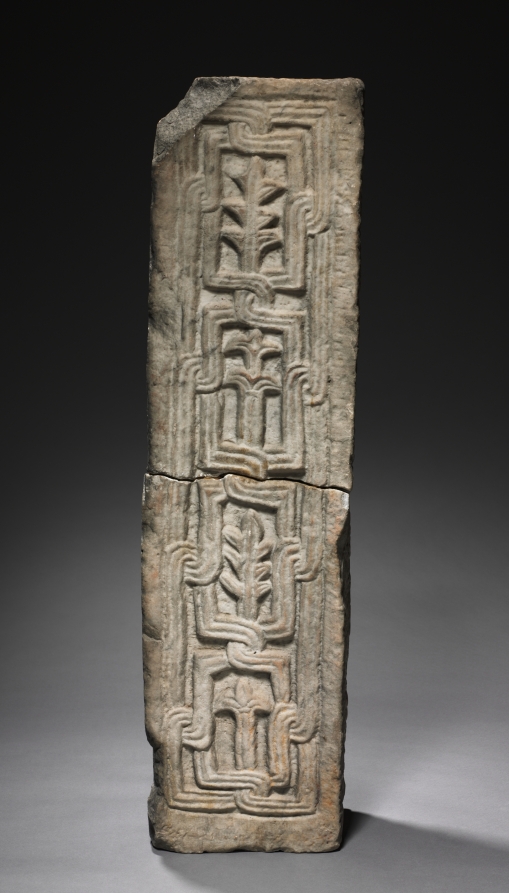
Technical Analysis: Transenna Post Silhouette
The provided internal DNA, a dialogue between the “Udumbara Flower” temple tablet and the “Beast-Grape Pattern Mirror,” presents a profound blueprint for architectural fashion. This analysis distills their contrasting yet complementary poetics into a definitive 2026 executive silhouette for Addison Fashion, codenamed Transenna Post. The silhouette is an exercise in structural tension, where the void defines the solid, and minimalism carries maximalist intent.
Structural Poetics: The Dialectic of Void and Volume
The core geometric integrity of the Transenna Post silhouette is derived from the philosophical interplay between the two artifacts. It is not a compromise, but a precise calibration of opposing forces.
The Udumbara Flower principle mandates an architecture of absence. Its “emptiness and stillness,” its existence as a “visual blank,” translates into silhouette through severe reduction and negative space. Garment structures are pared to their essential armature. Seams are minimized and strategically placed to create clean, uninterrupted planes that suggest a form rather than delineate it. Darts are eliminated or transformed into geometric paneling. The resulting shape is one of reductive purity, where the body itself becomes the implied form within the garment’s architectural frame. This is not deconstruction, but a more rigorous construction aimed at achieving a state of “vacuous splendor and subtle existence.”
Conversely, the Beast-Grape Mirror principle informs controlled articulation and symbolic detail. Its “abundance and circulation” are not expressed through ornament, but through strategic volume and topological complexity. A single, deliberate point of fullness—a precisely engineered drape at the shoulder, a spiraling seam that creates a contained volume at the hip, a parabolic curve across the back—echoes the mirror’s “full composition.” This volume is never frivolous; it is structural, serving as the “auspicious pattern” encoded into the silhouette’s logic. It represents the “worldly fulfillment” of dynamic, confident movement within an urban context.
Urban Materiality: The Calculus of Surface and Substance
The material execution of this silhouette demands a cold, sophisticated rigor. The designated Slate color palette is critical: it is the chromatic embodiment of shadow, mineral density, and twilight abstraction. It absorbs and re-emits light with a muted intelligence, providing the perfect ground for playing with texture and form.
Fabrics must possess an inherent geometric memory. Technical wool crepes and double-faced cashmere blends will provide the “simplicity and淡泊” for the Udumbara planes, holding severe lines with a soft authority. Contrastingly, to articulate the Beast-Grape volumes, we employ engineered jerseys and neoprene-felt hybrids—materials with a defined body that can be sculpted into self-supporting curves and spirals without collapsing into softness. Seams will be welded or laser-cut where possible, creating hairline fractures in the surface that hint at the underlying structure, much like the subtle joinery of a temple tablet.
Hardware, if present, is reduced to a functional symbolism: a single closure acting as a ritual object. A magnetic clasp made of darkened palladium, echoing the patina of ancient bronze, or a toggle inspired by a mirror’s central knob. It serves as the sole “auspicious beast” in the composition—a point of tactile focus and guarded dynamism.
The 2026 Executive Silhouette: A Machine for Contemplation
The synthesized Transenna Post silhouette for the 2026 executive is a machine for urban contemplation. It performs the dual function outlined in the DNA: it is both a “spiritual symbol leading to liberation” and a “material carrier reflecting worldly well-being.”
Its exterior presentation is one of impenetrable, minimalist luxury. The Slate-colored, architecturally severe shell projects authority, clarity, and a detachment from transient trends. It is the “gateway” to a professional persona. Yet, in movement, the controlled volumes articulate—the spiral seam allows for a wider stride, the parabolic back panel accommodates the gesture of reaching—encoding “abundance, reproduction, and vitality” into its very functionality. The wearer experiences the “circulation” of the mirror’s pattern through ergonomic liberation.
This silhouette does not shout; it resonates. It operates on the principle of “observing the object to capture its image, seeking meaning beyond the image.” The object is the urban environment itself—gridded, hard, dynamic. The silhouette captures its image through sharp angles and resilient materials. The meaning sought beyond is the executive’s own agency, poise, and intellectual force, reflected and amplified by the garment’s deliberate forms. It creates a call structure around the wearer, demanding a second, more considered look, revealing its depth only upon scrutiny.
Ultimately, the Transenna Post is a bridge. It connects the transcendent emptiness of strategic minimalism with the earthly fullness