Minimalist
Onyx
Urban Form: Kneeling Satyr
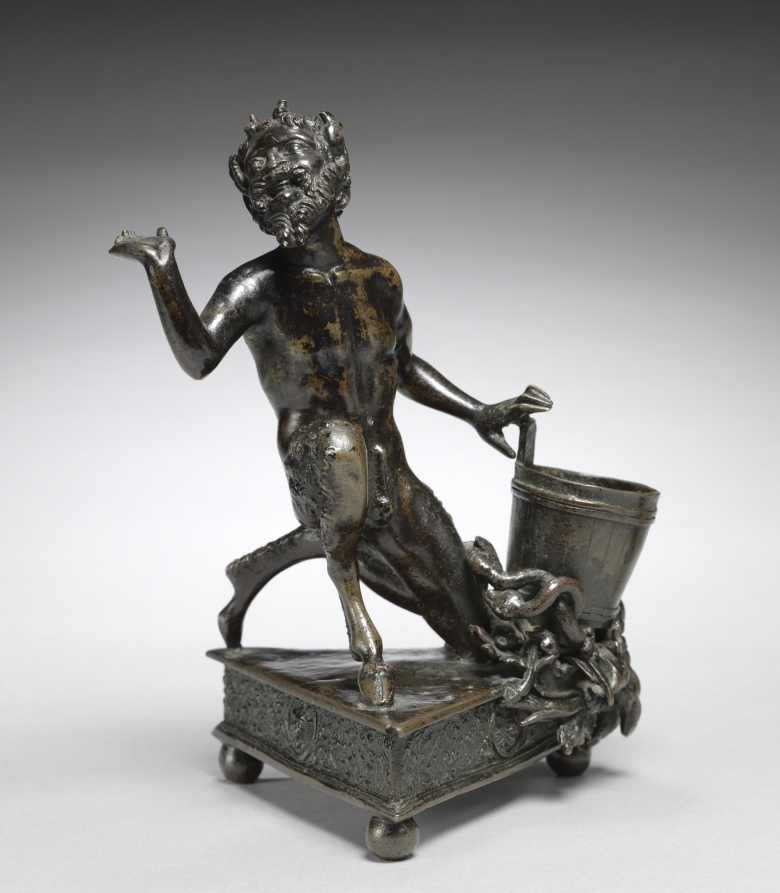
I. The Paradox of the Crouched Form: A Study in Compressed Tension
The Kneeling Satyr, in its canonical iterations—whether the Hellenistic bronze from the House of the Faun or the attenuated Roman marble copies—presents a singular structural problem for the contemporary designer: how does one translate a posture of arrested motion into a garment that must simultaneously accommodate the upright, ambulatory demands of urban life? The answer lies not in literal mimicry, but in the extraction of what I term *compressed tension*. The Satyr’s kneeling is not a collapse; it is a coiled spring, a muscular geometry of potential energy. The thighs press against the calves, the torso folds forward, and the arms either brace the ground or reach upward in a diagonal counterpoint. This is not repose. This is a held breath. For the 2026 executive silhouette, this translates into a radical rethinking of the lower body’s relationship to the torso. The traditional suit—a vertical axis of shoulder-to-hem—is insufficient. Instead, we propose a garment architecture that borrows the Satyr’s *folded axis*. Consider a high-waisted, double-pleated trouser with a pronounced, engineered knee. The pleat is not decorative; it is a functional hinge, allowing the fabric to gather and release in a manner that mirrors the Satyr’s quadriceps under tension. The rise is elevated to the natural waist, creating a visual compression at the hip—a deliberate, almost sculptural cinching that echoes the figure’s folded pelvis. The fabric must be dense, with a high-twist wool or a technical cotton twill, to hold this shape without collapsing into mere wrinkling. The result is a lower half that reads as *architectural mass*—solid, grounded, yet imbued with a latent spring.II. Geometric Integrity: The Diagonal as Load-Bearing Line
The Satyr’s most compelling geometric feature is the diagonal. From the shoulder to the planted hand, or from the tilted hip to the extended knee, the body’s primary load-bearing lines are never vertical. This is a direct affront to the classical Vitruvian ideal of the upright man, and it is precisely this subversion that defines our new urban poetics. In the 2026 executive silhouette, we must introduce the diagonal as a *structural seam*, not merely a stylistic flourish. Concretely, this manifests in a single-breasted jacket with a radically asymmetric closure. The lapel on one side extends into a sharp, downward-pointing peak that visually cuts across the torso, terminating at the opposite hip. This seam is not sewn; it is *engineered*, with internal boning or a fused canvas that forces the fabric to hold a deliberate, off-axis line. The shoulder on this side is slightly dropped—not slouched, but *articulated*, as if the clavicle itself has been shifted to accommodate a different center of gravity. The opposing shoulder remains sharp and structured, creating a deliberate asymmetry that mirrors the Satyr’s uneven distribution of weight. The jacket’s hem is cut on a bias, longer at the back, shorter at the front, further reinforcing the sense of a body caught mid-movement, frozen in a dynamic crouch. This is not deconstruction for its own sake. It is a *load-bearing diagonal*, a line that carries the visual weight of the garment and, by extension, the wearer’s presence. In a boardroom, this silhouette does not stand at attention; it *occupies space* with a predatory, coiled readiness. The executive is no longer a static monument but a kinetic force, held in check by the very tailoring that defines them.III. Urban Materiality: Onyx as the Skin of the City
The choice of Onyx as the primary color for this research is not arbitrary. Onyx—the stone, not the mere black—is a material of profound geological compression. It is formed in the cavities of volcanic rock, layer upon layer of silica deposited over millennia, resulting in a surface that is simultaneously opaque and deeply reflective. This duality is the essence of urban materiality for 2026. The city is not a place of softness; it is a palimpsest of hard surfaces—glass, steel, asphalt, and stone—each reflecting the other in a cold, indifferent dance. For the Kneeling Satyr silhouette, Onyx provides the necessary *gravitas*. A pure, undiluted black would be too flat, too funereal. Onyx, however, has a depth that shifts with the light—a subtle, internal luminescence that suggests hidden strata. We achieve this through fabric choice: a worsted wool with a high luster, woven with a micro-filament of recycled metallic thread. This is not a glitter; it is a *sheen*, a geological whisper that catches the sodium-vapor glow of a streetlamp or the cold LED of a lobby. The fabric must feel dense to the touch, almost mineral, with a drape that is heavy and deliberate, never fluid. The secondary material is a matte, bonded leather—not for the main garment, but for the *structural accents*: the internal collar, the cuffs, the hidden placket. This leather is treated to have a slightly granular, almost pumice-like texture, echoing the rough-hewn surface of the stone from which the Satyr was carved. When the wearer moves, the leather creaks faintly—a sound of resistance, of material against material, a subtle auditory reminder of the body’s tension within the garment’s architecture.IV. Structural Poetics: The Garment as a Held Breath
The final layer of analysis concerns the poetics of the silhouette itself. The Kneeling Satyr is a figure of *suspension*. He is neither fully prostrate nor upright; he exists in the liminal space between action and surrender. This is the precise emotional register for the 2026 executive. The modern leader does not dominate through overt aggression; they dominate through *controlled restraint*. The garment must communicate this through its very structure. We achieve this through a technique I call *negative ease in the upper block*. The jacket’s chest and back are cut with a slight reduction in circumference—not enough to restrict movement, but enough to create a visible tension across the shoulder blades and pectorals. The fabric strains, just barely, against the body’s natural expansion. This is the *held breath*. The wearer appears as if they are about to move, to spring, to act—but they remain still, their power contained within the tailored shell. The sleeves are set with a high, narrow armhole, forcing the arms to hang in a slightly forward, almost protective arc, echoing the Satyr’s braced posture. The trousers, as mentioned, are the counterpoint. They are cut with a generous, almost exaggerated fullness from the knee down, tapering sharply to a narrow, cropped hem that reveals the ankle. This creates a visual *funnel*, drawing the eye downward, grounding the figure. The fullness is not for comfort; it is for *volume*, a sculptural mass that suggests the heavy, planted thighs of the kneeling figure. When the executive walks, the fabric swings with a delayed, pendulum-like motion—a ghost of the Satyr’s crouch, a memory of the body’s potential to fold, to kneel, to rise again.V. Conclusion: The Silhouette as a Monument to the In-Between
The Kneeling Satyr, in its ancient marble or bronze, is a monument to a moment of indecision—a pause between the divine and the bestial, the sacred and the profane. For Addison Fashion’s 2026 Urban Silhouette Research, this figure offers a definitive departure from the static, vertical norms of executive dress. We do not design for the upright man. We design for the *crouched* man, the man who holds his power in reserve, who moves with the compressed energy of a predator, who wears his authority as a geological weight. The Onyx palette, the diagonal seams, the negative ease, the folded trouser—these are not trends. They are *structural poetics*, a language of restraint and potential. The garment is not a covering; it is a *carapace*, a second skin of compressed urbanity. It does not ask to be admired; it demands to be *reckoned with*. In a city of glass and steel, the executive who wears this silhouette is not a figure in a landscape. They are a geological event, a fold in the strata, a held breath in the cacophony. This is the definitive silhouette of 2026: not the man standing tall, but the man who has chosen to kneel, and in that choice, has found his most potent form of standing.
Technical Insight
Technical Insight: Translating Onyx palettes into Minimalist silhouettes for the modern metropolis.