Urban Form: Fragment of a Band with Abstract Pattern
Structural Poetics: The Fragment as Architectural Lexicon
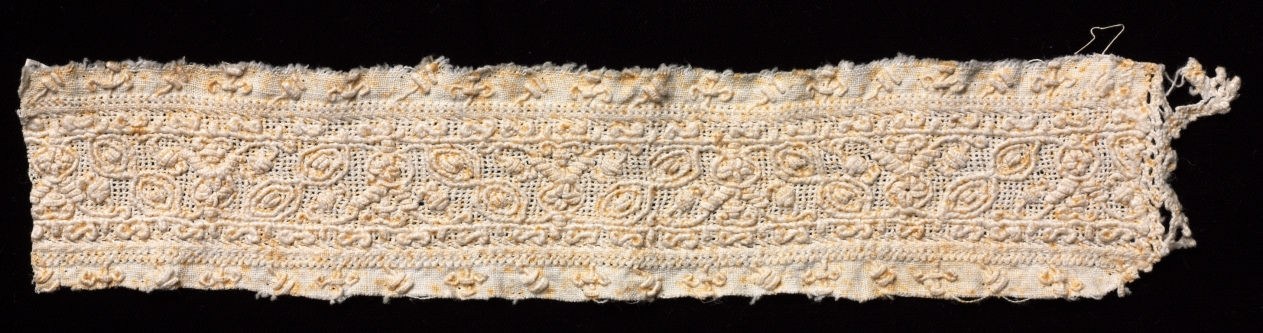
The Fragment of a Band with Abstract Pattern is not an ornament; it is a tectonic proposition. Its broken continuity—a band severed yet self-contained—mirrors the 2026 executive silhouette’s governing principle: controlled interruption. Where classical tailoring seeks seamless flow, this fragment demands a pause, a deliberate caesura in the visual field. The abstract pattern, rendered in muted tonalities of slate and ash, operates as a cartographic trace of urban movement—neither purely geometric nor organic, but a hybrid that speaks to the city’s layered palimpsest.
In the context of Addison Fashion’s architectural DNA, this fragment translates into a jacket whose shoulder seam is intentionally displaced, a coat whose hemline breaks before the knee, or a trouser whose crease is offset by a single asymmetric panel. The pattern itself—repetitive yet irregular—becomes a metaphor for the executive’s daily rhythm: structured appointments punctuated by spontaneous decisions. The silhouette does not cling to the body; it hovers, creating a negative space that echoes the fragment’s missing sections. This is not absence as lack, but absence as intentionality—a void that defines the form around it.
Geometric Integrity: From Vessel to Garment
The fragment’s abstract pattern recalls the interiority of the Eastern jar—not its painted surface, but its hollow core. In garment construction, this translates to a focus on internal architecture: fused canvases that do not stiffen but breathe, seams that are pressed open rather than closed, and linings that move independently from the outer shell. The 2026 executive silhouette rejects the armor-like rigidity of traditional power dressing. Instead, it adopts the jar’s principle of wu (無)—usefulness through emptiness. A blazer’s shoulder may be softly roped, but the chest is left unconstructed, allowing the fabric to fall in a clean, vertical line that suggests both composure and availability.
Simultaneously, the fragment’s Greek lineage—the Socratic gesture toward transcendence—informs the silhouette’s verticality. A long, unbroken column of slate wool, cut with a slight A-line, evokes the philosopher’s upward gaze. The pattern, when placed as a jacquard or a tonal embroidery, does not decorate; it articulates. It marks the body’s pivotal points: the nape, the scapula, the hip—areas where movement originates. This is not ornamentation but kinetic annotation, a visual score for the wearer’s stride through glass-and-steel corridors.
Urban Materiality: Fabric as Philosophical Terrain
The fragment’s palette—slate, onyx, and silver—demands materials that carry weight without heaviness. For 2026, Addison Fashion proposes double-faced wool with a felted back, technical silk with a matte finish, and recycled cashmere blended with metallic threads that catch light only at certain angles. These fabrics are not passive surfaces; they are active participants in the wearer’s urban narrative. A coat in slate double-face wool, cut with a high, stand-away collar, references the fragment’s broken band—its front edge slightly shorter than the back, creating a dynamic imbalance that resolves in motion.
The abstract pattern, when translated into a jacquard weave, becomes a topographic map of the city’s grid—intersecting lines that never quite meet, echoing the fragment’s incomplete circles. This pattern is placed strategically: on the underside of a lapel, inside a cuff, or as a full panel on a coat’s interior. It is a secret language for the discerning eye, a nod to the Socratic ideal of esoteric knowledge. The wearer knows the pattern is there; the observer sees only its subtle shadow against the slate ground.
The Silhouette’s Dialectic: Transcendence and Immanence
The 2026 executive silhouette is a study in dual temporality. From the front, it presents a clean, almost severe line—the Socratic ascent toward the ideal. The shoulders are defined but not exaggerated, the waist gently suppressed, the hem falling to mid-calf for outerwear or just below the hip for jackets. This frontality speaks to rational clarity, the philosopher’s calm before the hemlock. From the back, however, the silhouette shifts. A slight train on a coat, a curved seam that follows the spine, a vent that opens with each step—these elements introduce the Eastern jar’s immanence, its groundedness in the everyday. The back is not a retreat but a continuation, a reminder that transcendence is only meaningful when rooted in the material world.
The fragment’s abstract pattern, when used as a full-coverage print on a bias-cut dress or a fluid trouser, dissolves the body’s outline—not to erase it, but to merge it with the urban environment. The pattern’s irregularity prevents static reading; it shifts with the wearer’s movement, creating a living texture that responds to light and shadow. This is the jar’s qi (氣) made visible: the breath that animates form, the energy that turns a garment from object into extension of self.
Conclusion: The Fragment as Complete Statement
The Fragment of a Band with Abstract Pattern is not a source of inspiration; it is a blueprint for existence. Its broken form teaches that the executive silhouette need not be whole to be authoritative. Its abstract pattern demonstrates that meaning arises not from representation but from relation—between line and void, between wearer and garment, between the Socratic ideal and the Taoist vessel. The 2026 silhouette, therefore, is not a fixed shape but a philosophical stance: it stands in the city’s flux, acknowledging mortality through its very materiality, yet reaching toward the eternal through its precision. It is, in the end, a fragment that contains the whole—a band that, though broken, holds the pattern of a life lived with intent.