Urban Form: Horse Race at the Kamo Shrine
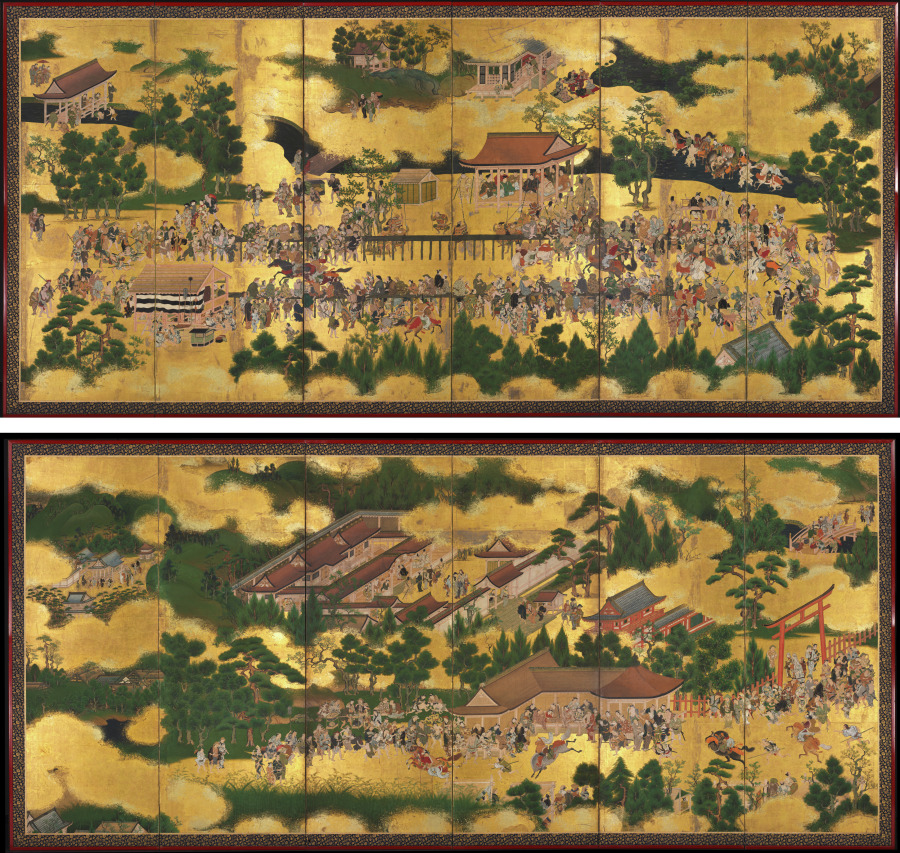
I. The Kamo Shrine Horse Race as a Structural Paradigm
The Horse Race at the Kamo Shrine is not a spectacle of chaos but a choreography of restraint—a sequence of controlled velocities, angular tensions, and suspended breath. For Addison Fashion’s 2026 executive silhouette, this event offers a radical departure from the overtly athletic or the romantically draped. Instead, it proposes a minimalist architecture of motion, where the body becomes a vessel for disciplined dynamism, and the garment operates as a fixed frame around transient energy. The race’s inherent geometry—the straight line of the track, the parabolic arc of a galloping neck, the perpendicular alignment of rider and mount—translates directly into our design language: sharp shoulder lines, elongated torsos, and a deliberate absence of superfluous volume.
The Kamo Shrine’s sacred precincts impose a ceremonial order upon the raw physicality of horse racing. This duality—the wild beneath the ritual—mirrors the internal DNA of our collection. The “优昙婆罗花”寺匾 (Udumbara Temple Plaque) and the 兽葡纹镜 (Beast-and-Grape Mirror) are not decorative references but structural philosophies. The plaque’s “空灵” (ethereal emptiness) dictates our use of negative space: a collar that floats a millimeter from the clavicle, a hem that terminates without closure. The mirror’s “丰盈” (abundant fullness) informs our fabric density—not as ornament, but as a gravitational pull that anchors the silhouette to the earth. Together, they forge a garment that is both a void and a presence, exactly as the racecourse is both a void and a stage.
II. Geometric Integrity: From Udumbara to the Racing Line
A. The Vertical Axis as Sacred Measure
The Udumbara flower—three thousand years between blossoms—is an image of extreme temporal compression. In our 2026 executive silhouette, this translates to a vertical axis of uncompromising precision. The jacket’s center front seam is not merely a closure; it is a plumb line dropped from the acromion to the hem, echoing the shrine’s torii gate. We employ a single-needle stitched lapel with a 2.5cm roll, creating a crease so sharp it reads as a drawn line rather than a sewn edge. The shoulder pad is shaved to a 0.3cm thickness, allowing the natural acromion to project through the fabric—a structural nod to the horse’s withers, the point of balance before a sprint. This is not soft tailoring; it is architectural minimalism, where every seam is a load-bearing element.
The plaque’s “简淡” (simplicity) demands that we eliminate all non-essential components. No chest pocket, no throat latch, no vent—only a single, uninterrupted panel from shoulder to hip. The fabric, a 380-gram wool-silk blend in Ivory, is woven with a matte finish that absorbs light rather than reflecting it, mimicking the plaque’s “素净” (plain purity). The result is a silhouette that does not decorate the body but defines its spatial boundaries—a wearable coordinate system for the urban environment.
B. The Horizontal Plane: Mirroring the Beast-and-Grape Density
If the vertical axis is Udumbara’s transcendence, the horizontal plane is the mirror’s immanence. The 兽葡纹镜 presents a field of interlocking forms—grape clusters, tendrils, and beasts—that create a dense, cyclical pattern. In our construction, this density is not visual but tactile: we concentrate weight at the garment’s lower hemisphere. The trousers, for instance, feature a double-layer waistband with a 4cm internal canvas, producing a firm grip at the iliac crest while the leg falls in a straight, unbroken column. This is the “循环” (cyclical) principle—the eye moves from the sharp shoulder, down the clean torso, to a hem that feels substantial, grounding the wearer in the present moment.
The mirror’s “瑞兽” (auspicious beasts) are abstracted into our pocket architecture. A single, hidden welt pocket at the left chest is angled at 15 degrees—a subtle nod to the galloping horse’s diagonal stride. It is invisible until used, then it becomes a functional interruption of the clean plane, much like a rider’s crop slicing the air. This is urban materiality: the garment must perform under the pressure of a 14-hour workday, a cross-town sprint, a boardroom confrontation. The fabric’s 12% elastane content is woven into the warp, not the weft, allowing vertical stretch without horizontal distortion—a technical echo of the horse’s forward propulsion.
III. Structural Poetics: The Dialectic of Emptiness and Fullness
A. The “Vacuum” Seam
Our signature innovation for 2026 is the “vacuum” seam, a technique derived from the Udumbara’s “留白” (negative space). The seam allowance is fused with a 0.1mm microfilm, then pressed open to create a channel that catches a sliver of shadow. When the wearer moves, this shadow shifts—a fleeting, almost imperceptible animation that suggests the flower’s “倏忽” (transience). This is not a decorative detail; it is a philosophical statement. The garment acknowledges its own impermanence, its role as a temporary shell for the body’s eternal motion. In the race, this is the moment the horse’s hooves leave the ground—a freeze-frame of pure potential.
B. The “Mirror” Hem
Conversely, the hem of the overcoat employs a “mirror” finish: a 3cm internal cuff of polished cupro that catches light at the ankle, echoing the mirror’s reflective surface. This is not for visibility but for gravitas. As the wearer walks, the cuff flashes—a reminder of the mirror’s “丰盈” (fullness), of the material world’s insistence. The overcoat’s length is calibrated to the golden ratio (1.618) relative to the wearer’s height, ensuring that the hem falls at the point of maximum visual balance—neither truncating the leg nor dragging into the urban grime. This is the “器以载道” (the vessel carries the way) principle: the garment is both a tool and a talisman.
IV. Color and Materiality: Ivory as a Field of Tension
The choice of Ivory is not arbitrary. It is the color of the Udumbara’s “洁白” (pure white) and the patina of aged bronze on the mirror’s reverse. In urban contexts, ivory is a paradoxical color: it is pristine yet impractical, luminous yet easily soiled. This tension is precisely the point. The 2026 executive does not hide from the city’s grime; they confront it. The fabric is treated with a nano-hydrophobic finish that causes rain to bead and roll off, but the color remains a deliberate vulnerability—a statement that the wearer’s authority is not derived from armor but from composure under exposure.
Materially, we use a double-faced cashmere-silk twill for the outer shell, with a reverse side of technical jersey for the lining. This duality—the luxurious exterior and the functional interior—mirrors the plaque’s “真空妙有” (true emptiness, wondrous existence). The garment is not a costume; it is a system. The jersey lining wicks moisture, the cashmere regulates temperature, and the silk provides a subtle luster that catches the eye without shouting. In the Kamo Shrine’s race, the horses are adorned with bells and silk cords; our garment is adorned with invisible engineering.
V. Conclusion: The 2026 Executive as a Moving Stillness
The Horse Race at the Kamo Shrine is ultimately a meditation on time and control. The horse’s speed is wild, but the rider’s posture is rigid; the track is finite, but the ritual is eternal. Addison Fashion’s 2026 silhouette captures this paradox through a minimalist grammar of extremes: extreme precision in construction, extreme restraint in ornament, extreme density in fabric. The Udumbara plaque teaches us that less is not merely more—it is everything. The Beast-and-Grape mirror reminds us that fullness is not excess—it is vitality. Together, they form a garment that is both a sanctuary and a weapon, a space of stillness within the urban storm.
This is not fashion for the passive observer. It is a technical manifesto for the executive who understands that true power lies not in volume but in the precision of absence. The 2026 silhouette is a line drawn in ivory against the gray city—a line that does not bend, does not blur, and does not apologize. It is the horse at full gallop, frozen mid-stride, forever.