Urban Form: Head of Proserpina
I. The Architectural Premise: Negative Space as Structural Authority
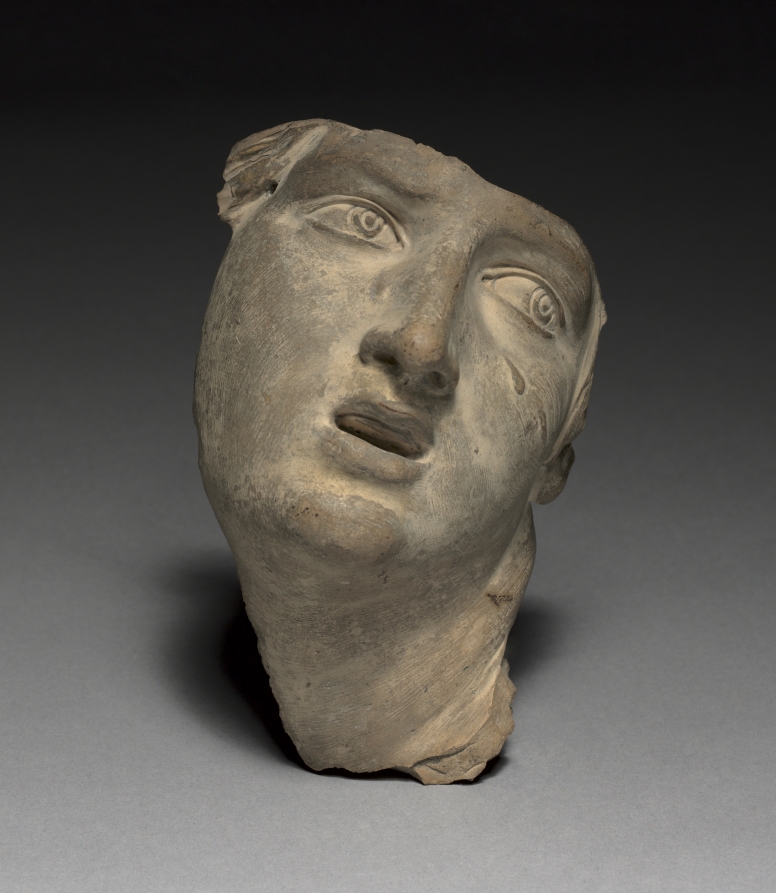
The Head of Proserpina—a conceptual fusion of the Mold Fragment with Musicians and the Mortuary Figure of the Zodiac Sign: Ox (Taurus)—demands a reconfiguration of the executive silhouette. The mold fragment’s defining aesthetic is its “以残见全” (seeing the whole through the fragment), a principle that translates directly into garment construction through deliberate incompleteness. For the 2026 executive wardrobe, this manifests as an oversized shell that does not merely drape but interrupts the body’s outline. The shoulder line is not padded into rigidity; rather, it is cut with a negative-space seam—a deliberate gap between the fabric’s edge and the clavicle’s terminus, allowing the garment to hover rather than cling. This is not casual ease; it is engineered absence, a visual caesura that mimics the mold’s broken rim.
The ox figure contributes a counterweight: compressed mass. Its sculptural volume—dense, low-slung, and earthbound—anchors the silhouette’s lower half. In tailoring, this translates to a coat or jacket with a weighted hem, constructed from double-faced wool or bonded technical twill, so that the fabric falls with the gravity of fired clay. The torso remains voluminous, but the waist is subtly cinched via an internal drawcord—not to feminize or masculinize, but to create a tectonic shift: fabric above, mass below, with the seam line acting as a fault line. The result is a silhouette that reads as both monumental and mobile, a walking architecture that references the ox’s stoic carriage without literal mimicry.
II. Structural Poetics: The Dialectic of Ephemeral and Eternal
A. The Sonic Seam
The mold fragment’s musicians are frozen in a moment of auditory creation. To translate this into fabric, the 2026 silhouette employs acoustic pleating—a technique where vertical, razor-sharp pleats are heat-set at varying depths, creating a surface that catches light and shadow like the ridges of a clay impression. These pleats are not decorative; they are functional memory. When the wearer moves, the pleats momentarily compress and release, producing a visual rhythm that echoes the lost melody. The oversized proportions allow this pleating to run uninterrupted from shoulder to mid-thigh, turning the garment into a portable score. The collar, meanwhile, is cut high and asymmetrical, referencing the fragment’s broken edge—one side stands erect, the other folds inward, suggesting a note cut off mid-phrase.
B. The Zodiacal Block
The ox figure’s role as a celestial guardian demands a structural response in the garment’s back panel. Here, the silhouette introduces a trapezoidal yoke—a panel that widens from the nape to the mid-back, echoing the ox’s broad, patient shoulders. This yoke is constructed from a stiffer interlining, such as horsehair canvas fused with a micro-layer of ceramic-coated nylon, giving it a subtle, armor-like resilience. The front of the garment remains fluid, but the back is architecturally fixed, creating a duality: the wearer faces the world with improvisational ease, yet carries a hidden structure of cosmic order. The sleeves are cut in a modified batwing—not fully dropped, but angled outward from the yoke, so that when arms are lowered, the fabric folds into deep, ox-hide-like creases. This is not a nostalgic nod to historical costume; it is a metaphysical engineering that makes the wearer a vessel for both fleeting sound and eternal stillness.
III. Urban Materiality: Slate as the New Neutral
The color Slate is chosen not for its neutrality but for its geological resonance. It is the color of wet stone after rain, of the mold fragment’s fired clay darkened by centuries, of the ox figure’s patinated surface. In urban environments, slate reads as both camouflage and monument—it absorbs the gray of concrete and glass, yet its undertones of blue and green catch the metallic glare of skyscrapers. For the 2026 executive, this color is applied in layered tonalities: a base of deep slate for the main shell, a mid-slate for the pleated underlayer, and a near-black slate for the internal seams and hardware. This monochromatic stratification creates depth without ornament, aligning with the minimalist luxury ethos.
Materially, the primary fabric is a technical wool-cashmere blend with a matte, stone-like finish, achieved through a sand-washing process that slightly raises the fiber’s surface. This texture mimics the mold fragment’s porous clay, inviting touch while resisting urban grime. For the yoke and hem, a recycled metallic twill—woven with fine stainless-steel threads—provides a subtle sheen, referencing the ox figure’s celestial role without overt sparkle. The lining is a silk-charcoal mesh, breathable and fluid, so that the garment’s interior feels like a second skin against the city’s temperature fluctuations. Every closure is a magnetic snap concealed within the seam, echoing the mold’s hidden musicians—function invisible until activated.
IV. The Definitive Silhouette: A Manifesto for 2026
The final construction is a three-quarter-length duster coat with an integrated, detachable inner vest. The coat’s exterior is the slate technical wool, cut oversized with the acoustic pleating running vertically from the shoulders. The vest, worn beneath, is constructed from the metallic twill, with the trapezoidal yoke and a high, mandarin-style collar. When worn together, the layers create a palimpsest—the vest’s rigid geometry visible through the coat’s open front, like the ox’s form emerging from the mold’s fragmented surface. The coat’s sleeves are finished with internal thumb loops, allowing the wearer to pull the fabric over the hands, transforming the silhouette into a closed, protective mass—a nod to the ox’s self-contained vigilance.
This is not a garment for passive wear. It demands a deliberate posture: shoulders slightly back, pace measured, gaze forward. The oversized volume is not about hiding the body but about claiming space—the way the ox claims its burial mound, the way the mold claims its fragment of history. In the urban context, this silhouette functions as a portable monument, a counterpoint to the fleeting digital interactions of executive life. It asserts that presence is not performative but substantive, that the wearer’s body is a vessel for both the ephemeral (a meeting, a negotiation, a glance) and the eternal (reputation, legacy, the unspoken).
The Head of Proserpina, as a conceptual guide, forces a rejection of the slim, reactive tailoring that has dominated executive fashion for a decade. Instead, it proposes a slow architecture—garments that are built, not cut; that carry weight, not just fabric; that endure, not merely exist. The 2026 silhouette is thus a dialectical resolution: the mold’s broken joy and the ox’s stoic eternity, fused into a single, slate-toned form that walks the city as a living artifact. It is not nostalgic. It is prophetic—a vision of the executive as both musician and guardian, creating sound in silence and order in chaos.