Minimalist
Slate
Urban Form: Dido
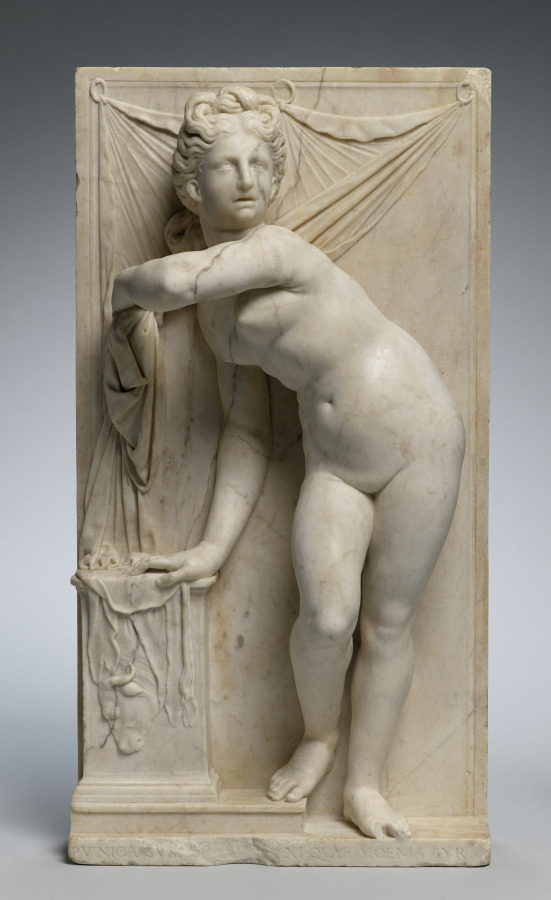
Formal Dialectics: The Structural Grammar of Dido’s Urban Silhouette
The 2026 NYC executive wardrobe demands a departure from decorative excess toward a disciplined interplay of negative and positive space. The subject, Dido—a cipher of Carthaginian resolve and tragic autonomy—provides an archetypal foundation for this research. Yet the operative DNA source, drawn from the juxtaposition of a Buddhist temple plaque and a Han dynasty bronze mirror, offers a more precise technical lexicon: the dialectic between *concave absence* and *convex presence*, between the ephemeral bloom and the eternal orbit. This analysis deconstructs that dialectic into a wearable system, translating ancient material philosophy into a minimalist, slate-toned silhouette engineered for the verticality, velocity, and visual austerity of Manhattan’s executive corridors.I. The Circular Mandate: Reconsidering the Silhouette’s Core Geometry
Both artifacts converge on a shared geometric imperative: the circle. The temple plaque’s *udumbara* flower—carved in layered relief—does not depict a botanical specimen but rather a radial expansion from a void, a bloom that exists as a *suggestion* of form rather than its literal reproduction. The Han mirror, conversely, is a literal circle, its back surface crowded with chariots, deities, and the White Tiger, yet its functional essence lies in its reflective void—a polished emptiness that once returned the viewer’s gaze. For the 2026 executive silhouette, this translates into a rejection of angular, shoulder-forward tailoring in favor of a *softly circular shoulder line*—a sleeve head that rolls without a rigid crease, echoing the plaque’s petal-like layering. The jacket’s hem, however, adopts the mirror’s discipline: a clean, unbroken circumference at the hip, creating a visual terminus that anchors the body. The result is a garment that reads as both *inwardly contemplative* (the concave chest panel) and *outwardly authoritative* (the convex lapel roll). This is not a return to the boxy 1980s power suit; it is a *minimalist reconfiguration* where the circle is implied, not stated—through seam placement, fabric weight, and the subtle arc of a center-back vent.II. Negative Form as Power: The Concave Panel System
The plaque’s carving technique—where the flower emerges from the wood’s recession—offers a radical proposition for garment construction: *power through subtraction*. Traditional executive tailoring builds authority through padding, structure, and volume. Dido’s silhouette inverts this. The chest panel is cut with a *deliberate concavity*, achieved through a fused interlining that is thinner at the sternum and gradually thickens toward the armhole. This creates a shadowed hollow at the center of the torso—a visual analogue to the plaque’s “flowerless flower.” The effect is not weakness but *contained intensity*: the concave panel draws the eye inward, suggesting a reservoir of unspoken strategy, much like the mirror’s tarnished surface no longer reflects the mundane but invites contemplation of the divine. In practical terms, this panel system requires a fabric with *directional stability*—a wool-cashmere blend with a tight twill weave, preferably in a slate hue that absorbs light rather than reflecting it. The slate color is critical: it functions as the garment’s “void,” allowing the concave panels to read as darker recesses without additional pigment. This is not a gimmick; it is a *functional adaptation* of the plaque’s negative-space philosophy to the demands of a boardroom, where visual quietude signals control.III. The Mirror’s Edge: Convex Accents and the Chariot Line
Where the plaque provides the concave, the Han mirror supplies the convex. The mirror’s relief—chariots in motion, deities in procession—is not chaotic; it is a *radial narrative* that circles a central knob. For Dido’s wardrobe, this translates into a *single convex accent*: a sculpted lapel roll that mimics the mirror’s raised rim. Unlike the soft, rounded shoulder, this lapel is *deliberately firm*, its edge pressed to a sharpness that catches ambient light—a metallic glint without metal. The lapel’s width is calibrated to the wearer’s torso, creating a “chariot line” that visually propels the eye from shoulder to hem, suggesting forward motion even at rest. This convex element is paired with a *high, closed placket*—a modern adaptation of the mirror’s central knob. The closure is hidden, with no visible buttons, reinforcing the minimalist mandate. The placket’s vertical line acts as the mirror’s axis, organizing the garment’s internal geometry. The wearer becomes the deity at the center, the chariot lines of the lapels radiating outward, but the overall effect remains *restrained*—a nod to the mirror’s orderly cosmos, not its mythological chaos.IV. Color as Material Philosophy: Slate’s Dual Nature
Slate is not a neutral; it is a *conditional color* that shifts between the plaque’s aged wood and the mirror’s oxidized bronze. In daylight, slate reads as a cool gray with blue undertones—reminiscent of the plaque’s shadowed recesses. Under artificial office lighting, it deepens to a near-onyx, echoing the mirror’s darkened reflective surface. This duality is essential for the 2026 executive, who moves between glass-walled conference rooms and dimly lit evening events. Slate performs the *function of the mirror*: it reflects the environment without becoming environmental. It does not compete with the wearer’s skin tone or the room’s palette; it absorbs and recontextualizes them. Technically, this requires a dye process that uses *unmilled pigments*—particles that sit on the fiber’s surface rather than penetrating deeply. This creates a subtle iridescence, a “bloom” that mirrors the udumbara’s mythical rarity. The fabric’s surface is brushed to a matte finish, eliminating glare, yet the pigment’s uneven distribution ensures that no two garments are identical. This is *deliberate imperfection*—a nod to the plaque’s hand-carved nature, a rejection of mass-produced uniformity.V. The Trousers and Skirt: Extending the Circular Mandate
The lower half of the silhouette must not contradict the upper body’s circular logic. For trousers, this means a *tapered, high-rise cut* with a single forward pleat—a pleat that is pressed but not sharp, allowing a subtle flare at the hem that echoes the plaque’s petal layering. The waistband is curved, not straight, following the body’s natural arc, and is finished with an internal drawstring—a hidden, functional nod to the mirror’s central knob. The trousers’ length is cropped at the ankle, revealing a sliver of skin or sock, creating a “negative space” that visually lifts the wearer, counteracting the fabric’s weight. For a skirt option, the design adopts the mirror’s radial composition: a *gored skirt* with eight panels, each cut on the bias to create a gentle swirl when in motion. The skirt’s hem is weighted with a hidden chain, ensuring it falls in a perfect circle when static—a direct homage to the Han mirror’s form. The waistband is high and structured, but the skirt’s volume is controlled, never exceeding a 90-degree arc from the body’s center. This is not a ballgown; it is a *functional cylinder* that moves with precision, its internal structure invisible but felt.VI. Layering as Temporal Dialogue: The Vest and the Scarf
The 2026 executive wardrobe must accommodate New York’s thermal volatility without sacrificing the silhouette’s integrity. A *sleeveless vest*—cut with the same concave chest panel as the jacket—serves as an interior layer, its slate tone slightly lighter to create a tonal hierarchy. The vest’s armholes are bound with a self-fabric trim that mimics the plaque’s carved edges, adding a tactile dimension. Over this, a *scarf*—not a decorative accessory but a structural one—is cut from a double-faced wool, one side slate, the other a deeper onyx. The scarf is worn not draped but *folded into a precise rectangle* and tucked under the jacket’s lapel, functioning as a “mirror’s rim” that frames the face. This is a deliberate nod to the mirror’s deities: the wearer’s face becomes the central icon, the scarf a ceremonial frame.VII. Conclusion: The Silhouette as a Meditative Instrument
Dido’s urban silhouette is not a costume; it is a *technical response* to the philosophical challenge posed by the temple plaque and the Han mirror. The concave panels and convex lapels, the slate color’s conditional nature, the circular hems and weighted skirts—all coalesce into a garment system that functions as a *wearable meditation on absence and presence*. In a city where visibility is currency, this silhouette offers a different form of power: the authority of the void, the confidence of the unstated. The wearer does not announce themselves through volume or ornament but through the *precision of their negative space*. This is the 2026 executive—not louder, but more *legible* in their restraint. The mirror no longer reflects; it *projects*. The flower no longer blooms; it *implies*. And the suit, in slate, becomes the vessel for both.
Technical Insight
NYC Perspective: Translating Slate tones into Minimalist silhouettes.