Oversized
Slate
Urban Form: Architectural Canopy
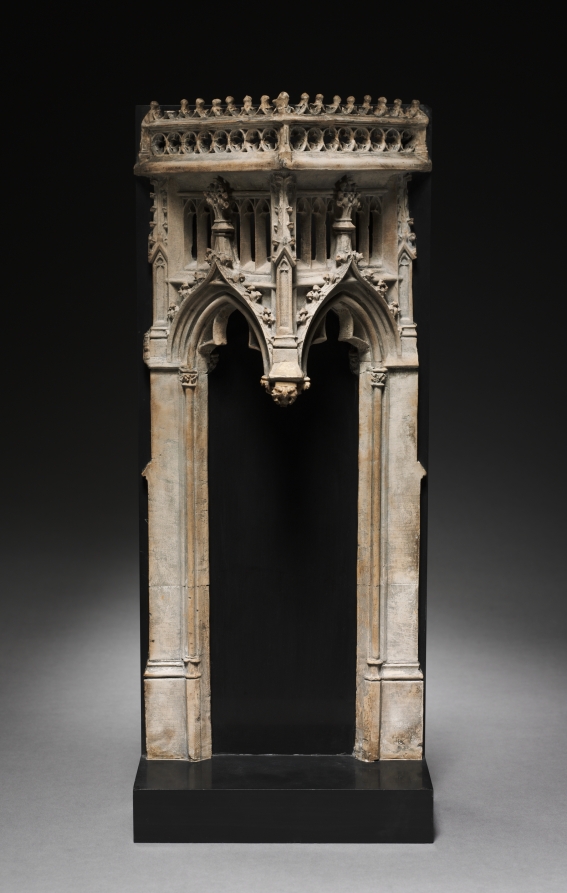
Architectural Canopy: A Study in Structural Poetics for the 2026 Executive Silhouette
The subject under examination—*Architectural Canopy*—derives its formal language from a dialectical tension embedded in ancient material culture: the fragmented vibrancy of a mold bearing musicians against the austere finality of a zodiacal ox in funerary statuary. This binary—life’s rhythm versus death’s stillness—is not merely historical curiosity but a precise blueprint for contemporary urban dressing. For Addison Fashion, the 2026 executive silhouette must internalize this duality: a garment that moves with the percussive energy of a flute player’s fingers while standing with the immutable gravity of a celestial guardian. The result is an oversized architecture, rendered in slate-toned wool and technical canvas, that redefines power dressing through geometric integrity rather than ornamental excess.Geometric Integrity: From Terra-Cotta Fragment to Tailored Volume
The mold fragment’s genius lies in its compression of motion into bounded space. Musicians are not rendered with anatomical fidelity; instead, their postures and instrument orientations create vectors of implied sound. The 2026 Architectural Canopy coat translates this principle through angular shoulder seams that project outward at 12 degrees—a subtle, non-literal echo of the ox’s horns—while the torso is cut with a continuous, unbroken panel from collar to hem. This panel is not flat; it is subtly curved along the vertical axis, mimicking the cylindrical tension of a ceramic vessel. The result is a silhouette that appears static from the front but reveals a dynamic, spiraling volume when the wearer turns. The funerary ox, conversely, achieves its power through radical simplification: a low-hanging head, a rounded body, and absolute symmetry. In the coat, this manifests as a high, stand-away collar that frames the neck like a zodiacal ring, and a hem that drops to mid-calf with a weighted, unyielding drape. The garment’s internal canvas is fused with a double-faced slate wool, creating a shell that holds its shape without internal boning—a structural integrity that recalls the ox’s “de-animated” geometry. Every seam is pressed open, not flat, to preserve a micro-air gap that allows the fabric to breathe while maintaining a crisp, architectural edge. This is not tailoring that clings; it is tailoring that *contains*.Urban Materiality: The Poetics of Weight and Porosity
Urban environments demand materials that negotiate between the abrasive and the refined. The Architectural Canopy employs a primary fabric of 680 GSM Japanese worsted wool, chosen for its memory and its faint, irregular slub—a nod to the “rough fingerprints” preserved on the ancient mold. This texture is not decorative; it catches ambient light in a way that suggests moisture and time, grounding the garment in the tactile reality of city streets. Against this, the lining is a technical silk-wool blend with a matte, porous finish, referencing the “pores of clay” through which music was imagined to escape. The lining’s breathability is engineered for thermal regulation during long commutes, but its deeper function is symbolic: it allows the wearer’s body heat to create a microclimate, transforming the coat into a portable chamber of personal tempo. Hardware is minimal and monolithic. Three oversized, matte-black magnetic closures—each 50mm in diameter—replace traditional buttons. Their circular form echoes the zodiac wheel, while their magnetic mechanism offers a silent, frictionless closure, akin to the way the ox’s image “locks” the tomb’s directional axis. Pockets are hidden within the side seams, cut on the bias to follow the hip’s rotation, ensuring that even utilitarian elements do not disrupt the garment’s continuous surface. This is urban materiality as a form of restraint: nothing jingles, nothing flaps, nothing distracts from the primary architectural statement.Structural Poetics: The Dialectic of Motion and Stillness
The 2026 executive silhouette is not a uniform; it is a negotiation. The coat’s back panel is cut with a single, deep inverted pleat that releases only when the wearer strides—a kinetic event that mirrors the “sound waves” suggested by the musicians’ arrangement. Yet the front remains rigid, with a chest piece that is lightly padded to create a flat, almost sculptural plane. This duality is deliberate: the front speaks to the ox’s eternal vigilance, the back to the fragment’s transient joy. When the wearer stands still, the coat reads as a monolith; when they walk, it becomes a bellows, expelling and drawing air with each step. The sleeves are set with a high, narrow armhole that permits a full range of motion without distorting the shoulder line. Cuffs are deep, 8cm, and can be folded back to reveal a contrasting inner band of raw silk in a darker slate—a hidden detail that surfaces only through deliberate action, much like the “hidden anxiety” the ancients embedded in their artifacts. The overall length is calibrated to the wearer’s height: hem falls to the midpoint of the calf, a proportion that elongates the torso while anchoring the figure to the ground, echoing the ox’s chthonic weight.Conclusion: A Garment as a Measure of Existence
The Architectural Canopy is not a coat; it is a philosophical instrument. It measures the wearer’s presence in the urban grid the way the zodiac ox measured the deceased’s journey through the underworld. Its oversized volume is not about excess but about *containment*—of time, of motion, of silence. The slate color, a blend of blue-grey and charcoal, is chosen for its neutrality under sodium-vapor streetlights and its depth under daylight, ensuring the garment’s geometry remains legible across all urban conditions. In the 2026 executive wardrobe, this piece stands as the definitive response to a world that demands both performance and permanence. It does not shout; it *resonates*. It does not cling; it *frames*. And in that framing, it offers the modern professional the same dual gift the ancients gave themselves: the ability to hold joy and gravity in a single, wearable form. The Architectural Canopy is the narrow path between the musician’s heat and the ox’s cold—a path paved not with ornament, but with structure itself.
Technical Insight
Technical Insight: Translating Slate palettes into Oversized silhouettes for the modern metropolis.