Minimalist
Slate
Urban Form: Helmet Mask
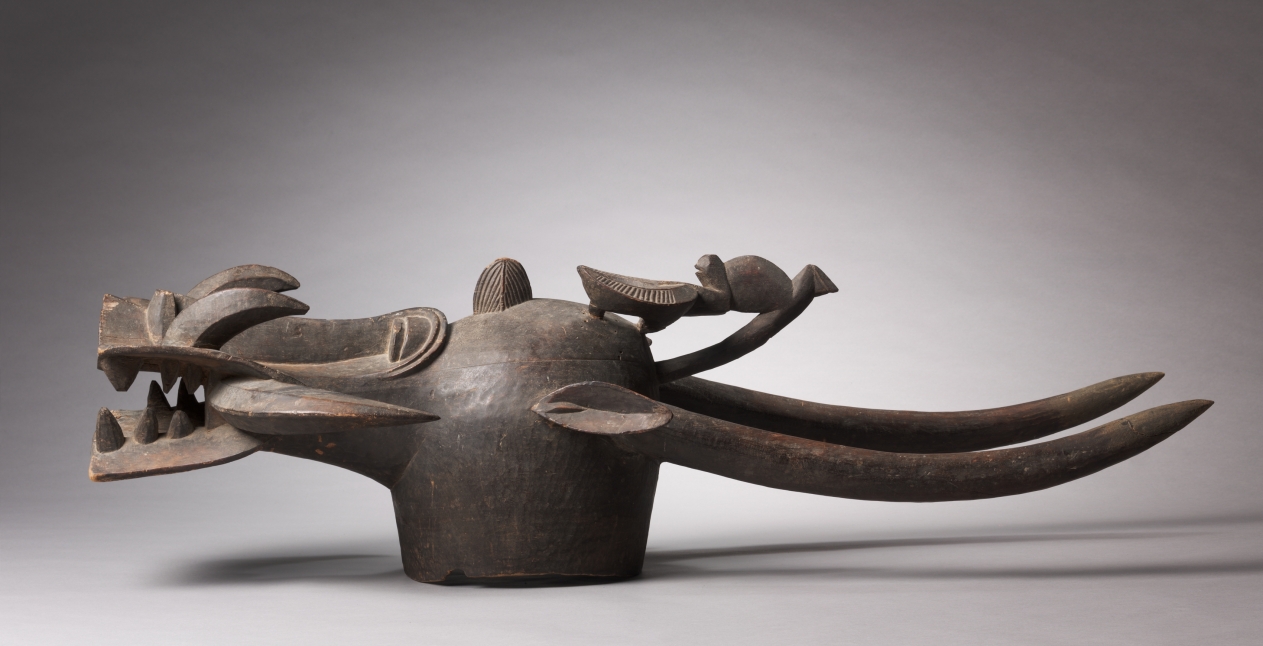
Technical Deconstruction: The Helmet Mask as a Study in Negative Space and Material Discipline
The helmet mask—an object of concealment, protection, and ritual transformation—offers a provocative architectural template for the 2026 NYC executive wardrobe. Unlike the theatricality of a face mask or the fragility of a veil, the helmet mask commands presence through volumetric reduction. It does not exaggerate; it encloses. Its form is a continuous shell, a single unbroken plane that wraps the cranium, eliminating seams, interruptions, and decorative excess. For Addison Fashion, this translates into a design philosophy rooted in *compressive minimalism*—garments that do not drape, but rather define space through deliberate, engineered containment.Formal Logic: The Shell as a Silhouette Generator
The helmet mask’s primary formal characteristic is its *monolithic curvature*. Whether derived from Edo-period firefighter’s hoods or the lacquered *kabuto* of samurai armor, the underlying geometry is consistent: a smooth, convex surface that tapers toward the jawline, with no protruding appendages. In contemporary womenswear and menswear, this translates to the **cocoon shoulder**—not the exaggerated puff of the 1980s, but a subtle, forward-rolled seam that creates a continuous line from the acromion to the occipital base. The shoulder pad is abolished; instead, the garment’s structure is achieved through *interfacing and bonded canvas*, allowing the fabric to hold its own arc without visible darts. Consider the **stand-away neckline**—a direct citation of the helmet’s lower rim. The collar is not a separate component but an extension of the bodice, folded inward and pressed to create a crisp, architectural edge. This eliminates the visual noise of lapels or buttons, forcing the eye to trace the uninterrupted perimeter. In a slate-toned wool crepe, this neckline reads as severe yet serene, echoing the Zen calligraphy of Ikkyū Sōjun—where each stroke is final, unretouched, and carries the weight of intention. The **sleeve integration** is equally critical. The helmet mask’s lack of articulation between head and neck suggests a garment where the sleeve is cut in one with the torso—a *kimono-sleeve derivative*, but executed with Western tailoring precision. The underarm gusset is eliminated; instead, the fabric is folded and pressed to allow a 90-degree arm raise without excess material. This is not a relaxed silhouette. It is a *controlled range of motion*, akin to the disciplined brushwork of a Zen master—every movement is deliberate, and the garment responds with silent compliance.Color Theory: Slate as a Non-Color, a Philosophical Void
The selection of **Slate** is not arbitrary. It is the chromatic equivalent of the helmet mask’s psychological function—neither black (absolute negation) nor grey (passive neutrality), but a *cool, mineral-infused tone* that absorbs light without reflecting emotion. Slate sits between the tangible and the abstract, much like the *瓦形砚铭文* (tile-shaped inkstone inscription) that bridges utility and contemplation. In the 2026 executive wardrobe, slate functions as a **grounding agent**. It does not compete with the wearer’s skin tone or the surrounding environment; instead, it creates a visual silence that amplifies the silhouette’s structural clarity. This is a departure from the current trend of saturated jewel tones or aggressive monochromes. Slate is the color of *withdrawal*—a deliberate retreat from the noise of digital communication and open-plan offices. It signals that the wearer’s authority is not derived from spectacle, but from *presence through absence*. Technically, slate is achieved by mixing a high proportion of grey with a trace of blue-violet undertone. In fabric, this requires a **yarn-dyed weave** rather than piece-dyeing, ensuring that the color has depth—not flatness—when viewed under fluorescent office lighting. The fabric’s surface should be *sanded or brushed* to create a matte finish, eliminating any sheen that might suggest synthetic luxury. This aligns with the Zen principle of *wabi-sabi*: the beauty of imperfection, the acceptance of material transience. A slate wool twill with a subtle, irregular slub texture is ideal—it catches light in micro-variations, mimicking the organic unevenness of hand-brushed ink on paper.Materiality and Construction: The Invisible Engineering
The helmet mask’s power lies in its *apparent simplicity* masking complex internal structure. Similarly, the Addison garment must employ **hidden architecture**: - **Fused front panels** with a 45-degree bias cut to allow the shell to flex without wrinkling. - **Internal stay-stitching** at the center back to maintain the helmet’s forward-leaning posture. - **Weighted hems**—not visible, but sewn into the lining—to ensure the garment falls with gravitational certainty, never floating or fluttering. The **closure system** is a critical innovation. Traditional buttons or zippers are rejected. Instead, a *concealed magnetic placket* is used, allowing the garment to close flush, with zero visual interruption. This is a nod to the helmet mask’s seamless enclosure—the wearer steps into the garment, and it seals like a shell, creating a private, meditative space within the public sphere.Application to the 2026 NYC Executive Wardrobe
For the female executive, this translates into a **slate-toned, single-seam overcoat** worn over a matching shell top and tapered trouser. The coat’s collar is pressed to a 2.5-inch stand, echoing the helmet’s rim. The trouser is cut with a *high, extended waistband* that mimics the mask’s lower jawline—anchoring the torso, creating a continuous column from shoulder to ankle. No belt, no pocket flaps, no visible stitching. The result is a uniform of *quiet authority*, suitable for boardrooms, courtrooms, and creative studios alike. For the male executive, the helmet mask informs a **slate double-breasted jacket with a suppressed waist**—not nipped, but *sculpted* through side-body panels that curve inward, then flare slightly at the hip, referencing the helmet’s flared base. The lapel is a *notchless, shawl-like extension* that folds over the chest, creating a continuous line from shoulder to sternum. Paired with a high-rise, straight-leg trouser in the same slate, the ensemble reads as a modern *kamishimo*—formal, armored, yet devoid of feudal nostalgia.Philosophical Resonance: The Garment as a Meditative Vessel
The helmet mask’s ritual function—to transform the wearer into a vessel for the divine—finds its secular equivalent in the executive’s daily performance. The slate garment does not merely clothe; it *contains*. It creates a boundary between the self and the chaotic external world, much like Ikkyū’s ink strokes that capture a moment of enlightenment within a finite frame. The wearer, encased in this minimalist shell, is freed from the tyranny of choice and ornamentation, allowing focus to shift inward—to strategy, to presence, to the *silent dialogue* between intention and action. In a city where visual noise is constant, the helmet mask silhouette offers a radical alternative: *the power of refusal*. Refusal to embellish, refusal to conform to seasonal trends, refusal to announce one’s status through logos or color. This is the 2026 Addison executive—a figure of slate-toned stillness, moving through Manhattan with the quiet precision of a Zen brushstroke, leaving no trace but a lasting impression.
Technical Insight
NYC Perspective: Translating Slate tones into Minimalist silhouettes.