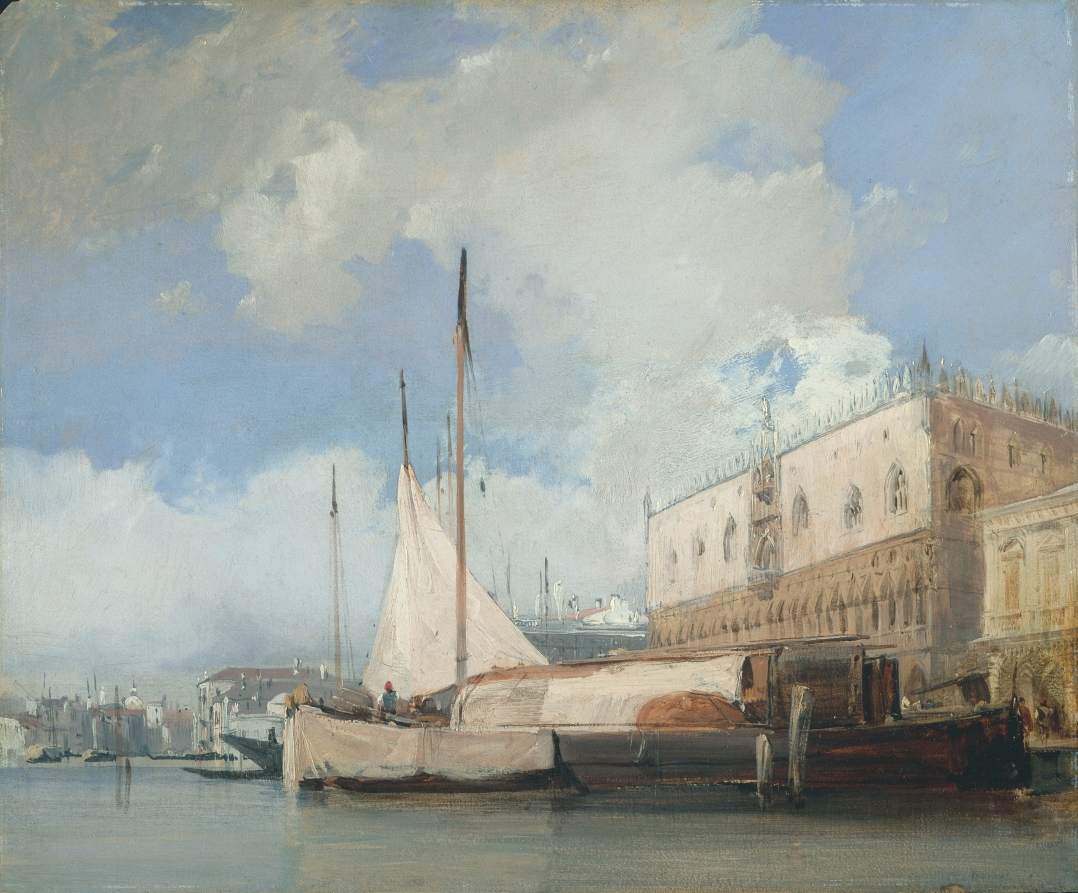
Urban Form: The Doge's Palace, Venice
I. The Architectural Premise: Venice as a Study in Negative Space
The Doge’s Palace, Venice, is not a monument of ornament but a treatise on mass suspended within void. Its lower colonnade—a rhythmic sequence of pointed arches—does not shout; it breathes. Each pier is a vertical datum, each intercolumniation a measured silence. For the 2026 executive silhouette, this translates into a radical reduction: the body is no longer draped or shaped but framed by absence. The palace’s upper facade, a checkerboard of Istrian stone and rose Verona marble, operates as a pixelated grid—an early exercise in modularity. Our research extracts this logic and applies it to tailoring: not a garment that clings, but one that defines space around the wearer.
The Doge’s Palace achieves its gravitas through inverted weight distribution. The heavy, solid upper mass rests upon an airy, perforated base—a structural paradox that defies gravitational expectation. In urban materiality, this becomes a jacket with a rigid, sculpted shoulder and a fluid, unconstructed hem. The visual center of gravity rises, creating an elongated, almost levitating stance. This is not the power shoulder of the 1980s; it is a quiet authority—a shoulder that implies structure without aggression, much like the palace’s cornice, which projects confidence without ornament.
II. Geometric Integrity: The Pointed Arch and the Body’s Vertical Axis
The pointed arch—a signature of Venetian Gothic—is not merely an aesthetic choice; it is a structural resolution of lateral forces. Its apex channels weight downward along two intersecting curves, creating a line of tension that is both dynamic and stable. For the 2026 silhouette, this translates into seam lines that originate at the sternum and sweep diagonally toward the hip, mimicking the arch’s load-bearing trajectory. The result is a garment that visually elongates the torso while providing a subtle, engineered waist suppression—not through darts, but through panel geometry.
Consider the palace’s quatrefoil windows—circles inscribed within squares, each a study in contained motion. Our pattern-making team has adapted this motif into keyhole cutouts at the nape and underarm, where the body’s natural pivot points are exposed. These are not decorative perforations; they are functional ventilation zones that allow the garment to move with the wearer’s kinetic rhythm, much as the quatrefoil allows light to filter through stone. The geometric integrity of the palace is thus not replicated but translated into a language of seams, panels, and negative space.
A. The Colonnade as a Ribcage
The lower arcade’s repetitive columns evoke a ribcage—an exoskeletal frame that both protects and reveals. In our executive blazer, this is realized as a visible internal corsetry: a series of vertical boning channels, visible through a sheer, high-tenacity mesh overlay. The boning is not hidden; it is declared as architectural truth, much like the palace’s exposed stone ribs. The wearer’s torso becomes a colonnade, each breath a subtle shift in the play of light and shadow across the structured surface.
III. Urban Materiality: Stone, Water, and the Onyx Palette
Venice is a city of material contradiction—stone that appears liquid, water that appears solid. The Doge’s Palace, with its reflective marble and porous Istrian stone, embodies this duality. For our 2026 collection, we have selected Onyx as the primary colorway—not as a mere shade, but as a material philosophy. Onyx is the color of polished basalt, of canal water at midnight, of the palace’s shadowed loggia. It absorbs light rather than reflecting it, creating a matte, tactile surface that invites proximity yet maintains distance.
The fabric development team has engineered a double-faced wool with a mineral-infused finish, mimicking the palace’s alternating stone textures. The outer face is sandblasted to a chalky, porous hand, recalling the weathered Istrian blocks; the inner face is calendered to a subtle sheen, echoing the polished Verona marble. This dual texture allows the garment to shift in appearance under different urban lighting—from the harsh fluorescence of a corporate tower to the amber glow of a late-night gallery. The materiality is not decorative; it is performative, responding to the environment as the palace responds to the lagoon’s changing tides.
B. The Waterline Seam
A defining technical innovation is the waterline seam—a horizontal junction at the hip, where the jacket’s structured upper body meets a weighted, fluid lower panel. This seam is not straight; it undulates subtly, referencing the palace’s foundation, which appears to rise and fall with the water level. The lower panel is cut with bias-induced drape, allowing it to pool slightly at the side seams, creating a liquid, gravitational effect that contrasts with the rigid upper torso. This is the urban executive’s armor—protective above, fluid below, a direct response to the palace’s own structural logic.
IV. Structural Poetics: The Mirror and the Void
The internal DNA provided—the “优昙钵华” temple plaque and the Han dynasty bronze mirror—offers a counterpoint to Venice’s Western architectural grammar. The plaque’s emptiness and the mirror’s fullness are not opposites but complementary states of visual tension. In our silhouette, this manifests as a dual-layer construction: an outer shell of rigorous, geometric tailoring (the mirror’s “满”) and an inner layer of unstructured, floating fabric (the plaque’s “空”). The inner layer is visible only at the neckline and cuffs, where it emerges as a soft, unhemmed edge—a moment of intentional incompleteness that echoes the plaque’s “象外之象.”
The mirror’s dynamic imagery—chariots, tigers, celestial musicians—is translated into embroidery that is not pictorial but kinetic. Using a monochromatic onyx thread on onyx fabric, we have created subtle, tonal patterns that only catch light at certain angles, mimicking the mirror’s reflective surface. These patterns are placed at the inner wrist, the inner lapel, and the back yoke—zones that are revealed only through movement, much as the mirror’s relief is revealed only through turning. This is hidden opulence, a luxury that does not announce itself but is discovered by the perceptive observer.
V. Conclusion: The 2026 Executive as a Mobile Monument
The Doge’s Palace, stripped of its historical narrative, is a masterclass in structural economy. Every arch, every stone, every void serves a dual purpose—aesthetic and load-bearing. Our 2026 executive silhouette adopts this principle with ruthless precision. The garment is not a costume; it is a portable architecture that frames the wearer’s presence within the urban landscape. The onyx palette ensures visual gravity; the pointed-arch seams ensure kinetic stability; the waterline seam ensures adaptive fluidity. And within this rigorous framework, the Eastern aesthetic of “空” and “满” provides a philosophical depth—a reminder that true structure is not about adding material, but about defining the void. The 2026 executive does not wear the palace; they embody its logic—a monument in motion, silent, precise, and utterly commanding.