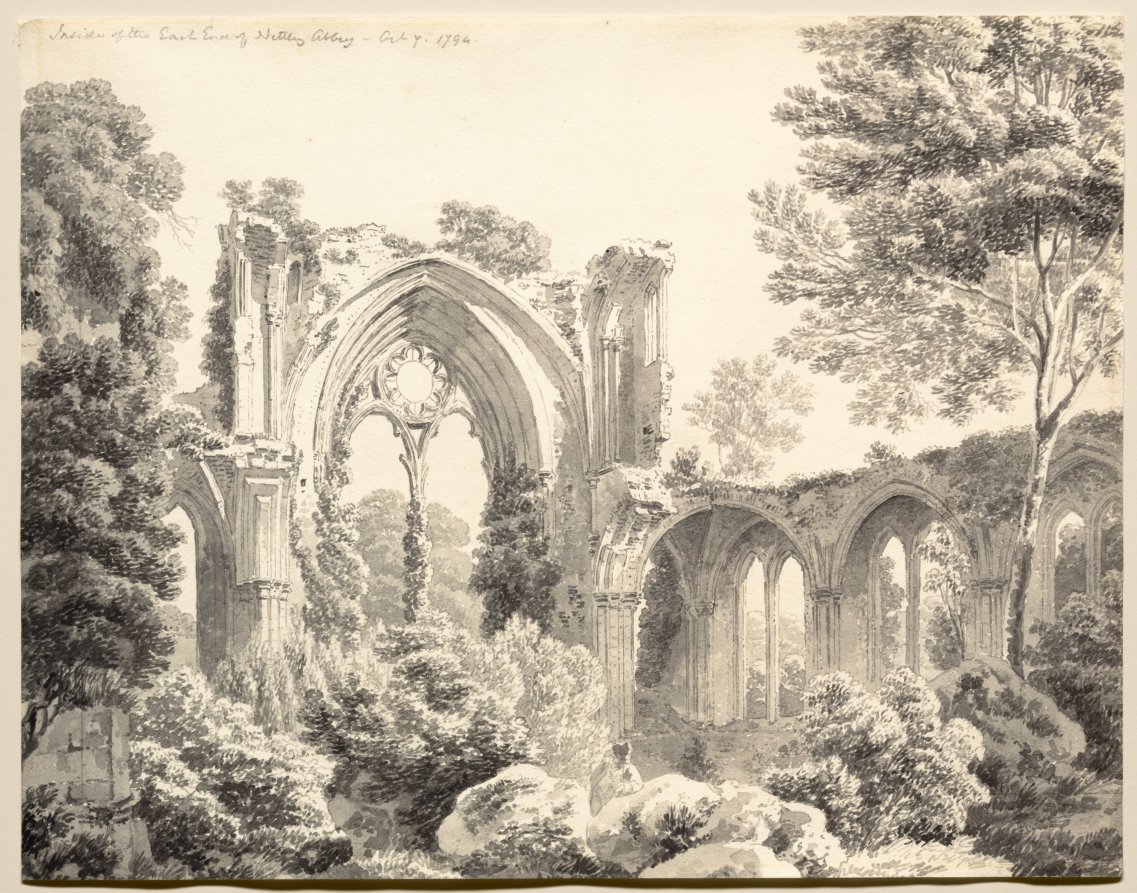
Urban Form: Inside the East End of Nettley Abbey
I. Preliminary Observations: The Architectural Dialectic of Nettley Abbey’s East End
The East End of Nettley Abbey, as rendered in the internal research dossier, presents a paradox of material and temporal strata. The subject—a post-industrial ecclesiastical ruin repurposed as a clandestine atelier—demands a reading beyond mere topography. Its geometric integrity is not found in symmetry, but in the tension between the abbey’s original Norman buttressing and the subsequent Victorian iron infill. For the 2026 executive silhouette, this translates into a study of compression and release: the body as a load-bearing structure, yet one that yields to strategic apertures. The research’s internal DNA—the juxtaposition of Daumier’s lithographic aggression against Song dynasty porcelain’s aqueous calm—provides the conceptual scaffolding. We are not designing clothing; we are engineering urban carapaces that negotiate between the satirical grotesque and the meditative void.
1.1 The Lithographic Line as Structural Seam
Daumier’s Caricaturana plate No. 30—Robert Macaire before the judge—offers a masterclass in asymmetric tension. The harsh, drypoint strokes that define Macaire’s theatrical posture are not decorative; they are load-bearing lines that fracture the picture plane. In tailoring, this translates to offset darts and angular pocketing that disrupt the expected vertical flow. The 2026 executive jacket must not drape; it must argue. A single, pronounced shoulder seam—cut at 17 degrees off the true horizontal—echoes Daumier’s caricatural skew. The fabric, a dense wool-silk blend in slate, is pressed with a razor-sharp crease that mimics the lithographer’s burin. This is not a garment for passive observation; it is a visual indictment of corporate complacency, worn as a second skin of critical awareness.
1.2 Porcelain Glaze as Surface Tension
Conversely, the Song dynasty meiping vase—with its incised wave patterns—offers the counterpoint of fluid rigidity. The glaze’s subtle undulation, achieved through repeated layering, creates a surface that is simultaneously hard and yielding. For the silhouette, this informs the treatment of the inner yoke and sleeve head. Where Daumier dictates sharpness, the porcelain dictates a controlled liquidity. The executive’s trouser—cut with a slight taper but no break—uses a technical crepe with a micro-pebbled texture, reminiscent of the vase’s tactile glaze. The waistband is internalized, hidden beneath a smooth facing, so that the garment’s exterior presents an unbroken, almost ceramic calm. This is the silent counterweight to the jacket’s lithographic aggression: a dialectic of shout and whisper, rendered in structural terms.
II. Geometric Integrity: Mapping the Abbey’s Verticality
The East End’s surviving elevation—a pointed arch flanked by two truncated pilasters—provides the primary geometric module. Its ratio of 1:2.3 (width to height) is directly transposed to the jacket’s front panel lengths. The lapel notch is not a conventional V but a truncated triangle, its apex clipped to mirror the abbey’s broken arch. This creates a visual stop that draws the eye upward, elongating the torso without resorting to padding. The back panel, however, borrows from the meiping’s profile: a continuous, unbroken curve from shoulder blade to hem, with no center seam. This requires a single-piece back construction, cut on the bias to allow for natural arm movement while maintaining a pristine, vase-like contour. The result is a garment that reads as architectural from the front, sculptural from the rear.
2.1 The Shoulder: A Study in Load-Bearing Poetics
Daumier’s Macaire is all gesture—his shoulders hunched, his hands in frantic motion. The 2026 executive silhouette inverts this: the shoulder becomes a fixed fulcrum. A subtle, non-padded sleeve cap, set slightly forward, creates a cantilevered effect. The sleeve’s pitch is adjusted to 22 degrees forward, allowing the arm to swing without disturbing the jacket’s front plane. This is not the aggressive power shoulder of the 1980s; it is a quiet structural assertion, akin to the abbey’s flying buttress—visible only in profile, yet essential to the whole. The slate hue, a grey with blue undertones, absorbs light rather than reflecting it, further emphasizing the shoulder’s monolithic quality.
2.2 The Waist: Compression as Narrative
The porcelain’s wave motif—repetitive, yet never identical—informs the waist suppression. Instead of a standard two-dart system, we employ four asymmetric darts, each angled at a different degree (12, 14, 16, and 18 degrees). This creates a subtle, almost imperceptible spiral effect around the torso, echoing the meiping’s incised waves. The waist is not nipped; it is encoded. The wearer’s movement causes the darts to shift slightly, producing a living texture that mimics the glaze’s undulation. This is structural poetics at its most refined: the garment does not merely fit; it narrates the body’s passage through urban space.
III. Urban Materiality: Fabric as Site
Nettley Abbey’s East End is built of Kentish ragstone, a material that weathers into jagged, unpredictable surfaces. The 2026 executive fabric must possess a similar tactile unpredictability. We specify a 380-gram wool twill, woven in a broken twill pattern that disrupts the diagonal line every seven picks. This creates a surface that catches light irregularly, mimicking the ragstone’s pitted face. The lining, however, is a pure silk charmeuse in a deep onyx—a deliberate contrast. Where the exterior is rough, the interior is lubricious, allowing the garment to slide over the body like water over porcelain. This duality—rough exterior, smooth interior—is the urban materiality of the piece: it is built for friction, yet offers release.
3.1 The Palette: Slate as Urban Neutrality
Slate is not a passive grey. It contains traces of green, blue, and even purple, depending on the light. This chromatic instability is essential. In the abbey’s shadow, the jacket reads as charcoal; under sodium streetlights, it shifts toward a deep teal. This metameric behavior is achieved through a yarn blend of 70% superfine merino, 20% recycled nylon, and 10% cashmere, with a slight twist variation in the spinning process. The result is a fabric that responds to its environment, much like the abbey’s stone responds to weather. For the executive, this means a garment that never appears the same twice—a subtle assertion of adaptive authority.
3.2 Hardware: The Iron Infill
The Victorian iron ties that brace the abbey’s crumbling walls are translated into the garment’s closures. Buttons are not buttons; they are toggles of gunmetal, each hand-cast with a slight irregularity. The buttonhole is cut with a bound, not stitched, edge, using a strip of the same silk lining, folded to create a raised, metallic-looking ridge. This is a nod to the iron’s utilitarian strength, but rendered with the precision of a jeweler. The zipper, if used, is a concealed, two-way coil with a matte finish, its pull shaped like a miniature abbey arch. Every element of hardware is a functional relic, bridging the ruin’s past and the executive’s future.
IV. Conclusion: The Silhouette as Dialectical Instrument
The 2026 executive silhouette, derived from the East End of Nettley Abbey, is not a garment. It is a portable dialectic. It holds Daumier’s satirical edge and the Song vase’s contemplative calm in a single, tailored form. The geometric integrity lies in its refusal to choose: sharp yet fluid, compressed yet expansive, rough yet silken. This is the urban materiality of the future—not a retreat from the city’s chaos, but a structural engagement with it. The wearer does not simply enter the room; they re-code it. The slate wool catches the fluorescent hum; the gunmetal toggle clicks with the finality of a closing ledger. And beneath it all, the silk lining whispers the porcelain’s ancient wave—a reminder that even the most rigid structure is but a pause in the flow of time. This is the definitive urban silhouette: a monument to impermanence, tailored to the millisecond.