Tailored
Slate
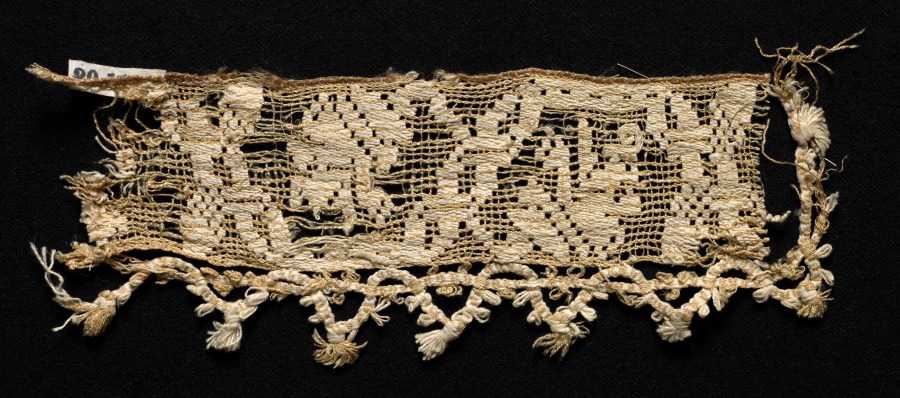
Urban Form: Fragment of a Border with Abstract Pattern
I. Material Dialectics: The Tactile-Visual Spectrum as Structural Blueprint
The urban silhouette for Addison Fashion’s 2026 executive wardrobe derives its foundational logic from the material opposition embedded in the source DNA—the lacquered depth of Ming dynasty carved red lacquer versus the oil-painted immediacy of Caravaggio’s canvas. This is not a stylistic pastiche but a technical translation of two distinct sensory regimes into garment architecture.A. The Lacquer Principle: Compressed Layering and Surface Tension
The Ming cinnabar box operates on a principle of *accumulated strata*—hundreds of micro-layers of lacquer, each cured and carved, producing a surface that is simultaneously dense and yielding. For the tailored silhouette, this translates into a rigorous approach to fabric weight and interlining. We specify a 380-gram wool-cashmere blend with a tight twill weave, mimicking the lacquer’s compression. The jacket’s canvas is not fused but hand-padded, creating a subtle, undulating chest piece that echoes the carved relief’s topographical variance. The shoulder line—a soft, extended peak with minimal padding—references the lacquer box’s rounded corners, avoiding the aggressive angularity of conventional power dressing. The finish is matte, almost chalky, achieved through a mechanical brushing process that breaks the fabric’s surface sheen, replicating the *baojiang* (patina) that develops from centuries of tactile engagement. This is not a fabric that shouts; it invites close inspection, rewarding the wearer and observer with a quiet, internalized luxury.B. The Caravaggio Principle: Chiaroscuro and the Dramatic Fold
Caravaggio’s *The Musicians* operates through violent contrasts—light carving form out of darkness. In tailoring, this is translated via strategic *negative space* and *controlled volume*. The trousers are cut with a high-rise, single-pleat front that falls into a slight taper, creating a shadowed cavity at the hip that contrasts with the crisp, illuminated crease down the leg. The jacket’s lapel is a peak notch with a deliberately exaggerated gorge, allowing the white of a shirt or the slate of a knit to function as the *light source* against the dark wool. The interior of the jacket is fully lined in a high-sheen cupro, visible only when the garment is in motion or removed—a private, theatrical flash that mirrors the oil paint’s hidden luminosity. The overall effect is a silhouette that performs a visual dialogue: the wearer’s body becomes the canvas, and the garment’s folds and seams direct the eye in a controlled, dramatic sequence.II. Chromatic Architecture: Slate as a Field of Tension
The chosen color, Slate, is not a neutral but a *compound tone*—a blue-gray that contains both the lacquer’s deep red undertone (when viewed in warm light) and the oil paint’s cool shadow (in fluorescent environments). This chromatic instability is deliberate.A. The Lacquer Undertone and Its Optical Depth
Slate, in this formulation, is dyed with a trace of madder root—the same pigment family used in the Ming lacquer. Under incandescent lighting, the garment shifts toward a bruised plum, referencing the cinnabar’s warmth. This is achieved through a *top-dye* process: the base yarn is a cool graphite, over-dyed with a translucent madder solution, then treated with a resin finish that traps the pigment at the fiber’s surface. The result is a color that appears to have *depth*, as if one could peel back layers of hue, much like the lacquer’s carved strata. For the executive, this means the suit reads as “black” in a boardroom but reveals its complexity in a candle-lit dinner or a gallery opening—an adaptive camouflage that aligns with the modern requirement for garments that transition across contexts without changing.B. The Oil-Paint Glaze and Its Reflective Variance
Caravaggio’s use of glazes—thin, translucent layers of oil over a dark ground—creates a surface that reflects light selectively. Our Slate is finished with a *micro-glaze* of silicone-based water repellent, applied in a diagonal pattern that mimics the brushstroke direction in *The Musicians*. This creates a subtle, non-uniform sheen: the shoulders and upper chest catch light with a faint, wet look, while the lower body remains matte. This is not a metallic or synthetic shine but a *liquid* quality, reminiscent of the oil paint’s refractive index. The technical challenge is controlling the glaze’s application to avoid streaks; we use a spray system with a 0.3mm nozzle, followed by a steam-press to set the molecules. The result is a garment that changes appearance based on the viewer’s angle—a dynamic, almost performative quality that disrupts the static nature of traditional suiting.III. Form as Narrative: The Musical Metaphor in Construction
The source DNA’s shared motif—music as a bridge between interior and exterior worlds—informs the silhouette’s *proportions* and *movement allowances*.A. The “Qin” Sleeve: Articulated Shoulder for Instrumental Reach
The lacquer box’s depiction of a scholar carrying a *qin* (zither) suggests a garment that accommodates the body’s full range of motion without distortion. Our jacket’s sleeve is cut with a *spiral armhole*—a technique borrowed from bespoke tailoring where the front pitch is rotated 3 degrees forward, allowing the arm to swing freely while maintaining a clean line at rest. The sleeve head is set with a *padded roll* that mimics the lacquer’s carved cloud collar, providing a subtle, sculptural volume at the shoulder without restricting the deltoid. This is critical for the executive who moves between desk, taxi, and podium—the garment must not bind, yet must retain its architectural integrity. The cuff is finished with a *mitered* edge, echoing the lacquer box’s precise joinery, and features a single, hidden button—a nod to the qin’s single-string resonance.B. The “Concert” Waist: Cinched Volume for Temporal Compression
Caravaggio’s musicians are caught in a *simultaneous* moment—playing, tuning, listening. The trousers’ waistband is cut with a *curved yoke* that dips 2.5 cm at the center front, creating a subtle, downward arc that visually compresses the torso’s length. This is paired with a *forward-pitched* side seam that pulls the eye toward the center, mimicking the converging sightlines in the painting. The waistband itself is faced with a *grip-strip* of silicone, ensuring the shirt stays tucked during active movement—a functional response to the painting’s frozen yet dynamic tension. The result is a silhouette that feels *compressed* at the center, releasing into the leg’s fall—a visual metaphor for the musical phrase’s build and release.IV. Synthesis: The 2026 Executive Uniform as a Portable Museum
The final garment is not merely clothing but a *wearable artifact* that encodes the source DNA’s dual heritage. The tailored jacket, in Slate, with its lacquer-inspired depth and Caravaggio-esque glazing, functions as a *container*—like the Ming box—for the wearer’s professional narrative. The trousers, with their musical proportions, serve as the *instrument*—enabling movement, gesture, and presence. For the NYC executive, this translates into a uniform that is *anti-trend*: it does not reference a season but a *permanence*—the lacquer’s endurance, the oil paint’s longevity. The silhouette is tailored but not tight, structured but not stiff, colored but not loud. It is a study in *controlled contrast*: matte versus sheen, depth versus flatness, compression versus release. The wearer becomes a curator of their own presence, moving through the city’s glass towers as if through a gallery, their garment a quiet but authoritative statement of aesthetic and intellectual rigor. The technical specifications are exacting: 380g wool-cashmere, hand-padded canvas, spiral armhole, curved yoke, silicone grip, madder top-dye, micro-glaze finish. But the *effect* is intangible—a confidence that comes from knowing one’s armor is both historically informed and technically superior. This is the Addison Fashion mandate: not to dress the body, but to *compose* it—a silent symphony of form and color, played across the city’s unforgiving grid.
Technical Insight
NYC Perspective: Translating Slate tones into Tailored silhouettes.