Urban Form: Fallen Caryatid Carrying Her Stone
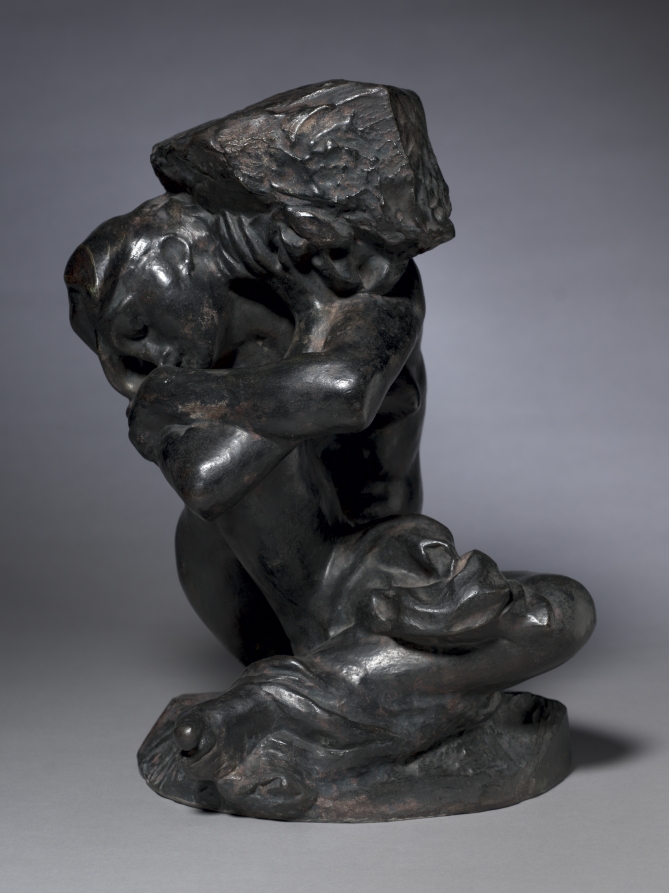
Structural Dissection: The Fallen Caryatid as Architectural Metaphor
The Fallen Caryatid Carrying Her Stone presents a paradox of load and collapse—a figure whose vertical purpose has been subverted into horizontal endurance. For Addison Fashion’s 2026 executive silhouette, this artwork is not a classical reference but a blueprint for tension. The caryatid’s original function—bearing the entablature of a temple—is here inverted: she is fallen, yet the stone remains. This is the essence of our new urban uniform: structure that acknowledges gravity without surrendering to it. The garment must carry weight—literal fabric weight, visual mass, psychological presence—while the body beneath appears to have relinquished upright ambition. The result is a silhouette that does not stand; it settles, with deliberate, architectural finality.
Geometric Integrity: From Pedestal to Pavement
The caryatid’s drapery, in Rodin’s original, is not decorative—it is a load-bearing system of folds and crevices. Translating this into tailoring requires a rethinking of seam placement. The 2026 oversized coat is cut with asymmetrical shoulder lines that mimic the displaced architrave: one shoulder is elevated, the other dropped, creating a diagonal that reads as both instability and control. The fabric—a dense, matte onyx wool blend—is engineered to hold a crease that does not fall cleanly but breaks, like stone fracturing along a fault line. Pockets are not placed for utility but as counterweights, positioned low and rearward to pull the garment’s center of gravity toward the wearer’s hips. This is not a coat; it is a portable ruin, a fragment of classical order repurposed for the commuter’s brutalist landscape.
The internal DNA—the Chinese aesthetic of “象外之象” (image beyond image)—informs the garment’s negative space. The fallen caryatid’s stone is not a solid block but a void rendered solid by shadow. In our construction, this translates to interior quilting that creates visible topographic ridges on the outer shell, without adding bulk. The coat’s back panel is cut in a single, unbroken expanse, but the lining is padded in a grid pattern that echoes the 神兽车马白虎镜’s concentric relief. From the outside, the surface appears calm; from within, the wearer feels the rhythmic compression of ancient bronze under their shoulder blades. This is the “灵动之境” (realm of vital dynamism) made wearable—a stillness that hums with internal motion.
Urban Materiality: Onyx as the New Neutral
Onyx is not black. It is black with a memory of light, a stone that absorbs but also reveals faint striations when turned against a low sun. For the 2026 executive, this color choice rejects the sterile graphite of corporate minimalism and the soft charcoal of casual luxury. Onyx demands presence without reflection—a matte finish that repels the glossy glare of glass towers. The fabric is a double-faced cashmere and technical nylon, bonded with a micro-perforated membrane that allows breathability while maintaining a windproof shell. The surface is brushed to a low nap, so that under fluorescent office lighting, the coat reads as flat; under dawn’s oblique rays, it reveals hidden moiré patterns—a nod to the 优昙钵华’s “空寂” (serene emptiness), where form emerges only in the right light.
The structural poetics of this piece lie in its seams. Traditional tailoring would hide them; here, they are exposed and topstitched in a contrasting silver-grey thread, tracing the path of the caryatid’s broken column. The sleeve seams do not run straight from shoulder to cuff but curve inward, then flare, echoing the drapery’s diagonal fall. The collar is not a collar but a folded plane, cut in a single piece with the lapel, wrapping the neck like a stone lintel that has slipped slightly off its posts. The hem is raw, left unhemmed and slightly frayed, but the fray is controlled—each thread is individually heat-sealed to prevent unraveling. This is controlled decay, the aesthetic of a monument that has been deliberately weathered to appear ancient.
The Fallen Caryatid’s Lesson: Weight as Authority
In the 2026 executive wardrobe, lightness is no longer a virtue. The fallen caryatid teaches us that authority is carried, not worn. The oversized silhouette is not about hiding the body but about redefining its relationship to space. When a woman enters a boardroom in this coat, she does not walk—she advances, with the stone’s inertia behind her. The garment’s weight (approximately 1.8 kilograms) is distributed across the shoulders and upper back, forcing a posture that is neither rigid nor slouched but braced, as if anticipating a load. This is the urban equivalent of the caryatid’s original duty: to hold up the sky, even when fallen.
The internal DNA’s second element—the 神兽车马白虎镜—contributes the dynamic counterpoint. While the coat’s exterior is static, its interior lining is printed with a disrupted chariot procession: horses mid-gallop, wheels frozen in rotation, the White Tiger’s tail lashing across the lumbar region. This print is only visible when the coat is removed or when the wearer lifts an arm, revealing a flash of bronze-green and cinnabar against the onyx shell. It is a secret, a private reminder that stillness is a choice, not a condition. The executive who wears this garment is not trapped in the stone; she carries it deliberately, and beneath it, her own vitality remains untamed.
Conclusion: The Silhouette as a Philosophical Statement
The Fallen Caryatid Carrying Her Stone, when filtered through Addison Fashion’s urban lens, becomes a manifesto for the modern power dresser. It rejects the ephemeral trends of athleisure and the brittle sharpness of old-school suiting. Instead, it offers a third path: monumental ease. The oversized onyx coat is not a costume of defeat but a ceremonial armor for the daily descent—into subways, into negotiations, into the weight of one’s own decisions. The geometric integrity lies not in symmetry but in balanced imbalance; the materiality lies not in luxury but in purposeful density. This is the 2026 executive silhouette: a body that has learned to carry its stone without being crushed by it, a form that finds its grace in the fall.