Minimalist
Slate
Urban Form: Adam
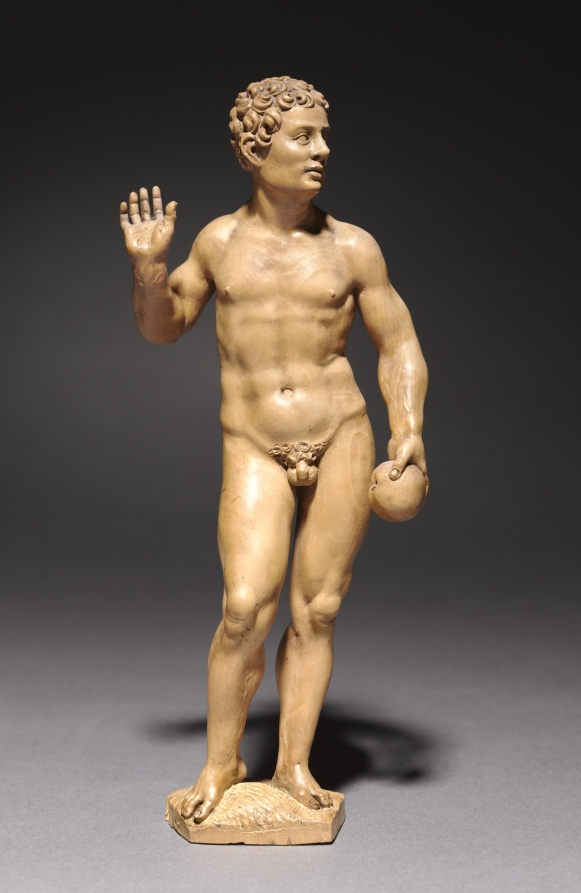
I. Foundational Dialectics: The Death of Socrates and the Ontology of the Jar
The subject, Adam, presents a unique sartorial challenge: to translate a philosophical confrontation between Western transcendentalism and Eastern immanence into a wearable urban silhouette. The source material—Jacques-Louis David’s *The Death of Socrates* and the anonymous *Jar*—offers not a binary opposition but a dialectical synthesis. The former is a study in controlled tension, geometric clarity, and the dramatic use of negative space; the latter is a meditation on volume, emptiness, and the quiet dignity of functional form. For the 2026 NYC executive, this translates into a wardrobe that rejects ornamentation in favor of structural honesty, and rejects overt expression in favor of calibrated restraint. The silhouette must embody the Socratic *logos*—rational, measured, unflinching—while simultaneously honoring the jar’s *kenosis*—the sacred void that allows for purpose. This is not minimalism as absence; it is minimalism as presence, distilled to its most potent essence.A. The Socratic Line: Rationality as Tailoring Architecture
David’s composition is built on a series of deliberate, almost architectural lines. The philosopher’s outstretched arm points upward, creating a diagonal that cuts through the scene’s horizontal grief. His body, draped in a simple white himation, is a column of calm amidst the chaotic folds of his disciples’ robes. For Adam, this dictates a jacket silhouette that prioritizes a clean, unbroken shoulder line—a structured, slightly extended shoulder that evokes the marble pediment, not the athletic swell. The lapel should be a sharp, notched peak, its angle mirroring the Socratic gesture: assertive but not aggressive, intellectual rather than emotional. The waist suppression must be minimal, almost imperceptible, to avoid any hint of sensuality or softness. We are constructing a garment that thinks, not one that feels. The fabric should be a high-twist wool, preferably a 4-ply or a compacted worsted, with a matte finish that absorbs light rather than reflecting it. This is the visual equivalent of Socratic irony—a surface that appears simple but contains immense internal complexity. The trouser should be a straight, full-length cut with a single, sharp crease, echoing the verticality of the Doric column. No break, or a very slight break, to maintain the line from hip to shoe as an unbroken vector of intention.B. The Jar’s Volume: The Architecture of the Void
The Eastern jar, in contrast, is defined by its convexity and its internal emptiness. Its form is not about line but about mass and the space it encloses. To translate this into menswear, we must consider the garment’s *interior* volume as much as its exterior silhouette. For Adam, this suggests a topcoat or an overcoat with a slightly generous, cocoon-like back. The front should remain flat and minimal—perhaps a hidden placket or a fly-front closure—while the back incorporates a subtle, unpadded shoulder and a gentle drape that falls from the shoulder blade. This creates a sense of contained air, a pocket of stillness that moves with the wearer. The color, Slate, is critical here. It is neither the stark white of Socrates’ robe nor the earthy brown of the terracotta jar, but a hybrid: a grey-blue that holds both the cool rationality of the West and the grounded, mineral quality of the East. Slate is the color of the Athenian sky at dusk and the color of a kiln’s shadow. It is a color that does not demand attention but commands respect—the executive equivalent of a philosophical pause.II. Chromatic and Textural Synthesis: Slate as a Philosophical Medium
The choice of Slate is not arbitrary. It functions as a neutral that is anything but passive. In the context of the 2026 NYC executive wardrobe, where the default is often a monochromatic black or navy, Slate offers a subversive alternative. It is the color of wet cobblestones, of a steel-glass facade reflecting a cloudy sky, of the patina on a bronze statue. It is a color that absorbs the city’s chromatic noise and returns a sense of calm. For Adam, we will deploy Slate in three distinct textures to create a dialogue within the monochrome: a brushed flannel for the primary suit, a technical cotton poplin for a secondary shirt, and a double-faced wool for the outer layer. This textural variation prevents the look from becoming flat, mimicking the way David uses light to model the philosopher’s form and the way a glaze catches the light on a ceramic surface.A. The Primary Layer: The Socratic Suit
The core garment is a two-button, single-breasted suit in a brushed Slate flannel. The flannel’s soft, matte surface is the fabric equivalent of the philosopher’s calm. The jacket’s construction is lightly structured—a half-canvas, not a full canvas—to allow for a subtle, organic movement that echoes the jar’s rounded form. The shoulder is a natural, slightly extended slope, avoiding the hard, padded look of a power suit. The lapel is a medium-width notch, set at a 90-degree angle to the collar, creating a visual right angle that speaks to Socratic logic. The trousers are a high-rise, straight-leg cut with a single reverse pleat. The pleat is functional, providing room for movement, but its sharp, pressed edge maintains the line of rationality. The hem has a slight break, just enough to touch the shoe, grounding the silhouette in the earth, like the jar resting on a table.B. The Secondary Layer: The Jar’s Shirt
The shirt is a departure from the traditional executive white or blue. It is a Slate technical poplin, with a matte, almost chalky finish. The collar is a spread, but with a softer roll, avoiding the aggressive points of a cutaway. The cuffs are a simple, single-button barrel, not the double French cuff. This is a shirt that does not announce itself; it exists as a quiet foundation, the internal void of the jar that gives the suit its purpose. The fabric’s technical properties—moisture-wicking, wrinkle-resistant—are the modern equivalent of the jar’s utility. It is a garment designed for the long hours of an executive’s day, not for a moment of theatrical presentation.C. The Outer Layer: The Architectural Overcoat
The final layer is a knee-length overcoat in a double-faced Slate wool. The coat is the most direct translation of the jar’s volume. It has no visible buttons; instead, it uses a hidden placket and a single, interior throat latch. The silhouette is a soft, A-line shape that falls from a slightly dropped shoulder. The back is cut with a deep, inverted pleat that allows for a generous sweep of fabric, creating a sense of contained air. This is the garment that allows Adam to move through the city with the same deliberate, unhurried pace as Socrates approaching the hemlock. It is not a shield against the world but a vessel for carrying one’s own center of gravity.III. The 2026 NYC Executive: A Synthesis of Action and Stillness
The final ensemble is not a costume but a system. It is a wardrobe that functions on multiple levels: the suit provides the rational structure for decision-making; the shirt offers the quiet utility of daily function; the overcoat supplies the philosophical space for reflection. The Slate palette unifies these elements into a single, cohesive statement. This is the answer to the question posed by the source material: how does one exist with the knowledge of inevitable decline? The Socratic answer is to live with rational clarity; the Eastern answer is to live with graceful acceptance. The Addison Fashion answer for Adam is to dress with both. The silhouette is minimalist, but it is a minimalism born of deep consideration, not of deprivation. It is a form that holds the void, and in doing so, becomes a vessel for presence. In the relentless pace of the 2026 NYC executive environment, this is not just a style choice; it is a philosophical position. It says: I am here, I am aware, and I am not afraid of the empty space.
Technical Insight
NYC Perspective: Translating Slate tones into Minimalist silhouettes.