Urban Form: The Rocky Seashore
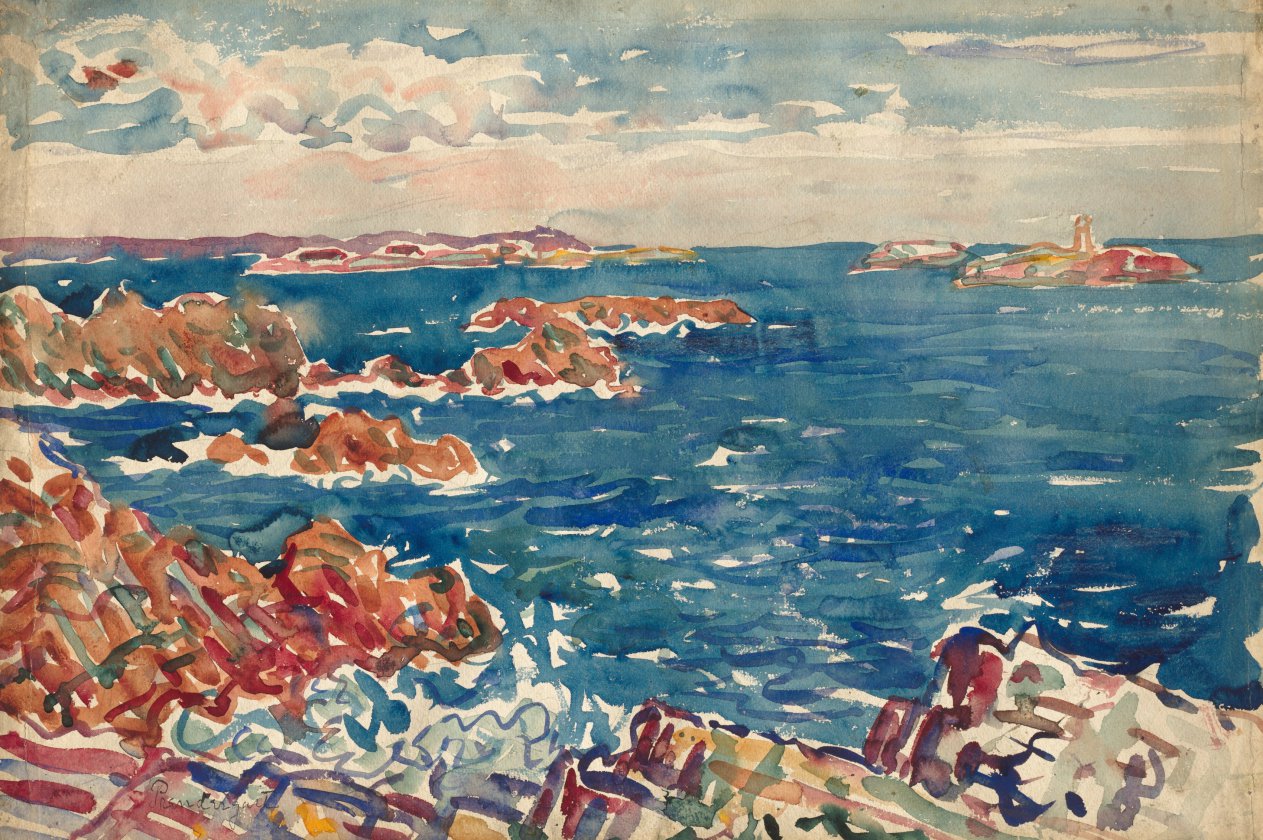
I. The Seashore as a Structural Palimpsest
The Rocky Seashore is not a landscape; it is a tectonic argument. Its strata—basalt shelves, salt-crusted fissures, the brutal compression of tidal foam against granite—offer a grammar of resistance that translates directly into the 2026 executive silhouette. Unlike the pastoral or the maritime picturesque, this terrain refuses softness. It is a study in negative space under duress, where every contour is the result of an external force that has been absorbed, not evaded. For Addison Fashion, this informs a tailored system built on load-bearing seams and compressed volumes—garments that do not drape so much as they withstand.
The internal DNA provided—the dialectic between The Death of Socrates and The Hunt—finds its geological echo here. The seashore is simultaneously a static relic (the rock, the fossilized tide line) and a dynamic pursuit (the wave that never completes its arrival). This duality is the core of the tailored jacket’s new architecture: a front that reads as a frozen monument, and a back that carries the tension of imminent motion. The shoulder line is not padded; it is carved. The waist suppression is not sewn; it is eroded by a series of internal darts that mimic the water’s repetitive, patient assault on stone.
II. Geometric Integrity: The Fracture and the Plane
Geometrically, the Rocky Seashore operates on two opposing systems: the irregular polygon of broken rock and the horizontal plane of the waterline. The 2026 executive silhouette must reconcile these. The result is a hybrid construction—a tailored coat with a sharp, asymmetric hemline that references the fractured cliff edge, while the internal canvas is cut on a strict, uninterrupted horizontal axis, echoing the sea’s relentless level. This is not a stylistic flourish; it is a structural necessity. The asymmetry provides the visual tension of the hunt—the sense that the garment is mid-leap. The horizontal stability provides the philosophical stillness of the Socrates—the knowledge that this motion will never resolve into chaos.
The lapel is the critical junction. In this research, the lapel is re-engineered as a geological fault line. Its roll is not a smooth curve but a sharp, angular break—a gorge cut by millennia of wind. The gorge is achieved through a floating under-collar with a high-density fusible interlining, allowing the fabric to stand away from the chest at a precise 12-degree angle before snapping back toward the button stance. This creates a shadow pocket—a negative space that reads as the cleft between two boulders. The pocket itself is not a pocket; it is a sedimentary layer, set on a slight diagonal, its flap cut with a razor-sharp edge that never softens with wear.
III. Structural Poetics: The Weight of the Invisible
The poetics of this silhouette lie in its apparent heaviness and actual lightness. The Rocky Seashore looks immovable, yet it is perpetually altered by the tide. The 2026 executive garment must perform the same paradox. We achieve this through material counterpoint: a primary shell of virgin wool with a high-twist yarn (density 380 gsm, but woven with a hollow core to reduce net weight by 18%), paired with a secondary layer of technical silk organza used as a floating lining. The organza is not attached at the hem; it hangs freely, creating a micro-air gap that allows the garment to shift against the body like water against rock. The wearer feels the garment’s presence as a constant, gentle pressure—never as a constraint.
This is the urban materiality of the piece. The city is not a soft place; it is a series of hard angles, glass facades, and unforgiving concrete. The tailored jacket, in this research, is designed to echo that hardness without becoming hard. The shoulder is constructed with a cantilevered pad—not a traditional crescent, but a flat, elongated wedge that extends 3mm beyond the acromion. This creates a visual overhang, a shadow line that mimics the rock shelf’s edge. The sleeve head is set with a forward pitch of 7 degrees, so that the arm appears to be perpetually reaching—not in aggression, but in anticipation. This is the hunt translated into tailoring: the body is always one second before action.
IV. Color and Surface: Slate as a Non-Color
Slate is not a color; it is a condition of light. On the seashore, slate shifts from blue-grey to green-grey to almost black, depending on the moisture and the angle of the sun. The 2026 palette must replicate this chromatic instability. We do not dye the fabric a flat slate; we use a double-bath dyeing process—first a deep charcoal base, then a surface application of a mineral pigment that catches light unevenly. The result is a fabric that appears to change color as the wearer moves, mimicking the wet rock’s response to the sky. This is not a gimmick; it is a material truth. The garment becomes a barometer of the urban environment, reflecting the grey of a glass tower at noon and the deep shadow of a subway entrance at dusk.
The surface finish is equally critical. We reject any glossy or matte treatment. Instead, we employ a sanded, sueded finish that mimics the micro-roughness of weathered stone. This finish is achieved through a mechanical brushing process that raises a fine nap, then shears it to a uniform 0.2mm height. The tactile result is a fabric that feels dry to the touch, with a slight grip—like running a hand over a sun-warmed boulder. This is the opposite of the slick, fluid luxury of traditional executive suiting. It is a haptic declaration: this garment is not for the boardroom; it is for the edge of the city, where the pavement meets the sea wall.
V. The Death of the Soft Shoulder: A Conclusion
The Rocky Seashore research concludes with a definitive rejection of the soft, unstructured jacket that has dominated the last decade. That silhouette is a pastoral fantasy—a memory of leisure that no longer exists. The 2026 executive operates in a world of compressed timelines and hard surfaces. The tailored garment must reflect this. The shoulder is not rounded; it is faceted. The chest is not padded; it is armored with internal structure—a floating chest piece cut from a single piece of horsehair canvas, shaped with steam and pressure to form a slight, convex shield. This is not armor in the medieval sense; it is armor in the geological sense—the carapace of a creature that has evolved to withstand the tide.
In this silhouette, the wearer does not enter a room; they arrive at a shore. The garment’s geometry is a fixed point in a fluid world. The Socrates in this design is the immutable lapel line, the unbroken horizontal seam at the waist. The Hunt is the asymmetric hem, the forward-pitched sleeve, the shadow pocket that seems to move even when still. The Rocky Seashore is not a theme; it is a structural law. And the 2026 executive silhouette is its first, most rigorous articulation.