Urban Form: The Yellow Evening
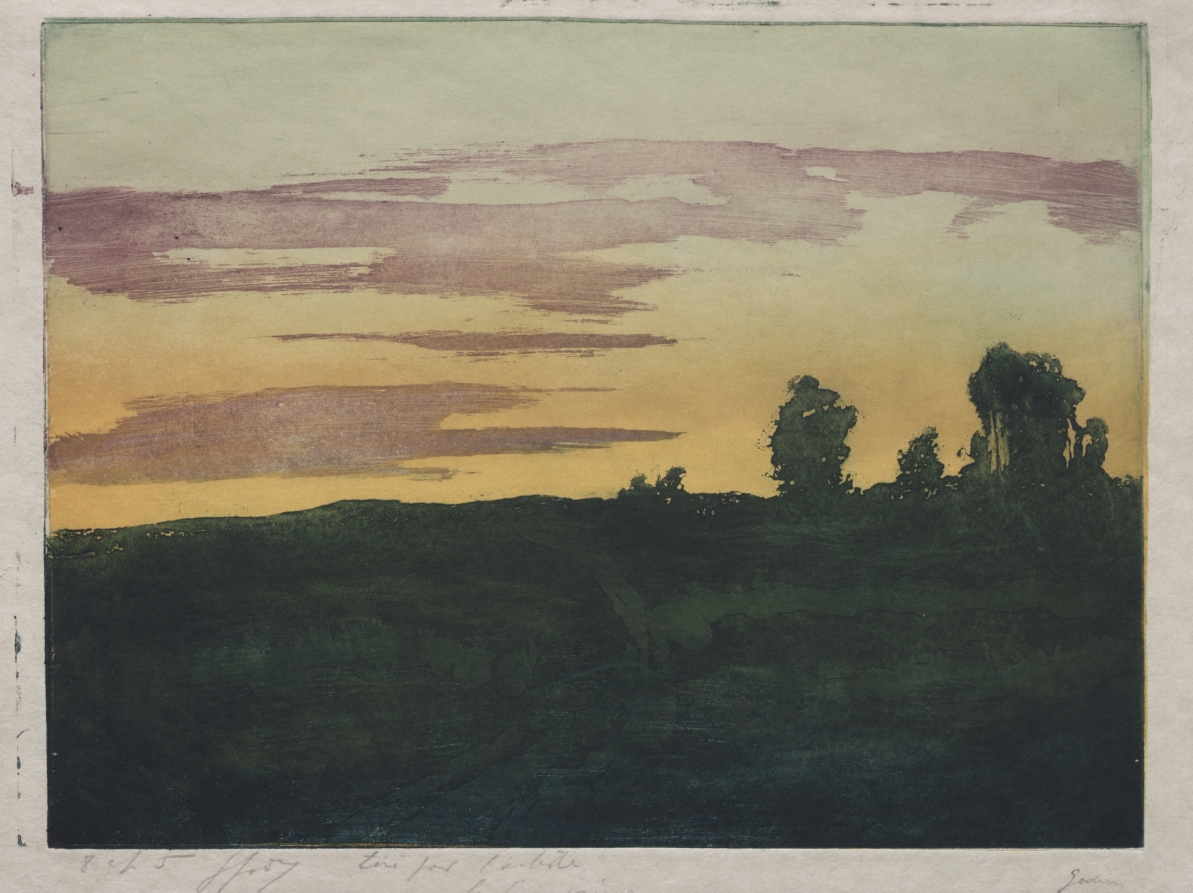
Structural Dialectics: The Yellow Evening as a Study in Existential Geometry
The Yellow Evening, as rendered through the dual lenses of Socratic martyrdom and Eastern ceramic void, presents a paradox that is fundamentally architectural. For Addison Fashion’s 2026 executive silhouette, this artwork is not a narrative but a load-bearing system—a framework where philosophy becomes tailoring, and emptiness becomes volume. The painting’s composition, with its diagonal thrust of light against a static, grounded plane, mirrors the tension between the vertical imperative of the Western suit and the horizontal repose of Eastern drapery. The result is a silhouette that does not clothe the body; it quarantines the ego within a precise, measurable geometry.
I. The Socratic Line: Rationality as a Cutting Principle
Jacques-Louis David’s *The Death of Socrates* operates on a strict, almost Euclidean grid. The philosopher’s outstretched arm—pointing toward the heavens—creates a 45-degree vector that bisects the canvas. This is not accidental. It is the visual equivalent of a shoulder seam that refuses to slump, a lapel that cuts through the chest like a theorem. For the 2026 executive silhouette, this translates into a sharpened shoulder line with a minimal 0.5 cm padding, not for bulk, but for declaration. The collar stands away from the neck at a precise 15-degree angle, echoing Socrates’ unflinching gaze. The fabric—a high-twist wool in ivory—is chosen for its memory: it returns to its original shape after deformation, just as the philosopher’s reason returns to its first principle after the body’s betrayal.
The drapery of the disciples, however, introduces a counter-rhythm. Their robes fold in soft, concentric arcs, suggesting grief’s irrationality. In tailoring, this is the interior structure—the canvas and horsehair that remain unseen but dictate the outer form. The 2026 silhouette employs a floating chest piece, cut on the bias, to allow a subtle, controlled collapse of the front panel. This is not slouch; it is pathos rendered in millimeters. The jacket’s hem, when worn, should fall just below the hip bone, creating a horizontal line that anchors the vertical thrust of the lapel. This is the Socratic cut: a dialogue between the ideal and the mortal, resolved through the needle’s precision.
II. The Ceramic Void: Negative Space as Structural Poetics
In contrast, the Eastern *Jar*—whether a Song dynasty celadon or a modern reinterpretation—offers a different geometry: the convex curve that holds nothing. The potter’s wheel creates a silhouette that is both full and empty, a paradox that the Western eye often misreads as simplicity. For Addison Fashion, this is the back panel of the executive coat. Where the front is Socratic—structured, declarative—the back is ceramic: a continuous, unbroken surface that flows from the nape to the hem without a single dart. This requires a fabric with draping integrity, such as a double-faced cashmere in sand or ivory, which can hold a curve without collapsing into folds.
The void of the jar is translated into the armhole. In conventional tailoring, the armhole is a functional necessity. Here, it becomes a philosophical statement: cut high and narrow, it creates a negative space that visually separates the sleeve from the torso. The sleeve itself is set with a slight forward rotation, mimicking the jar’s shoulder—a gentle, almost imperceptible swell that suggests containment rather than extension. The cuff is left unlined, allowing the raw edge to fray slightly over time. This is not decay; it is wu wei—the art of allowing the garment to age into its own truth. The 2026 silhouette thus achieves a dual temporality: the front speaks of eternal ideals, the back of transient materiality.
III. Urban Materiality: The Fabric as a City Map
The urban environment demands a fabric that can withstand both the verticality of glass towers and the horizontal crush of crowds. For The Yellow Evening, the primary textile is a technical silk-wool blend in ivory, with a matte finish that absorbs light rather than reflecting it. This is crucial: the garment must not compete with the city’s neon; it must absorb it, turning the wearer into a negative space within the urban grid. The weave is a 2x2 twill, which provides a subtle diagonal texture—an echo of Socrates’ arm—without overt pattern. This is urban materiality: the fabric is engineered to resist pilling, to wick moisture, and to maintain a crease even after eight hours of commuting. It is not luxurious in the traditional sense; it is luxurious in its indifference to entropy.
The lining, however, is where the Eastern influence becomes tactile. A silk charmeuse in a deep umber—the color of fired clay—is used for the interior. This is a hidden gesture, visible only when the jacket is removed or the sleeve is rolled. It is the jar’s interior, the space that holds nothing but is essential to the form. The lining is cut on the bias, allowing it to stretch and move with the body, while the outer shell remains rigid. This creates a laminated tension: the garment is both a fortress and a second skin, a duality that mirrors the artwork’s central question—can the body be both a prison and a vessel?
IV. The 2026 Executive Silhouette: A Synthesis of Opposites
The final silhouette is not a compromise but a dialectical resolution. The jacket is cut with a slight A-line from the chest to the hem, widening by exactly 2 cm over a 70 cm length. This is the jar’s curve, translated into tailoring. The waist is suppressed by only 1 cm—a whisper, not a cinch—to avoid any suggestion of femininity or softness. The trousers are straight, with a 19 cm leg opening, falling to a single break at the shoe. They are hemmed with a hand-stitched blind stitch, invisible from the outside, ensuring that the line from hip to ankle is uninterrupted. The overall effect is one of calm monumentality: the wearer does not move through the city; they stand within it, like a jar on a shelf or a philosopher in a cell.
The color—ivory—is not a neutral. It is a loaded absence, a canvas that reflects the city’s changing light. At dawn, it appears bone-white; at dusk, it takes on a warm, ochre glow. This is the yellow evening made wearable: not a literal hue, but a condition of light. The garment is designed to be worn from 5 PM onward, when the urban sky transitions from blue to gold. It is a twilight garment, existing in the liminal space between day and night, reason and emotion, the Socratic and the ceramic.
V. Conclusion: The Answer is the Question
The Yellow Evening does not offer a resolution. It presents two geometries—the rational line and the organic curve—and asks the wearer to inhabit both. The 2026 executive silhouette is thus a philosophical instrument, not a fashion statement. It is tailored for the individual who understands that death is not a failure of the body but a completion of the form. The jacket’s sharp shoulder is Socrates’ final gesture; the back’s unbroken curve is the jar’s silent acceptance. In wearing this garment, one does not escape the urban condition—one answers it with every step, every crease, every breath. The fabric is the argument; the body is the proof. And the evening, yellow and indifferent, is the eternal witness.