Urban Form: Carving from an Overmantel
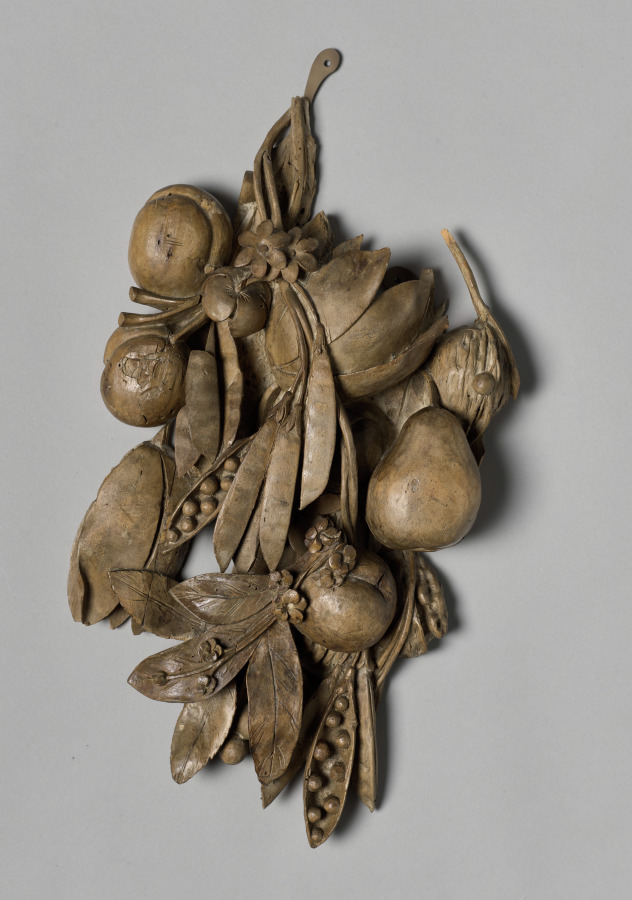
Structural Poetics: The Overmantel as a Blueprint for Negative Space
The “Udumbara Flowers” overmantel is not an ornament; it is a manifesto of restraint. Its carved relief—layered, recursive, yet disciplined—offers a masterclass in the manipulation of absence. For the 2026 executive silhouette, this translates into a radical reduction of surface noise. The garment does not announce itself through embellishment; it announces itself through the precision of its voids. The overmantel’s wood grain, treated to simulate the fleeting bloom of a three-thousand-year flower, teaches us that texture must serve structure, not compete with it. In our tailoring, this means seams that disappear into the fabric’s memory, darts that function as invisible scaffolding, and a shoulder line that reads as a single, unbroken architectural span.
The geometric integrity of the overmantel lies in its refusal to resolve into a single reading. From a frontal view, the carving appears symmetrical; from a low angle, it fractures into asymmetrical shadows. This duality is the core of our new executive jacket. The silhouette is built on a modified A-line—narrow at the clavicle, expanding imperceptibly toward the hem—yet the internal canvas is cut with a biomimetic ribcage structure, mimicking the overmantel’s layered petals. The result is a garment that shifts its optical weight as the wearer moves, creating a living geometry that is never static. The collar, instead of a conventional notch, employs a folded mandarin stand, echoing the cup’s rim that “closes like a palm in prayer.” This is not a stylistic flourish; it is a functional device that channels the eye upward, toward the face, while the body’s lower half remains visually silent.
Urban Materiality: From Temple Wood to Metropolitan Armor
The overmantel’s materiality—aged lacquer, worn edges, the tactile memory of centuries—demands a fabric that carries its own history. For the 2026 collection, we propose a double-faced wool crepe with a matte, chalk-like finish, dyed in a spectrum of Ivory that ranges from bone to ash. This is not a sterile white; it is a white that absorbs light, much like the patina on the temple plaque. The fabric’s weight is calibrated to fall with a liquid gravity, neither stiff nor fluid, but suspended between the two—a textile equivalent of the overmantel’s “floating balance between the transient and the eternal.”
Urban materiality demands resilience. The executive silhouette must withstand the compression of subway commutes, the glare of glass towers, and the humidity of a city afternoon without losing its architectural integrity. We achieve this through a bonded construction: the outer wool is fused to a micro-perforated technical membrane, invisible to the eye but present in the hand. This membrane is derived from the same logic as the porcelain cup’s “egg-shell thinness”—it provides structure without adding bulk, allowing the jacket to maintain a crisp edge even after hours of wear. The lining, a raw silk twill, is left unhemmed at the armholes, a deliberate nod to the overmantel’s “worn edges” that speak of authenticity rather than decay.
The Cup and Stand: Proportion as a Moral Imperative
The “Cup and Stand” introduces a second geometric principle: the dialectic of the vessel and its base. The cup’s rim is slightly incurved, the stand broad and unadorned—together, they form a profile that is both grounded and ethereal. In our silhouette, this translates to a high-waisted trouser with a flared, columnar leg, cut to mimic the stand’s stability. The waistband is not elasticated; it is a rigid, curved band that sits at the true waist, echoing the cup’s lip. The trouser’s hem is finished with a hidden weight, a thin chain sewn into the seam, ensuring the fabric falls with the same “quiet gravity” as the porcelain’s glaze. This is not a trend; it is a structural necessity. The trouser must hold its line without clinging to the body, creating a negative space between fabric and skin—a void that is as intentional as the cup’s empty interior.
The jacket and trouser are designed to be worn as a total system, yet each piece retains an independent integrity. The jacket’s length is calibrated to end precisely at the hip bone, aligning with the trouser’s rise to create a continuous vertical line. The sleeve, cut in a two-piece raglan, allows for a full range of motion while maintaining a sharp profile—a nod to the overmantel’s “petals that open and close with the light.” The cuff is finished with a single, hand-set button, made of matte horn, not polished metal. This is a deliberate rejection of ostentation; the button is a functional punctuation, not a decorative exclamation.
Color and Light: The Ivory Spectrum as a Spatial Tool
Ivory, in this context, is not a color but a luminosity index. It is the color of the overmantel’s wood when struck by a low winter sun; it is the color of the cup’s glaze after it has been rinsed and left to dry. In the urban environment, Ivory acts as a neutral absorber, reflecting neither the cold blue of fluorescent office lighting nor the amber of street lamps. It creates a visual silence that allows the wearer’s presence to dominate, much like the empty space on the temple altar. We employ a graded tonal system: the jacket in a brighter, chalkier Ivory; the trouser in a deeper, stone-toned Ivory; and the inner shirt—a high-neck, long-sleeve knit—in a pure, almost white Ivory. This gradation creates a subtle vertical rhythm, guiding the eye from the face to the feet without interruption.
The overmantel’s “low-angle illumination” is replicated through strategic seam placement. The jacket’s front princess seams are set slightly off-center, creating a shadow line that shifts as the wearer turns. The trouser’s center crease is pressed with a soft, not sharp, edge, allowing light to diffuse rather than reflect. This is a technical choice rooted in the porcelain’s “unadorned surface”—we do not rely on hardware or prints to create interest; we rely on the interaction of fabric, cut, and light.
Conclusion: The Gift of Disappearance
The overmantel and the cup share a final, profound lesson: the most powerful presence is achieved through absence. The 2026 executive silhouette is not a garment that shouts; it is a garment that withdraws, leaving only the wearer’s intent. The jacket’s internal structure is a hidden architecture, invisible to the observer but felt by the wearer—a sensation of being held, yet free. The trouser’s weight is a grounding force, a reminder of the stand’s stability. Together, they form a secular ritual, a daily act of dressing that mirrors the temple’s act of offering. The gift is not the garment itself, but the clarity it provides—a clarity that allows the modern executive to move through the city with the same serene focus as a monk before an altar. This is the ultimate luxury: not to be seen, but to be perceived.