Oversized
Slate
Urban Form: Plate 2: Levi
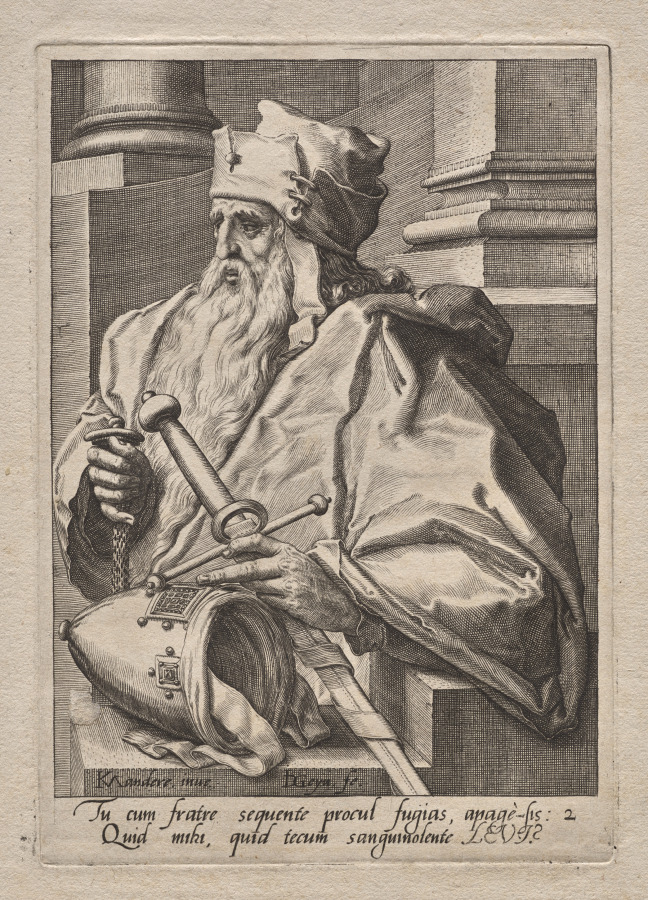
Plate 2: Levi — Structural Poetics of the Damascus Room and the He Xiangu Base
The 2026 executive silhouette is not a product of whimsy. It is a distillation of architectural memory, compressed into wearable form. Plate 2: Levi draws its definitive logic from two seemingly disparate artifacts—the 18th-century Damascus Room and the Daoist He Xiangu figure base. Both operate on a principle of *layered density* that culminates in a central void. This is the core of the Levi silhouette: an oversized shell that does not swallow the body, but rather frames it as a negative space of intention. The garment is a habitable room, not a second skin.I. The Damascus Room: Layered Infinity as Outer Structure
The Damascus Room’s aesthetic is one of *controlled excess*. Wooden paneling, marble inlays, stucco reliefs, glazed tiles, and gilded calligraphy stack vertically from wainscot to ceiling. Yet this is not chaos. Each layer adheres to a geometric rhythm—the infinite repetition of the *girih* star, the cyclical undulation of the vine. For the Levi silhouette, this translates into a **multi-panel outer construction** with no single seam dominating. The coat’s shoulder line is extended, not padded, creating a horizontal datum that echoes the room’s cornice. The fabric—a dense, matte wool-silk blend in Slate—absorbs light rather than reflecting it, mimicking the aged plaster and wood tones of the chamber. The critical move is the *internal layering*. The Levi is not a single shell but a series of overlapping planes: a dropped back yoke, a double-faced front placket, and a hidden interior pocket system that adds weight without bulk. These layers are not decorative; they are structural metaphors for the room’s walls. Each panel is cut with a precision that allows the garment to stand slightly away from the torso, creating a micro-architecture of air. The wearer’s body becomes the *central void*—the empty floor of the Damascus Room where hospitality and meditation occur. The oversized volume is not about excess; it is about *creating space for presence*.II. The He Xiangu Base: The Ascent of the Lower Register
The He Xiangu base, though a fragment, is a masterclass in *vertical transition*. Its stacked motifs—cloud scrolls, lotus petals, and lingzhi forms—rise in a staggered, rhythmic sequence. This is not a static pedestal; it is a visual escalator from the mundane to the transcendent. The Levi silhouette applies this logic to its lower half. The coat’s hem is not straight. It is cut with a subtle *A-line flare* that begins at the hip, echoing the widening base of the Daoist pedestal. The side seams are curved, not straight, to suggest upward motion even when the wearer is still. The materiality of the base—carved stone or lacquered wood—informs the Levi’s *weight distribution*. The hem is finished with a hidden cotton canvas interlining, giving it a gravitational pull that anchors the silhouette. The front hem is slightly shorter than the back, a deliberate asymmetry that references the base’s stepped profile. This is not a casual design choice. It creates a *dynamic tension*: the garment appears to be perpetually rising, yet it remains grounded. The Slate color deepens toward the hem, achieved through a double-dye process, mimicking the patina of aged stone. The wearer’s legs become the *clouds*—the transitional element between the solid base and the ethereal upper body.III. Geometric Integrity: The Rule of the Void
The definitive aspect of the Levi is its *geometric integrity*—the relationship between the filled and the empty. In both source artifacts, decoration is not an end. The Damascus Room’s overwhelming ornamentation exists to make the central space feel more profound. The He Xiangu base’s intricate carvings exist to lift the figure into a different realm. The Levi applies this principle through *negative-space tailoring*. The garment’s oversized volume is governed by a strict internal grid. The shoulder seam aligns with the outermost point of the chest panel. The armhole is dropped 3 centimeters below the anatomical shoulder, creating a *sleeve void* that allows the arm to move freely within a larger architectural envelope. The collar is a high, stand-away band—reminiscent of the room’s wall frieze—that does not touch the neck. This creates a *visual gap* between fabric and skin, a constant reminder of the space between the material and the immaterial. The back of the Levi is its most radical statement. A single, unbroken panel of Slate wool runs from the collar to the hem, with no center seam. This is a direct reference to the *uninterrupted surface* of the Damascus Room’s upper walls, where calligraphy bands circle the room without beginning or end. The absence of a back seam forces the fabric to drape in a continuous, waterfall-like flow, emphasizing the *void behind the wearer*. In urban context, this reads as a shield—a mobile wall that separates the executive from the chaos of the street.IV. Urban Materiality: Slate as a Philosophical Choice
Slate is not a neutral color. It is the color of wet stone, of the Damascus courtyard after rain, of the shadowed recesses of a temple base. For the Levi, Slate is chosen for its *absorptive quality*. In a city of reflective glass and neon, the Levi does not compete. It *withdraws*. The fabric’s surface is treated with a water-repellent finish that causes droplets to bead and roll off, a practical nod to urban weather. But the deeper resonance is philosophical: the garment repels the superficial, just as the Damascus Room’s thick walls repelled the heat and noise of the street. The material weight is substantial—approximately 680 grams per meter—ensuring that the oversized silhouette does not flutter or lose its architectural line. The weave is a twill with a subtle diagonal rib, visible only at close range. This is the *micro-order* of the He Xiangu base’s lotus petals: from a distance, a smooth surface; up close, a complex topography. The buttons are not plastic or horn, but *oxidized metal*—dark, almost black, with a matte finish. They are placed asymmetrically, following the stepped rhythm of the base’s cloud motifs.V. Conclusion: The Wearable Threshold
Plate 2: Levi is not a coat. It is a *threshold*—a wearable version of the Damascus Room’s entrance arch and the He Xiangu base’s ascending steps. The oversized silhouette is a deliberate rejection of the body-conscious tailoring that dominates contemporary menswear. Instead, it proposes a new executive presence: one that commands space through *stillness*, not movement. The wearer does not walk through the city; the city moves around the wearer’s defined volume. The geometric integrity of the Levi lies in its ability to hold two opposing ideas simultaneously: the *dense layering* of the Damascus Room and the *ascending void* of the He Xiangu base. The result is a garment that feels both monumental and weightless, both protective and liberating. In the 2026 urban landscape, where attention is fragmented and surfaces are slick, the Levi offers a counterpoint: a deep, matte, layered silence. It is not an object of display. It is an environment—a portable chamber of focus, a pedestal for the self. The executive who wears the Levi does not wear a coat. They inhabit a room. And in that room, they are the only figure.
Technical Insight
Technical Insight: Translating Slate palettes into Oversized silhouettes for the modern metropolis.