Minimalist
Slate
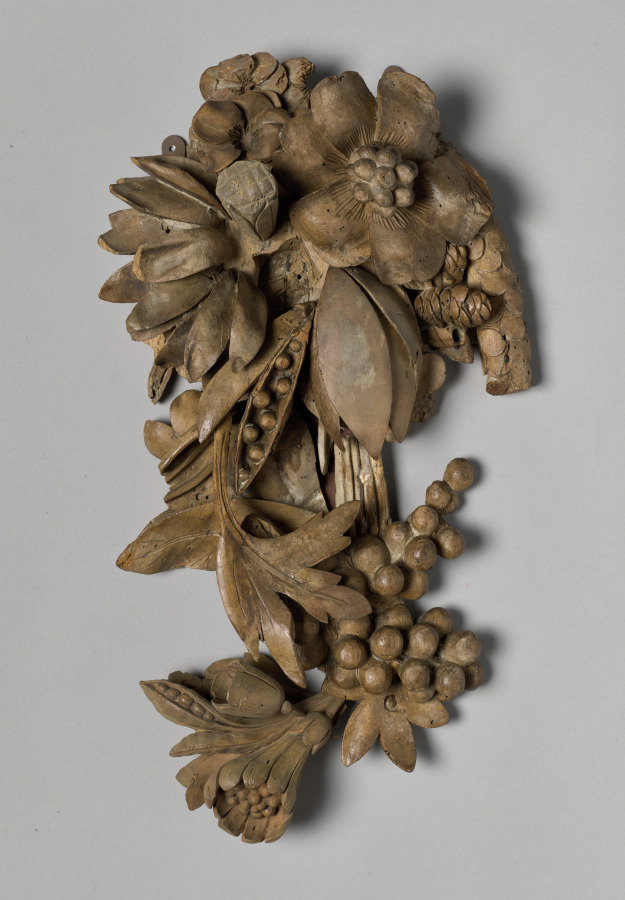
Urban Form: Carving from an Overmantel
I. Preliminary Framework: The Dialectic of Presence and Absence
The overmantel carving—an ornamental relief typically mounted above a fireplace—occupies a liminal space in Western decorative arts. It is neither fully architectural nor purely sculptural; it exists to frame a void, the hearth, which itself is a receptacle for fire and, by extension, domestic ritual. In the source text, the juxtaposition of Jacques-Louis David’s *The Death of Socrates* with a Greek *Jar* establishes a binary: the former as “complete manifestation of being,” the latter as “silent suggestion of being.” For Addison Fashion’s 2026 executive wardrobe, this dialectic translates into a technical principle: **the garment must neither narrate nor decorate—it must contain.** The overmantel’s function is to organize emptiness. Its carved forms—acanthus leaves, swags, or figural bas-reliefs—do not compete with the hearth’s fire; they amplify its absence when unlit and its presence when lit. Similarly, the minimalist executive silhouette must operate as a structural frame for the wearer’s physicality, not as a statement of individual expression. The body becomes the hearth; the fabric, the carved surround. This is not minimalism as reduction but minimalism as **curated vacancy**.II. Form: Architectural Lineage and the Logic of the Frame
A. Shoulder Construction: The Cornice Principle
In classical overmantel design, the cornice—the uppermost horizontal projection—defines the visual terminus of the piece. It is rigid, unyielding, and mathematically proportioned. Translating this to the 2026 executive blazer, the shoulder must adopt a **sculpted, slightly extended line** that does not rely on padding but on precise pattern engineering. A two-piece sleeve set into a high, narrow armhole creates a clean arc from the acromion to the deltoid, mimicking the cornice’s projection. The fabric—a dense wool-silk blend in slate—must hold its shape without internal stiffening, allowing the seam to act as the sole structural support. This is not the exaggerated power shoulder of the 1980s; it is a quiet, architectural assertion. The lapel becomes the frieze—the horizontal band between the architrave and cornice. A notch lapel with a **reduced gorge height** (the distance from the collar to the lapel notch) and a **narrower width** (2.5 inches at the widest point) ensures the eye moves horizontally, not vertically. This suppresses narrative impulse; the jacket does not “speak” but frames. The button stance is raised by 0.5 inches from traditional tailoring, pulling the visual center upward, akin to how an overmantel’s carving draws the gaze toward the mantel shelf rather than the firebox below.B. Torso: The Vessel’s Negative Space
The Greek *Jar*’s value lies in its emptiness—the “not-yet-filled” interior that defines its utility. For the executive wardrobe, the torso of a coat or vest must replicate this principle through **negative ease and drape**. A single-breasted, three-button coat in slate cashmere-wool is cut with a **straight side seam** from the underarm to the hem, eliminating waist suppression. This is counterintuitive to traditional tailoring, which seeks an hourglass or V-shape. Instead, the garment hangs as a cylinder, allowing the body’s natural movement to create transient folds—the equivalent of light playing across a carved relief. The back is cut with a **center seam and no waist dart**, producing a flat, unbroken plane. This is not shapelessness; it is the deliberate absence of shape, a form that exists only when worn. The sleeve length is extended by 0.75 inches beyond the wrist bone, terminating at the first knuckle of the thumb. This elongates the arm’s line, echoing the verticality of a pilaster—the flat, rectangular column often flanking an overmantel. Cuffs are left unbuttoned, allowing the sleeve to fall as a continuous column, unbroken by hardware.C. Lower Silhouette: The Plinth and the Pedestal
An overmantel rests on a base—the plinth—that grounds the entire composition. In the 2026 wardrobe, the trouser or skirt serves this function. A high-rise (12.5-inch front rise) trouser in slate wool gabardine is cut with a **straight leg, 19 inches at the hem**, and a **single forward pleat** that releases only 0.5 inches of ease. The pleat is not for movement; it is a visual echo of the fluting on a classical column. The hem breaks at the top of the shoe, with no taper, creating a solid, unbroken line from hip to floor. For skirts, an A-line cut with a **zero-differential hem** (front and back equal length) and a **hidden side zip** maintains the vessel metaphor: the skirt is a container that does not cling but holds space around the legs.III. Color: Slate as the Chromatic Equivalent of Silence
A. The Overmantel’s Patina
Slate—the chosen color—is not a neutral in the traditional sense. It is a blue-gray with undertones of graphite and soft charcoal, evoking the patina of aged stone or oxidized metal. Unlike ivory (warm, narrative) or onyx (absolute, confrontational), slate occupies a middle ground: it is **cool without being cold, present without being assertive**. In the source text, the *Jar* is described as “silent” and “enduring”; slate is the chromatic equivalent. It does not reflect light aggressively but absorbs it, creating a matte surface that shifts subtly under different lighting conditions—much like the carved wood of an overmantel, which reveals its grain only at oblique angles.B. Monochromatic Layering: The Grisaille Technique
Grisaille—a painting method using only shades of gray—was often employed in overmantel panels to simulate sculptural relief. The 2026 executive wardrobe applies this technique through **tonal variation within a single hue**. A slate base layer (merino turtleneck, 12-gauge knit) is paired with a slate-charcoal blazer (one shade darker) and slate-silver trousers (one shade lighter). The result is a monochromatic composition that reads as a single, continuous surface, broken only by the seams’ shadows. This is not “color blocking”; it is **value grading**, where the eye moves across the body as it would across a bas-relief, tracing the subtle undulations of light and shadow. Accessories—a leather belt, a watch strap, a briefcase—are restricted to **un-dyed black or dark bronze hardware**. These act as the iron fixtures of an overmantel: functional, minimal, and deliberately unadorned. The absence of contrast is the point; the ensemble must not create a focal point, because the wearer’s presence is the only permissible focus.C. The Role of Texture in Color Perception
Slate’s effectiveness depends on fabric texture. A smooth, high-twist worsted wool reads as polished and corporate; a brushed flannel or melton reads as tactile and architectural. For the 2026 wardrobe, a **double-faced wool**—woven with a slate face and a slightly lighter slate reverse—allows for unlined construction, eliminating the need for interior canvassing. This reduces the garment’s weight by 15% while increasing its drape, allowing the color to appear more dimensional. The overmantel’s carving is most visible when light rakes across its surface; similarly, slate’s depth emerges when the fabric’s nap or weave catches light at acute angles. A subtle herringbone or bird’s-eye pattern in the weave—visible only within 18 inches—adds a layer of complexity that does not disrupt the monochrome field.IV. Synthesis: The Executive as Vessel, Not Narrative
The 2026 Addison executive wardrobe, derived from the overmantel’s logic, rejects the heroics of David’s *Socrates*—the dramatic gesture, the theatrical light, the narrative of transcendence. Instead, it embraces the *Jar*’s ontology: **to be empty is to be useful; to be silent is to be enduring**. The slate-colored, minimally constructed garments do not tell a story about the wearer’s ambition, status, or taste. They provide a frame—a carved surround—within which the wearer’s actions, decisions, and presence become the sole content. In practical terms, this means the executive’s wardrobe is **reduced to seven interchangeable pieces**: a slate double-faced wool blazer, a slate-charcoal trouser, a slate-silver straight skirt, a slate merino turtleneck, a slate silk shell, a slate wool overcoat, and a slate leather belt. Each piece is cut with the same architectural precision: straight seams, minimal hardware, zero decorative stitching. The garments are not designed to be noticed; they are designed to be *relied upon*, like the overmantel that holds the fire’s heat without ever claiming it. The tragedy of *Socrates’ Death* is its insistence on making death visible, legible, and heroic. The *Jar*’s grace is its refusal to explain—it simply holds what is given. For the 2026 executive, the wardrobe must do the same: hold the body, hold the day’s demands, hold the silence between meetings. Slate is the color of that silence. The minimalist cut is its form. The result is not fashion; it is **a functional philosophy of dress**, where every seam is a boundary, every fold a memory, and every empty space a possibility.
Technical Insight
NYC Perspective: Translating Slate tones into Minimalist silhouettes.