Urban Form: Architectural Model
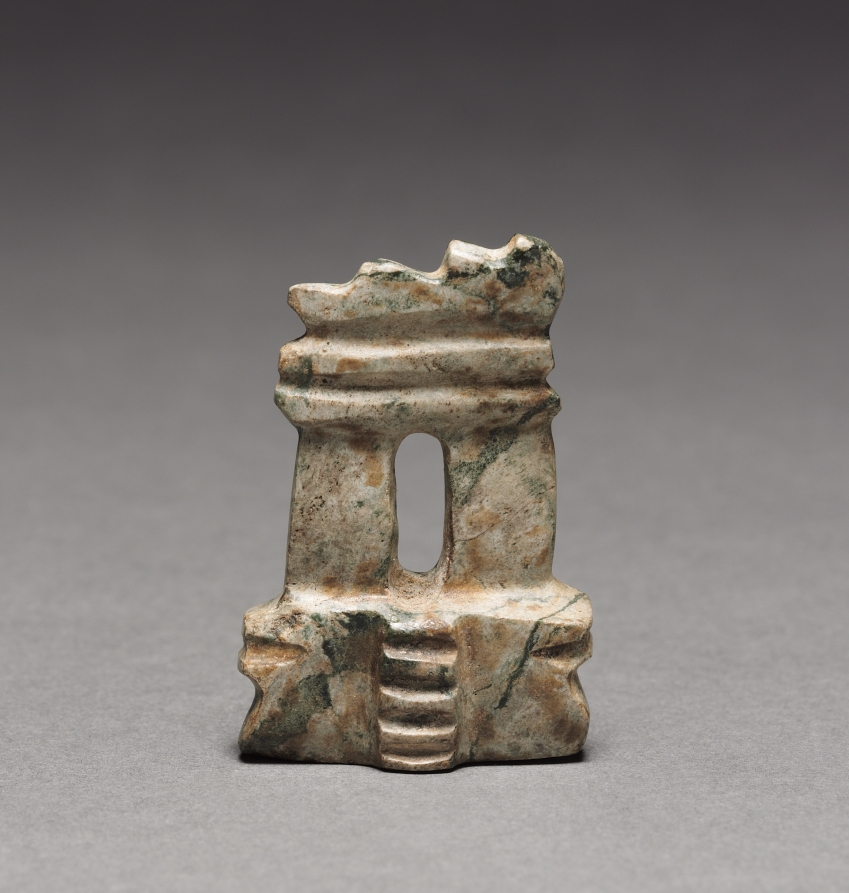
I. The Architectural Model as a Dialectical Framework
The subject under analysis—a dual-panel meditation on The Death of Socrates and Stele with Sakyamuni and Bodhisattvas—presents not a binary opposition but a structural continuum of terminal poetics. For Addison Fashion’s 2026 executive silhouette, this artwork functions as a blueprint for geometric integrity under existential pressure. The Greek vessel’s taut, vertical lineation and the Indian stele’s undulating horizontal drapery are not stylistic relics; they are load-bearing principles for contemporary urban dress. The executive body, like the philosopher’s cup or the Buddha’s robe, must negotiate gravity, temporality, and the gaze of the city. This research deconstructs the artwork’s formal grammar—its planes, axes, and negative spaces—to propose a silhouette that is at once monumental and mutable.
1.1 The Socratic Vertical: Rationalism as Tailoring
The Greek artifact operates on a strict vertical axis. Socrates’ raised finger, the cup’s rim, the folded himation—all align to a plumb line that declares intellectual defiance. In tailoring terms, this translates to a sharpened shoulder line, a cinched waist that does not yield, and a hem that falls with the finality of a verdict. The vessel’s “heroic stillness” is achieved through negative space: the unadorned clay between the figure’s arm and torso. For the 2026 executive, this becomes a cutaway jacket with a pronounced lapel notch, creating a void that frames the chest as a pedestal. The color slate—neither black nor grey—echoes the stone’s mineral gravity, absorbing light without surrendering form. This is not mourning; it is premeditated composure.
1.2 The Buddhist Horizontal: Fluidity as Transcendence
Contrastingly, the Indian stele’s lateral flow—the cascading folds of the Buddha’s robe, the interlocking hands of bodhisattvas—proposes a silhouette that breathes. Where the Greek form is a column, the Indian form is a wave frozen in mineral pigment. The 2026 executive silhouette must incorporate this through asymmetric draping or a paneled coat that moves like water over stone. The artwork’s “paradox of materiality”—using dense pigment to depict immaterial nirvana—informs a fabric choice of heavyweight wool with a fluid drape, or a double-faced cashmere that holds structure yet yields to motion. Slate, here, is not monolithic; it is layered in tonal shifts, from deep graphite at the shoulder to a lighter mist at the hem, mimicking the mineral’s internal luminosity.
II. Structural Poetics: The Grammar of Terminal Elegance
The artwork’s shared “aesthetic will”—to overcome time through stillness—demands a silhouette that is architecturally anchored yet temporally fluid. The 2026 executive is not a static figure; she moves through glass towers, concrete plazas, and transit systems. Her clothing must therefore embody dual structural states: a primary frame that asserts presence, and secondary seams that allow for dissolution. This is achieved through strategic seaming—a vertical princess seam that recalls Socrates’ spine, intersecting with a horizontal yoke that echoes the Buddha’s robe. The result is a grid of intention, where every panel is a deliberate response to the body’s own geometry.
2.1 The Shoulder as Pediment
In both artifacts, the upper register—Socrates’ head, the Buddha’s halo—commands the eye. For the executive, the shoulder becomes a pediment: not padded into aggression, but cut with a precise, slightly extended cap that suggests a frieze. The sleeve head is set low, allowing the arm to move without disturbing the line. This is minimalist luxury: no epaulets, no excess. The fabric is pressed with a razor edge, so that the shoulder reads as a carved lintel—supporting the weight of the city’s gaze without buckling.
2.2 The Torso as Stele
The torso is the central field where the two philosophies converge. A high, closed neckline—reminiscent of the stele’s frontal figures—creates a monumental presence, while a single, off-center closure introduces the Indian principle of asymmetry. The waist is defined but not constricted, using a hidden drawcord or an internal belt that allows the wearer to modulate the silhouette from column to wave. This is the structural poetics of choice: the garment is not a cage but a calibrated instrument for the wearer’s own terminal decisions—meetings, exits, entrances.
2.3 The Hem as Horizon
The hem is where the artwork’s “ultimate question” is answered. Socrates’ cup rests on a flat base; the Buddha’s feet are hidden beneath robe folds. For the 2026 executive, the hem is neither strictly straight nor flowing. It is cut with a slight forward sweep, longer at the back, creating a dynamic horizon line that suggests both forward momentum and contemplative pause. The interior is finished with a contrast facing—a flash of raw silk or matte cupro—that reveals itself only in motion, echoing the mineral pigment’s hidden vibrancy.
III. Urban Materiality: Stone, Pigment, and the City
The city is the third panel in this triptych. Its glass, steel, and concrete are the contemporary equivalents of the artwork’s stone and mineral. The 2026 executive silhouette must dialogue with these materials, not mimic them. Thus, the fabric palette is restricted to slate, onyx, ivory, silver, and sand—each a geological reference that grounds the garment in the urban substrate. Slate is the primary; it is the color of wet pavement at dusk, of the philosopher’s stone, of the stele’s shadowed recesses. The texture is matte, with a subtle slub, so that light does not bounce but settles, like dust on a ledge.
3.1 The Weight of Silence
Urban materiality demands weight—not heaviness, but gravitas. The fabric must have a dense hand, a quiet fall, so that the garment moves with the wearer’s intention, not the wind’s. A wool-cashmere blend at 380 grams per meter achieves this: it holds a crease like a chisel mark, yet warms to the body like a second skin. The lining is viscose with a mineral wash, reducing static and allowing the garment to slip over a blouse or bare skin without friction. This is tactile minimalism: the wearer feels the garment’s presence, but it never announces itself.
3.2 The Seam as Scribe
Seams are not closures; they are inscriptions. Each seam in the 2026 silhouette is topstitched with a tonal thread, one shade lighter than the fabric, so that the line is visible only at close range—like the incised letters on a stele. The armhole seam is set forward, creating a slight drag that mimics the Buddha’s robe’s tension. The side seams are curved, not straight, following the body’s own architecture. This is structural poetics at the millimeter level: the garment is a text, and the wearer is its author.
IV. The 2026 Executive Silhouette: A Synthesis
The definitive silhouette is a single-breasted, three-quarter-length coat over a columnar dress or high-waisted trouser. The coat’s lapels are notched but narrow, drawing the eye upward to the face—the true monument. The dress is sleeveless, with a high neck, its fabric cut on the bias to allow a subtle, liquid movement beneath the coat’s rigidity. The trousers are straight, with a single pleat that releases into a clean break at the shoe. The color is slate throughout, with ivory as a secondary for the blouse or shell, and silver as a metallic accent—a thin belt, a cuff—that catches the city’s artificial light like a fragment of mica.
This is not a uniform. It is a philosophical garment, designed for the executive who understands that death and觉悟 are not opposites but coordinates. The silhouette does not hide the body; it frames the body’s own geometry as a response to the city’s vertical and horizontal pressures. It is minimalist in ornament, maximal in intent. The wearer does not enter a room; she erects a structure within it—a temporary stele, a living vessel, a final argument in the ongoing dialogue between self and world.
In conclusion, the architectural model of this artwork—its dual-axis tension, its mineral gravity, its terminal clarity—is not a historical reference but a living specification. The 2026 executive silhouette is the built form of this