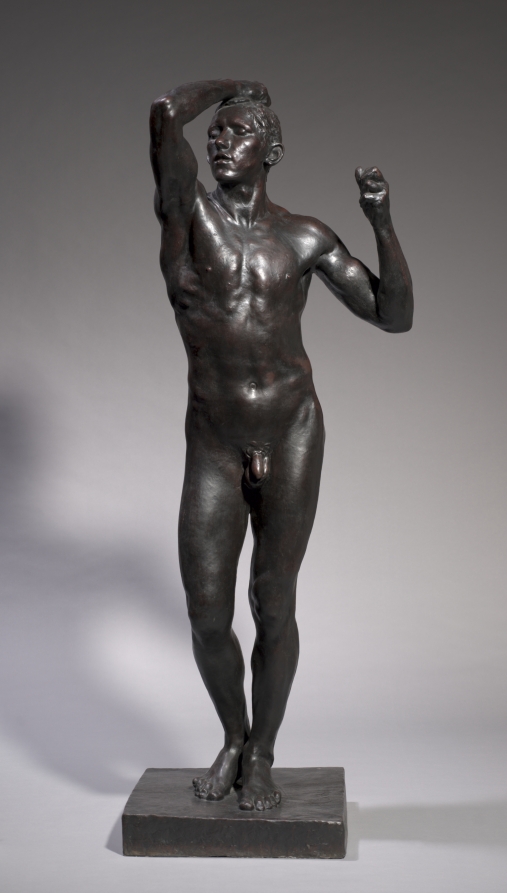
Urban Form: The Age of Bronze
Structural Poetics: The Bronze Vessel as Architectural Precedent
The Cup and Stand is not an object of passive beauty; it is a manifesto of equilibrium. Its geometry—the calibrated ratio between cup and base, the controlled arc of the stem, the deliberate weight of the foot—operates as a study in vertical tension and horizontal repose. For the 2026 executive silhouette, this translates into a garment architecture that rejects superfluous volume in favor of measured proportion. The shoulder line becomes the cup’s rim: precise, unyielding, yet inviting. The torso is the vessel’s body, tapered not to constrict but to define a column of quiet authority. The hem, like the stand, grounds the composition with a subtle flare—enough to suggest stability, never drama.
This is not minimalism as absence. It is minimalism as deliberate reduction, where every seam, every dart, every millimeter of fabric is justified by structural necessity. The onyx palette deepens this logic: black absorbs light, erasing incidental shadows and forcing the eye to trace only the essential lines. In urban environments—glass towers, concrete plazas, subterranean transit—this silhouette becomes a counterpoint to chaos. It does not shout; it stands, like the bronze artifact, in silent defiance of noise.
From Vessel to Garment: The Dialectic of Containment and Release
Jacques-Louis David’s The Death of Socrates offers the counterpoint: the vessel is no longer a container of water or wine but a chalice of philosophical finality. The cup in that painting is not merely held; it is received, its geometry charged with moral weight. For the executive silhouette, this suggests a dual function. The garment must contain—the body, the day’s labor, the public persona—while simultaneously allowing for release: the gesture of reaching for a handshake, the pivot into a boardroom, the unbuttoning of a jacket as the evening descends. The 2026 silhouette achieves this through articulated construction: a hidden gusset at the shoulder blade, a bi-swing back, a vent that opens only when movement demands it. The onyx fabric—a dense wool-cashmere blend with a matte finish—does not cling; it drapes with the weight of bronze, yet yields with the suppleness of cloth.
This is the urban materiality of the collection: fabrics treated to resist the city’s abrasions—rain, friction, fluorescent light—while retaining a tactile gravity that signals permanence. The cuff is cut long, echoing the cup’s rim, and closed with a single horn button, unadorned. The lapel is a narrow peak, sharp as a chisel’s edge, but softened by a hand-rolled edge that speaks to the artisan’s patience. Here, the vessel’s “waiting” becomes the garment’s readiness: it is always prepared for the next negotiation, the next flight, the next moment of consequence.
The Sublime in Tailoring: Socratic Resolve as Wearable Ethos
David’s painting is not about death; it is about conviction. Socrates’ gesture—one hand accepting the hemlock, the other pointing toward the heavens—is a study in opposing forces: acceptance and aspiration, finality and transcendence. The 2026 executive silhouette must embody this same dialectic. The jacket’s front is closed, disciplined, a shield against the incidental. But the back—often unseen, yet felt—carries a subtle architectural surprise: a curved yoke that follows the scapula, allowing the wearer to raise an arm without distortion. This is the hidden sublime: not visible in stillness, but revealed in action. The trousers are cut with a full seat and a tapered ankle, permitting a stride that is both grounded and swift. The waistcoat, if worn, is cropped at the natural waist, its buttons placed asymmetrically—a quiet nod to the painting’s off-center composition, where light falls on the philosopher’s brow, not on the crowd’s grief.
Color reinforces this ethos. Onyx is not black; it is black with depth, a hue that shifts from charcoal to near-obsidian depending on the light. In the morning, under fluorescent office lighting, it reads as authoritative. At dusk, in a restaurant’s amber glow, it becomes intimate, almost bronze. This chromatic mutability mirrors the vessel’s materiality: bronze oxidizes, darkens, and gains character over time. The garment, too, is designed to age—not to fade, but to acquire a patina of wear at the elbows, the knees, the cuffs. This is not decay; it is evidence of use, the urban equivalent of a museum artifact’s provenance.
Geometric Integrity: The 2026 Silhouette Defined
The definitive silhouette for 2026 is neither boxy nor sculpted. It is columnar with a hinge. The shoulders are straight, but not padded to excess; the chest is flat, but not concave; the waist is defined, but not pinched. The jacket’s length falls just below the hip, echoing the cup’s proportion—taller than wide, yet stable. The sleeve is set with a slight forward pitch, accommodating the natural arc of the arm in a city where one hand holds a phone, the other a coffee cup. The trouser breaks at the shoe with a single, clean fold—no pooling, no stacking. This is geometry as ethics: every line resolves, every angle closes, every seam meets its counterpart with precision.
The Cup and Stand teaches us that beauty is a function of restraint. The Death of Socrates teaches us that restraint can be heroic. The 2026 executive silhouette synthesizes both: a garment that does not perform, but is. It waits, like the vessel, for the hand that will fill it—with a day’s decisions, a year’s ambitions, a career’s legacy. And when that hand comes, the garment yields without collapsing, moves without distorting, and remains, at the end of the evening, as composed as it was at dawn. This is the age of bronze: not the age of gold’s ostentation, nor iron’s rigidity, but the age of an alloy that is strong enough to endure, yet subtle enough to be overlooked. In the urban landscape, this is the ultimate luxury: to be present, but not loud; to be structured, but not stiff; to be, in the deepest sense, essential.