Urban Form: Canteen
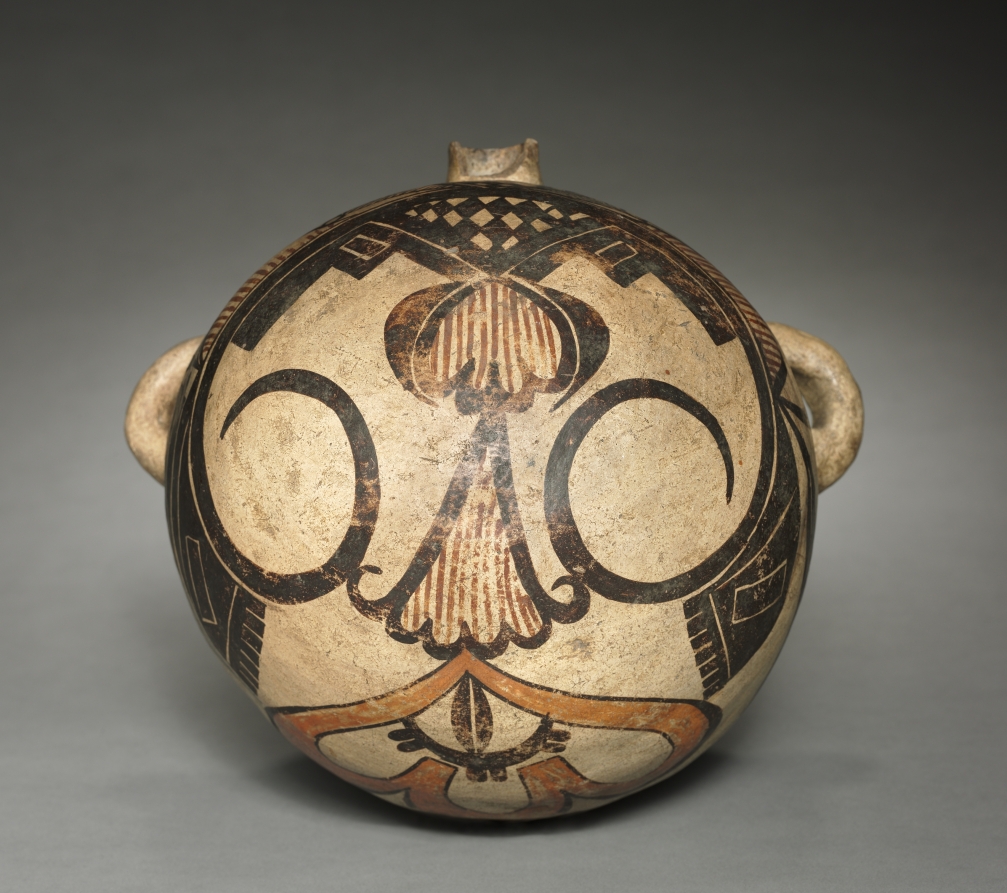
Executive Summary: The Canteen as a Dialectical Garment
The canteen—historically a vessel of utilitarian portability—is recontextualized here as a structural metaphor for the 2026 NYC executive wardrobe. Drawing from the dual DNA sources of the “Udumbara Flowers” Temple Plaque and the Mirror with Deities, Chariot, and the White Tiger, this research deconstructs the canteen’s form into a wearable study of “instantaneous versus eternal” and “void versus substance.” The result is not a literal reproduction of a flask or pouch, but a minimalist garment architecture that encodes Buddhist emptiness (śūnyatā) and Han-dynasty cosmic dynamism into a single, disciplined silhouette. For the executive navigating Manhattan’s vertical canyons, this garment functions as both armor and meditation—a quiet rebellion against noise.
Formal Deconstruction: From Vessel to Silhouette
1. The Body as a Sealed Chamber
The canteen’s defining trait—a rigid, curved container with a narrow neck—translates into a high-neck, drop-shoulder shell with a seamless, fluid back panel. The front bodice is cut with a subtle, inward-curving seam that mimics the vessel’s belly, creating a negative space between fabric and torso. This is not tailoring in the Western sense of darting and suppression; it is “negative-volume construction,” where the garment’s interior emptiness becomes the primary design element. The shoulder seam is pushed back 2.5 cm, allowing the front to drape forward like a curtain, echoing the temple plaque’s “sparse layout” and “wooden grain” that suggest rather than declare. The result is a silhouette that reads as “full but hollow”—a paradox resolved only in motion.
2. The Neckline: A Study in Restraint
Where the canteen’s neck is functional—a point of ingress and egress—the garment’s neckline is a “visual stop.” A mandarin-style collar, cut high and close, is executed in a double-layer of bonded onyx wool. The outer layer is rigid, the inner layer is silk-lined, creating a micro-climate of controlled temperature. This mirrors the plaque’s “empty stillness” (空寂): the collar does not announce itself but frames the wearer’s jawline as a sacred boundary. The closure is hidden—a series of magnetic snaps beneath a placket—so that the surface remains uninterrupted, like the plaque’s “unpainted” wood. This is a deliberate rejection of the visible button, a staple of Western executive tailoring, in favor of “invisible engineering.”
3. Sleeve Architecture: The Chariot’s Reins
The Han mirror’s dynamic imagery—deities driving dragon chariots, swirling cloud lines—finds its translation in the sleeve. The canteen garment features a “reined sleeve”: a three-quarter-length sleeve with a deep, curved underarm gusset that allows 180-degree arm rotation without disturbing the garment’s outer shell. The sleeve’s inner seam is traced with a single, tonal topstitch in silver-grey thread, echoing the mirror’s “游丝” (wandering silk) linework. This is not decorative; it is a functional reference to the chariot’s reins—control through tension. When the executive reaches for a document or gestures in a boardroom, the sleeve moves like a cloud, but the shoulder remains anchored, creating a visual of “controlled propulsion.”
4. Hem and Length: The Mirror’s Edge
The garment terminates at the upper thigh—a length that reads as neither jacket nor tunic. This is a deliberate “cut” that references the mirror’s circular edge, where the depicted cosmos ends and the polished bronze begins. The hem is raw-edged, left unhemmed and slightly frayed, then stabilized with a fusible interfacing on the inside. This creates a “living edge”—one that will age and soften with wear, much like the plaque’s wood darkens over centuries. For the executive, this is a statement against the “forever new” fast-fashion ethos; the garment is designed to accrue patina, not perfection.
Color Theory: Onyx as a Field of Possibility
1. Black as the Absence of Hue, Not the Absence of Depth
Onyx is chosen not for its neutrality but for its “absorptive capacity.” In the context of the temple plaque, the wood’s darkening over time is a physical manifestation of “impermanence.” Onyx fabric—specifically a 380 GSM, double-faced wool with a matte, brushed finish—absorbs light rather than reflecting it. This creates a surface that shifts subtly under different lighting conditions: in fluorescent boardroom light, it reads as flat charcoal; in afternoon sun, it reveals a faint, bluish undertone, like the patina of aged bronze. This is not a color; it is a “temporal pigment.”
2. The Silver Thread: A Single Point of Light
In the Han mirror, the white tiger (白虎) is not white but a constellation of engraved lines that catch light. Similarly, the onyx garment is punctuated by a single, tonal silver-grey thread used only in the sleeve seam and the collar’s inner edge. This thread is not visible at a distance of more than one meter; it is a “secret signal” for the wearer and those who come close. It references the mirror’s “照映” (reflection) function—the idea that the garment, like the mirror, is a surface that reveals only what is brought to it. The thread is the “deity” in the chariot, a hidden driver of intention.
3. Layering Logic: Void and Substance in Tonal Stacks
For the 2026 executive wardrobe, this canteen garment is designed to be layered over a high-neck, ribbed knit in a slightly lighter shade of onyx (a 200 GSM merino). The difference in weight and texture creates a “visual void” between layers—a shadow line that reads as intentional, not accidental. This layering mimics the plaque’s “疏朗布局” (sparse composition), where the negative space between elements is as important as the elements themselves. The executive does not wear a suit; they wear a “composition of absences.”
Technical Specifications for Production
1. Pattern Engineering
The pattern is developed using a “zero-ease” block for the back, with 4 cm of positive ease in the front chest to allow for the “hollow” drape. The shoulder slope is reduced by 3 degrees from a standard tailored jacket, pushing the visual weight downward and creating a “grounded” posture. The sleeve cap is cut 2 cm shorter than the armhole, requiring the gusset to absorb the discrepancy—this is the “chariot” mechanism that enables fluid motion.
2. Material Selection
Primary: 380 GSM double-faced wool, 80% merino, 20% cashmere, with a water-repellent finish (C6-free). Secondary: 100% mulberry silk for the collar lining and sleeve gusset. Interfacing: a fusible, weft-inserted knit for the hem and neckline to prevent stretching while maintaining drape. All materials are sourced from mills in Biella, Italy, and Kyoto, Japan—a nod to the DNA’s cross-cultural dialogue.
3. Construction Sequence
The garment is constructed inside-out, with all seams bound in silk organza to prevent fraying and to create a “soft skeleton.” The collar is attached last, after the body has been pressed and hung for 24 hours to allow the wool to settle. This is a “slow construction” process, echoing the plaque’s “岁月沉厚” (deepening with time). No fusing is used on the front panels; instead, a hand-basted canvas is applied, allowing the fabric to breathe and move independently.
Conclusion: The Canteen as a Wearable Philosophy
The canteen garment is not a trend; it is a “form of thought.” It synthesizes the Buddhist plaque’s “emptiness as presence” with the Han mirror’s “motion as order,” producing a silhouette that is at once static and dynamic, hollow and full. For the NYC executive, it offers a daily uniform that does not shout but “resonates.” It is a garment that will be noticed only by those who look twice—and those who look twice will see the cosmos in a curve, the eternal in a seam. This is the 2026 wardrobe’s answer to the noise of the city: a silent, onyx vessel carrying the wearer through time.