Urban Form: Picturesque Architecture in Paris, Ghent, Antwerp, Rouen: Nôtre Dame, Paris
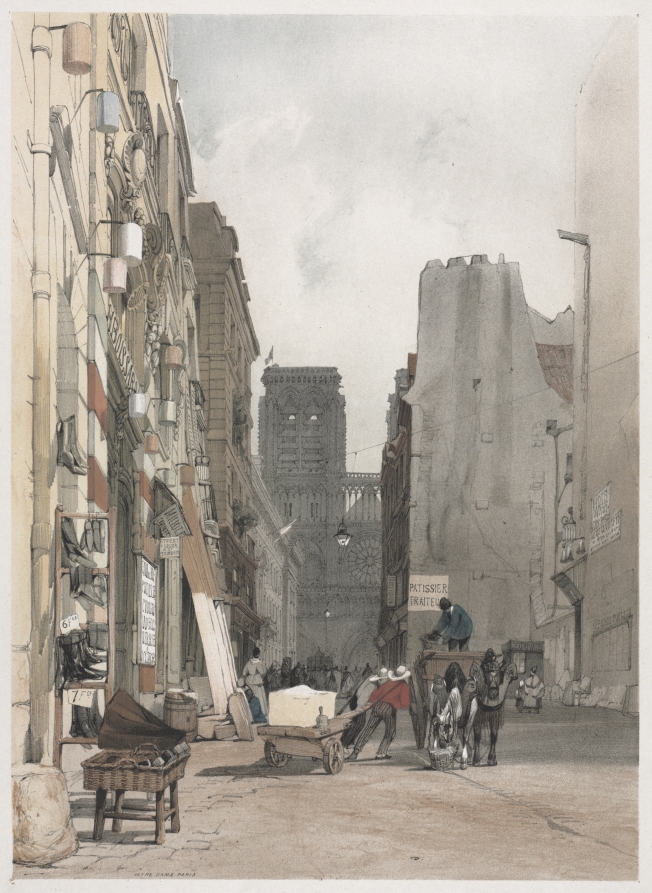
Technical Analysis: Architectural Rigor and the 2026 Executive Silhouette
The provided internal DNA, a treatise on the "Global Baroque," presents not a mere historical anecdote but a precise blueprint for the 2026 Addison Fashion executive silhouette. The analysis of the Textile with crowned double-headed eagles and the Screen with European Figures reveals a core dialectic: the tension between imposed structural order and curious, adaptive translation. This is the foundational geometry for our next collection. We move beyond superficial ornamentation to engineer a silhouette defined by architectural integrity, where the body itself becomes the site of sophisticated urban poetics and rigorous material negotiation.
I. Geometric Integrity: The Architecture of Authority
The double-headed eagle textile is our primary structural informant. Its aesthetic core—"the majesty of order"—is deconstructed into three non-negotiable principles for the 2026 silhouette. First, axial symmetry. This is not the soft symmetry of nature, but the hard, deliberate symmetry of state power and architectural facades. It translates into silhouettes built upon a central, unwavering spine. Jackets and coats will feature severe center-back seams, mirrored pocket placement, and lapels that are precise geometric extensions of the garment’s front panels. The silhouette rejects slouch; it is engineered to stand with the perpendicular certainty of a colonnade.
Second, the repeated unit. The eagle motif is a modular component, creating a vast, authoritative field through repetition. In our materiality, this becomes the philosophy of the structured panel. Garments will be composed of clearly defined, almost tectonic segments—a sleeve head constructed as a distinct architectural element, a torso section paneled to mimic the ribbed vaulting of Gothic architecture (as subtly referenced in the Nôtre Dame subject). Seams are not hidden; they are emphasized as the load-bearing joints of the garment’s architecture. Third, textural contrast as definition. The metal thread against wool creates depth through material opposition. Our execution will utilize the cold sheen of technical satin-backed wools against the matte, mineral density of brushed Slate gabardine. The contrast defines shape, carving light and shadow along the silhouette’s engineered edges.
II. Structural Poetics: The Translation of Form
If the textile provides the rule, the Japanese screen provides the critical, poetic exception: the art of adaptive translation. The screen does not copy European perspective; it flattens it, reorganizing foreign elements within a native compositional grammar. This is the essence of our "urban poetics." The 2026 executive exists within a global matrix; their silhouette must absorb urban stimuli without losing its core Addison identity.
This translates into controlled deconstruction. A tailored overcoat, impeccable in its Slate-colored symmetry from the front, may reveal a back constructed from a single, seamless panel of technical fabric—a quiet homage to the screen’s flat, golden ground. The "European figures"—the complex, foreign elements—are analogous to hybrid functional details. A tailored blazer’s internal architecture might incorporate a weight-distributing harness, inspired by sailing rigs (echoing the screen’s ships), but rendered in pure, unadorned leather, its function becoming its form. The silhouette remains fundamentally tailored, but its poetry lies in these moments of intelligent, almost anthropological, adaptation of utility into aesthetic language.
III. Urban Materiality: The Substance of Tension
The "creative misunderstanding" of cross-cultural appropriation is ultimately a material conversation. Our materiality must embody the same durable, tactile tension. The Slate color palette is non-negotiable. It is the color of weathered cathedral stone, of lead roofing, of a pre-dawn city sky—a neutral that is profoundly architectural and somberly luxurious. It provides the perfect ground for exploring texture as structure.
Materials will be selected for their inherent geometric potential and urban endurance. We will employ: Fused wool-mohair blends that hold a razor-sharp line against wind and moisture, their slight halo mimicking the blurred glow of streetlights on wet pavement. Engineered jerseys with multi-directional stretch, not for comfort, but for engineered mobility—allowing a precisely tailored sleeve to articulate without compromising its cylindrical form. Micro-coated cottons that offer a matte, mineral hand-feel, repelling the urban environment while developing a patina of wear. Hardware will be minimal and embedded: magnetic closures, flush zippers in gunmetal finishes, all subservient to the garment’s clean geometry.
IV. The 2026 Executive Silhouette: A Definitive Proposition
The resultant silhouette for 2026 is one of tailored monumentality. It is personal architecture. Imagine a double-breasted coat where the wide, peaked lapels are not simply folded cloth but are internally structured with a lightweight composite to hold a parabolic curve, echoing the soaring lines of Nôtre Dame’s flying buttresses—an example of "structural poetics" made manifest. The waist is defined, not through cinching, but through the precise tapering of panels, creating a silhouette that is powerful yet agile. Trousers are a study in straight lines and deliberate, sharp breaks, the fabric falling with the gravity of a curtain wall.
This silhouette is cold, sophisticated, and authoritative. It does not seek to blend into the urban landscape; it re-contextualizes it. The wearer becomes a node in the network, their form speaking of history, global awareness, and an unwavering commitment to engineered elegance. Like the double-headed eagle, it is a symbol of sovereignty—in this case, the sovereignty of the individual over the chaotic stimuli of the metropolis. Like the Japanese screen, it is a curated, intelligent translation of that metropolis into a silent, potent, and deeply personal sartorial language. This is not fashion as decoration. This is fashion as applied urban architecture.