Urban Form: The Doge's Palace, Venice
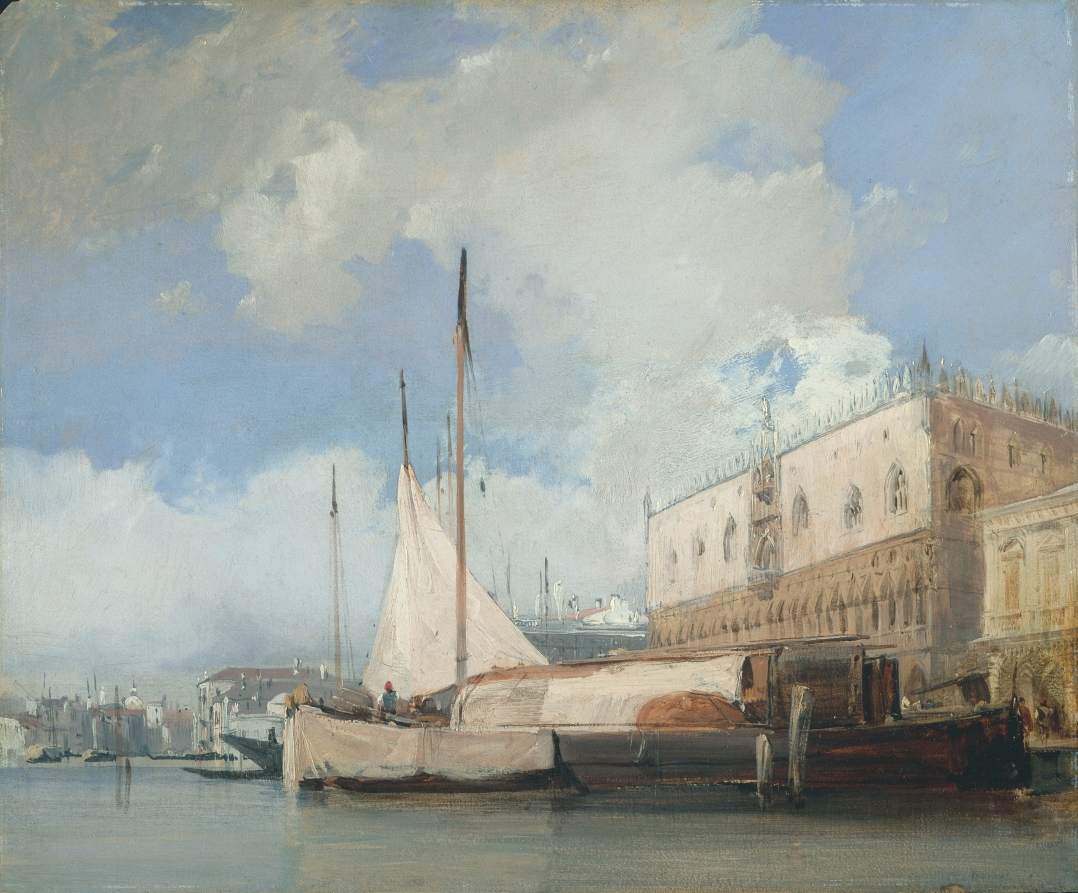
Geometric Integrity and the Architectural Sublime
The Doge’s Palace, Venice, is not a building; it is a treatise on mass and void, a study in the tension between the load-bearing and the ornamental. For Addison Fashion’s 2026 executive silhouette, this structure offers a definitive grammar: the oversized form as a vessel of authority, not bulk. The palace’s lower colonnade—repetitive, rhythmic, almost hypnotic—translates directly into a columnar coat silhouette, where vertical pleats or seaming mimic the arcade’s cadence. The upper loggia, with its delicate tracery, becomes the garment’s shoulder architecture: a structured, slightly extended line that frames the face without collapsing into theatricality. The geometric integrity here is not about replication but about proportional discipline. Each panel of the coat must echo the palace’s dual logic: solid base, airy crown. The hem falls with the weight of Istrian stone, yet the lapel rises with the lightness of Gothic tracery. This is the 2026 executive uniform—a garment that commands a room not through volume alone, but through the ratio of its parts.
Structural Poetics: The Inverted Pyramid
The palace’s most radical gesture is its inverted mass—the heavy upper storey resting on slender columns. This inversion is a poetic act, a defiance of gravitational expectation. In our silhouette, this manifests as a dropped shoulder with a high, narrow chest, creating a trapezoidal torso that flares subtly toward the hem. The fabric must be engineered to hold this shape without rigidity: a double-faced wool with a slight mechanical stretch, bonded to a technical interlining that mimics the palace’s hidden iron ties. The sleeve head is set low, almost dropped, to echo the loggia’s overhang. The result is a garment that appears to float above the wearer’s hips, as if the body itself is the colonnade—supporting, yet visually secondary. This is structural poetics: the wearer becomes the architecture, not the occupant. The internal seams are exposed, not as a deconstructive flourish, but as a homage to the palace’s exposed brick and stone courses—honest, load-bearing, and unapologetic.
Urban Materiality: Stone, Water, and Shadow
Venice’s material palette—pink Verona marble, lead, gilded wood, and the ever-present lagoon’s grey-green reflection—dictates our fabric and finish choices. The primary textile is a slate-toned, water-repellent technical twill, its surface lightly brushed to mimic the patina of centuries of salt air. This is not a romantic texture; it is a functional one. The garment must perform in the urban environment as the palace performs in its lagoon: resistant, adaptive, and quietly monumental. The lining is a deep onyx silk, visible only at the cuff and the inner placket, referencing the palace’s shadowed interiors where the Doge’s council once deliberated. Hardware is gunmetal, not polished—matte, almost granular, like the lead roof tiles that cap the palace’s corners. The silhouette’s urban materiality is further defined by asymmetric closures: a single, off-center magnetic placket that suggests the palace’s main portal, slightly shifted from its axis. This is not a gimmick; it is a nod to the building’s subtle irregularities—the slightly off-square courtyard, the uneven cornice—that make it human, and therefore wearable.
The 2026 Executive: A Study in Restraint and Presence
The executive silhouette for 2026 is not about aggression or overt power dressing. It is about contained monumentality. The Doge’s Palace teaches us that true authority is expressed through the management of negative space. Thus, our oversized coat is cut with a deep, inverted-V neckline that reveals a high-necked, ivory knit underneath—a nod to the palace’s white marble tracery against the dark water. The sleeves are cut full, but tapered at the wrist with a hidden strap, allowing the wearer to adjust the volume from a sweeping, processional line to a more precise, operative one. The back is where the geometry becomes most explicit: a single, continuous panel that falls from the nape to the hem, unbroken by seams, echoing the palace’s vast, unadorned interior walls. This panel is weighted at the hem with a hidden chain, ensuring the fabric falls with the same gravitational certainty as the palace’s stone. The overall effect is one of silent gravitas—a garment that does not shout, but rather occupies space with the inevitability of a building that has stood for seven centuries.
Conclusion: The Silhouette as Civic Monument
In translating the Doge’s Palace into a 2026 executive silhouette, Addison Fashion rejects the transient and the decorative. The result is an oversized form that is neither shapeless nor aggressive, but architecturally inevitable. It is a garment for the individual who understands that presence is not volume, but proportion; not noise, but resonance. The slate tone grounds the wearer in the urban landscape, while the internal construction—the hidden boning, the bonded interlinings, the weighted hems—ensures that the silhouette holds its integrity from boardroom to evening. This is not fashion as expression; it is fashion as civic architecture. The wearer does not simply don a coat; they inhabit a structure, one that carries the memory of Venice’s stone, water, and shadow into the concrete canyons of the modern metropolis. The 2026 executive is not a follower of trends; they are a keeper of structural truths. And this silhouette, drawn from the Doge’s Palace, is their definitive uniform.