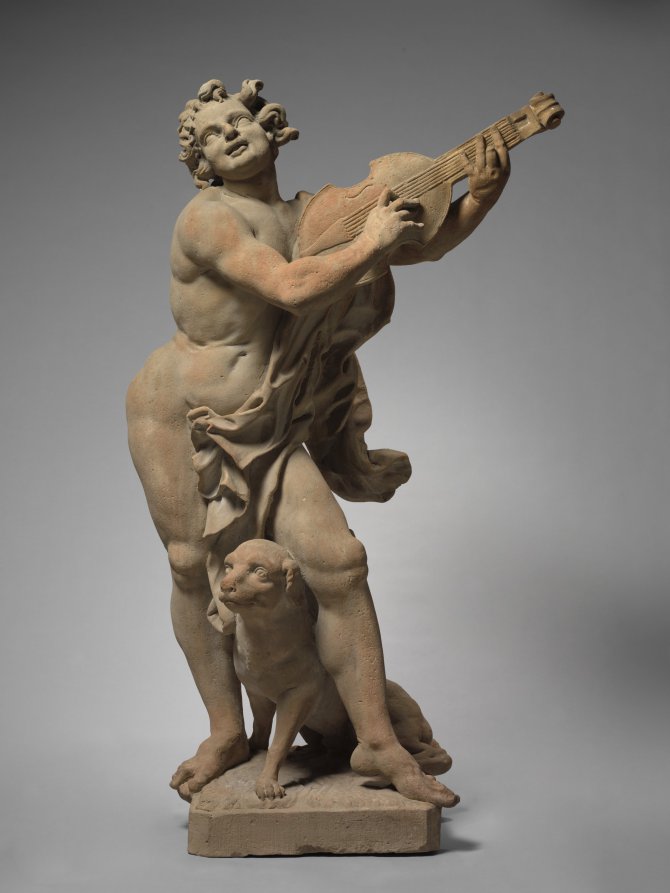
Urban Form: Orpheus and Cerberus
Executive Summary: The Dialectics of Surface and Structure
This Urban Silhouette Research interrogates the aesthetic dialogue between two disparate artifacts—the Renaissance Italian cassone depicting Famous Women and the Mughal miniature Caparisoned Elephant—to extract a wearable thesis for the 2026 NYC executive wardrobe. The operative insight is not ornamental nostalgia but a cold, structural principle: fabric as ideological armor. Both objects deploy dense surface treatments to simultaneously reveal and conceal power dynamics. For the contemporary urban professional, this translates into a tailored silhouette that uses onyx-toned, high-tensile textiles to encode authority through controlled opacity, geometric precision, and a deliberate suppression of organic form. The result is a garment system that performs dominance not through volume, but through the discipline of its surface—a visual rhetoric of containment that mirrors the cassone’s moral framing and the elephant’s imperial regalia.
Formal Deconstruction: From Narrative Panel to Wearable Architecture
The cassone’s painted surface operates as a “textile-ized” narrative field. Its linear perspective and compartmentalized scenes—each female exemplar isolated within a framed vignette—function like tailored panels sewn into a rigid bodice. The brushwork mimics warp and weft: drapery folds are rendered as repetitive, almost mechanical striations, converting flesh into pattern. This is the first formal principle: the body is subordinated to the grid. In tailoring, this translates to a sharpened shoulder line, a suppressed waist, and a hip-length jacket with princess seams that create vertical, unbroken lines. The garment does not follow the body; it redefines it as a series of flat, controlled planes—akin to the cassone’s wooden panels, which deny anatomical depth in favor of symbolic flatness.
Conversely, the Caparisoned Elephant inverts this logic. Here, the surface is not a painted illusion but a literal textile overlay—the jhool—that completely obscures the animal’s natural silhouette. The miniature’s obsessive rendering of gold thread, mirrored medallions, and repetitive arabesques creates a haptic density that draws the eye across the surface, never allowing it to settle on the organic form beneath. For the executive wardrobe, this translates into a technical innovation: jacquard-woven onyx wool with a matte, almost metallic finish, where the pattern is not printed but structurally embedded. The suit jacket’s lapels are cut with a sharp, asymmetric peak—echoing the elephant’s ceremonial howdah—while the trousers feature a high-rise, tapered leg that elongates the silhouette into a vertical monolith. The goal is to make the wearer’s body a carrier of pattern, not a source of it.
Color Logic: Onyx as the New Neutral of Control
Onyx is selected not for its somberness but for its absorptive capacity. In both source artifacts, the most powerful elements are those that swallow light: the cassone’s dark walnut ground against which gilded figures emerge, and the elephant’s deep indigo and black velvet panels that anchor the gold embroidery. Onyx functions as a visual void—it refuses distraction, forcing the viewer to engage with texture and cut rather than hue. In the 2026 NYC context, where digital screens flatten color into noise, onyx provides a counter-signal of material presence. The fabric is a 4-ply wool crepe with a subtle, irregular slub—reminiscent of hand-spun Mughal threads—that catches ambient light without reflecting it. This is not a flat black; it is a depth-charged black, layered with tonal variations that only reveal themselves at close range, much like the cassone’s underdrawings.
The color is deployed strategically: a full onyx suit for boardroom presentations, but with a single accent—a slate-gray silk lining visible only at the cuff or collar—referencing the cassone’s hidden moral inscriptions. This is a power move of restraint: the executive does not announce authority; they absorb it, making the viewer lean in to decipher the garment’s internal logic.
Surface Politics: The Aesthetics of Concealment
Both artifacts demonstrate that the most decorated surface is the most heavily policed. The cassone’s painted women are trapped in their virtue; the elephant’s caparisoned body is a spectacle of imperial order. For the tailored wardrobe, this translates into a zero-tolerance approach to drape. Every seam is topstitched with a contrasting onyx-on-onyx thread, creating a barely visible ridge that mimics the miniature’s linework. Pockets are welted and hidden; buttons are covered in the same fabric, eliminating any metallic interruption. The jacket’s hem falls precisely at the second knuckle of the thumb—a measurement derived from the cassone’s proportional framing—ensuring that the silhouette terminates in a clean, unbroken line.
The trousers are cut with a forward-pitched waistband, a subtle deviation from the vertical axis that creates a slight tension at the hip—echoing the elephant’s girth straps, which cinch the caparison into place. This is not comfort tailoring; it is architectural tailoring, where the garment’s internal structure (fusible interfacing, canvas chest pieces, and steel boning at the side seams) functions like the cassone’s wooden frame: invisible but absolute. The wearer’s movement is slightly restricted, but this restriction is the point. It signals that the body has been disciplined by the garment, just as the elephant’s wildness is disciplined by the jhool.
Silhouette Specifications for the 2026 NYC Executive
1. The Cassone Jacket: Single-breasted, two-button closure, with a notched lapel cut at a 75-degree angle—a nod to the cassone’s perspective lines. The shoulder is extended by 0.5 inches and padded with a firm, non-roll felt, creating a square, authoritative line. The waist is suppressed by 1.5 inches, but the suppression is achieved through a side panel construction, not darts, preserving the front’s flat, panel-like surface. Length: 29 inches, ending at the hip bone to elongate the torso.
2. The Caparison Trouser: High-rise (12-inch front rise) with a double-tab closure and an internal belt that cinches the waist from within. The leg is tapered from a 24-inch thigh to a 14-inch hem, creating a continuous, columnar line. A single, forward-facing pleat—pressed to a knife edge—references the elephant’s ceremonial saddle folds. The hem is finished with a 2-inch cuff, weighted with a hidden lead strip to ensure it falls with the same gravity as the Mughal miniature’s drapery.
3. The Surface Treatment: All garments are finished with a silicone-based water repellent that creates a micro-textured, almost waxy surface—reminiscent of the cassone’s varnished tempera. This is not a weatherproofing gimmick; it is a tactile signifier of impermeability. The executive’s authority is not porous; it repels external influence, just as the cassone’s painted surface repels the viewer’s attempt to see beyond its moralizing imagery.
Conclusion: The Surface as Sovereign
The 2026 Addison Fashion urban silhouette, derived from Orpheus and Cerberus, rejects the current trend of “soft power” dressing—the oversized blazers, fluid trousers, and draped knits that dominate contemporary executive wear. Instead, it returns to a pre-modern logic of surface sovereignty: the garment as a painted panel, a woven caparison, a controlled interface between the self and the social gaze. The onyx palette and tailored form are not nostalgic; they are strategic responses to an era of visual noise. In a city where attention is the scarcest commodity, the executive who wears this silhouette does not compete for visibility. They command it—by offering a surface so dense, so deliberate, that it cannot be ignored, yet so opaque that it cannot be read. This is the ultimate power move: to be seen, but never known. The surface is the message, and the message is control.