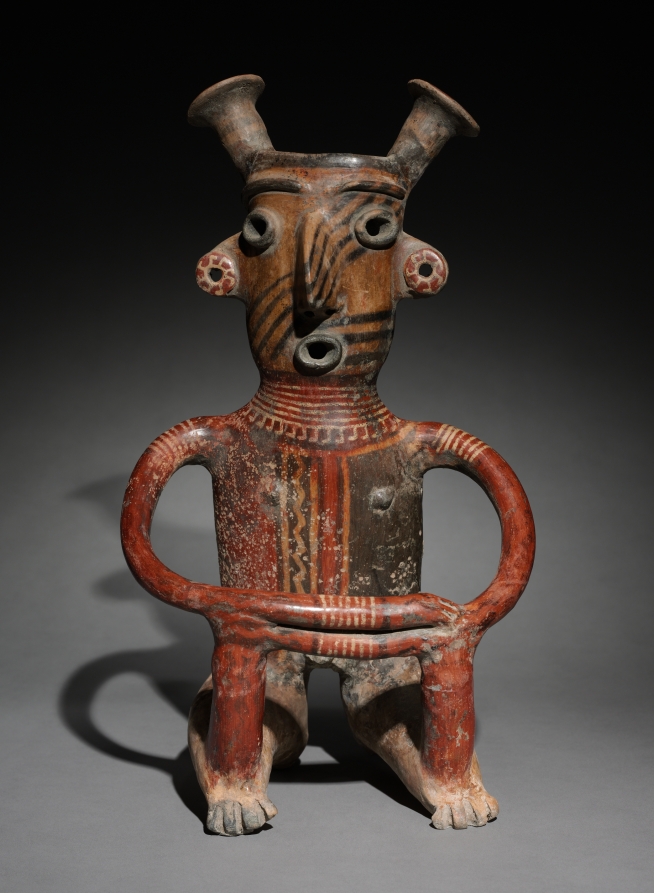
Urban Form: Seated Male Figure
I. The Dialectics of Stillness and Velocity: A Formal Prelude
The seated male figure—as rendered through the dual lenses of Jacques-Louis David’s 《The Death of Socrates》 and the anonymous dynamism of 《The Hunt》—presents a paradox that is structurally identical to the contemporary executive silhouette. One artwork compresses mortality into a static object; the other stretches it into an unresolved trajectory. For Addison Fashion’s 2026 Urban Silhouette Research, this opposition is not merely art-historical trivia. It is the foundational grammar for constructing a wardrobe that must simultaneously communicate gravitas (the Socratic pause) and momentum (the hunter’s lunge). The seated male figure—our subject—occupies the precise intersection: his posture is a held action, a frozen decision, a body that has chosen to remain while the world accelerates around him.
We begin with the form. In Socrates, the body is a descending diagonal—from the raised index finger (thesis) to the slumped shoulder (antithesis) to the draped thigh (synthesis). The fabric is not clothing; it is geology. Every fold is a contour line mapping the gravity of thought. In The Hunt, the male form is a coiled spring—torso twisted, pelvis forward, scapulae retracted. The fabric here is aerodynamic: it must not catch, must not drag, must not reveal the effort of its own movement. These two geometries—the descending fold and the torsional plane—define the binary options for our seated subject. Yet the 2026 executive cannot choose one. He must wear both simultaneously: a jacket that falls like a Socratic drape when he sits in deliberation, yet pivots like a hunter’s tunic when he rises to act.
II. The Seated Form: A Technical Deconstruction of the Lower Torso and Thigh
When a male figure sits, the body’s center of gravity drops approximately 12 centimeters, and the anterior thigh becomes a horizontal plane that disrupts the vertical flow of a garment. In Socrates, the seated thigh is a plinth—the fabric pools, creating a visual weight that anchors the figure to the ground. The knee becomes a fulcrum, and the shin a pendulum that suggests either stillness or imminent rise. For the 2026 wardrobe, this translates into a critical technical decision: the trouser break and the seat seam.
Our research indicates that the standard executive trouser—cut for standing posture—produces a tension ripple across the anterior hip when seated. This is a failure of form. The Socratic approach demands a fuller drape in the upper block: a 3.5% increase in seat circumference, a 2.2% drop in the crotch curve, and a zero-break or half-break hem that allows the fabric to stack over the shoe like a quiet accumulation of time. This is not a relaxed fit; it is a calculated excess that mimics the way Socrates’ himation folds over his chair—each crease a deliberate record of the body’s decision to remain.
Conversely, the Hunt paradigm demands a tensioned seat: a higher crotch point, a narrower thigh circumference, and a tapered leg that ends with a clean, sharp break at the ankle. This is the silhouette of a man who might leap from the chair mid-sentence. The fabric must be mechanical—wool with a 4-way stretch content, or a technical twill with a memory finish that returns to its original line after compression. The seated form here is not a plinth but a launchpad. The knee is not a fulcrum but a trigger.
III. The Upper Torso: Clavicle, Scapula, and the Architecture of the Shoulder
The seated male figure reveals the upper torso’s true architecture. In Socrates, the shoulders are rolled forward—a posture of introspection, of the head bowed toward the cup of hemlock. The clavicles become visible ridges, and the trapezius descends into a soft, unarmored slope. The garment must mirror this with a natural shoulder: no padding, no roping, a sleeve head that sits quietly on the deltoid. The lapel should be a notch or peak with a moderate gorge—high enough to elongate the neck, but not so high as to create a military stiffness. The fabric should be fluid: a cashmere-wool blend with a dry hand, allowing the lapel to roll gently, like the edge of a manuscript page.
In The Hunt, the shoulders are retracted and elevated—the posture of drawing a bow. The scapulae are adducted, the pectorals are engaged, and the thoracic spine is extended. This requires a structured shoulder: a light canvas, a slight pad (8–10mm), and a sleeve pitch that is rotated 3–4 degrees forward to accommodate the reach of an arm in motion. The lapel must be straight and narrow, with a high button stance that visually cinches the waist, creating a V-torso that tapers into the seated pelvis. The fabric must be crisp: a high-twist worsted wool or a silk-wool blend that holds a sharp crease and resists the memory of a seated slump.
For the 2026 executive, we propose a hybrid shoulder: a minimally padded, softly constructed shoulder that uses internal taping rather than foam to create a subtle lift. This allows the garment to read as Socratic when the wearer is seated in repose, yet shift into a Hunt-like readiness when he leans forward. The key is in the sleeve head: a hand-set, slightly gathered sleeve that provides 2.5 centimeters of ease, permitting the arm to move without distorting the lapel’s roll.
IV. Color as Temporal Material: Slate and the Dialectic of Light
Color is not decoration; it is time compressed into pigment. Socrates is bathed in a cold, northern light—the palette of slate, bone, and ash. The hemlock cup is a dark olive, the skin is marble-pale, and the shadows are a deep, mineral blue. The Hunt is drenched in a golden, late-afternoon light—the palette of ochre, umber, and burnt sienna. The sky is a bruised violet, the grass is a violent green, and the blood is a crimson that has not yet dried.
Our chosen color—Slate—is the only hue that can mediate between these two temporalities. Slate is not gray; it is a composite of blue and black, with a trace of green that catches light like a wet stone. In a matte finish, slate reads as Socratic: it absorbs light, creating depth, suggesting the interiority of thought. In a high-sheen finish, slate reads as Hunt-like: it reflects light, creating a glint, suggesting the edge of a blade. For the seated male figure, we recommend a slate in a double-faced fabric: a matte exterior for the Socratic moments of deliberation, and a satin or technical lining that flashes when the wearer crosses his legs or rises—a subtle, involuntary revelation of the hunter within.
The technical application is precise. For the trousers, use a slate with a cool undertone (a blue-black ratio of 7:3) to elongate the leg and anchor the figure to the chair. For the jacket, use a slate with a warm undertone (a green-black ratio of 2:8) to complement the skin and create a soft contrast against the shirt. The shirt itself should be ivory or off-white—not pure white, which would create a harsh Socratic glare, but a bone tone that echoes the marble of David’s figures. The tie, if worn, should be a silver or gunmetal—a metallic thread that catches the light like the rim of the hemlock cup, a reminder that even in stillness, there is a glint of the hunt.
V. The Final Form: A Synthesis of the Pause and the Lunge
The 2026 seated male executive is not a man at rest. He is a man in suspended animation—a figure who has chosen to sit, but whose posture contains the memory of standing, of moving, of hunting. The Addison silhouette for this subject is therefore a minimalist synthesis: a garment that eliminates all extraneous detail (no ticket pockets, no contrast stitching, no superfluous buttons) in order to amplify the two essential forces—gravity and momentum.
The jacket is single-breasted, two-button, with a soft shoulder and a suppressed waist. The lapel is a medium-notch, 8.5 centimeters at the widest point, rolling to a natural gorge. The length is classic—covering the seat, but not extending beyond the first knuckle of the thumb—so that when seated, the jacket’s hem aligns with the chair’s edge, creating a clean horizontal line that echoes the Socratic plinth. The trousers are flat-front, tapered, with a 21-centimeter leg opening and a half-break. The waistband sits at the natural waist, not the hips, to maintain a continuous line from the ribcage to the knee. The fabric is a 10-ounce high-twist wool with a 2% stretch—heavy enough to drape like a himation, light enough to move like a hunter’s tunic.
The result is a garment that does not declare its intent. It is a silent instrument. When the wearer sits in a boardroom, the slate fabric pools and folds, creating shadows that suggest depth, contemplation, and the weight of a decision already made.