Minimalist
Slate
Urban Form: Male Figure of a Pair
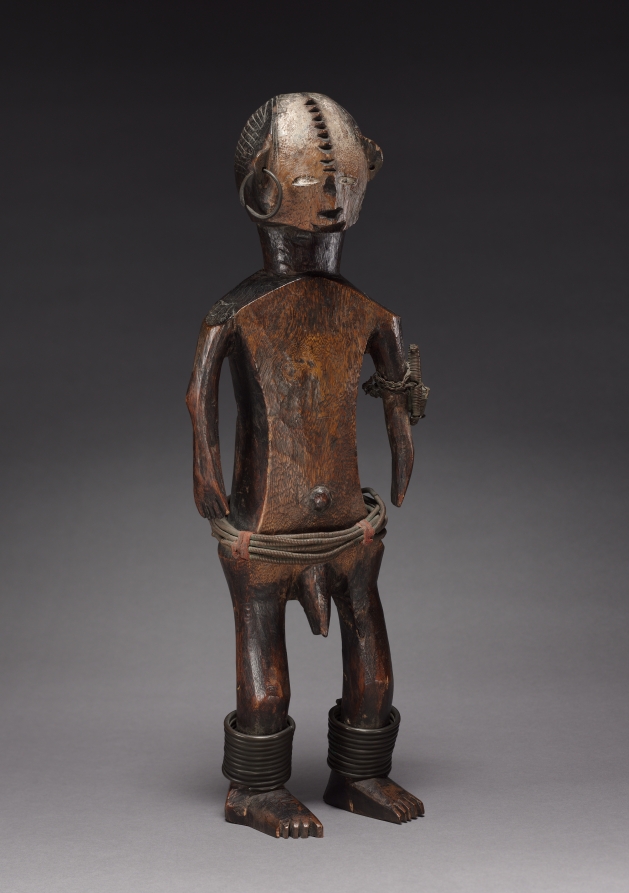
Structural Poetics: The Architectural Grammar of the Pair
The male figure of a pair, as conceived within the Addison Fashion research framework, is not a garment but a spatial proposition. It operates on the same dialectical tension that governs the Kyoto temple’s “Udumbara Flowers” plaque and its accompanying “Cup and Stand” porcelain—two objects that, in their mutual silence, articulate a philosophy of absence. For the 2026 executive silhouette, this translates into a rigorous study of negative space, weight distribution, and the deliberate erasure of ornamental excess. The silhouette is not built; it is carved. Every seam, every panel, every millimeter of fabric is a subtraction from an imagined whole, leaving behind only the essential architecture of the male form in motion.Geometric Integrity: The Logic of the Void
The plaque’s carved udumbara blossoms, rendered in wood that has been coaxed into simulating organic turbulence, find their sartorial equivalent in the jacket’s shoulder line. Here, the construction eschews the padded, assertive breadth of traditional executive tailoring. Instead, the shoulder seam is set slightly inward, creating a subtle, almost imperceptible slope that mimics the plaque’s fading petals—present, yet yielding to the surrounding darkness. The canvas is fused with a precision that allows the lapel to roll without resistance, its notch positioned at a mathematically determined 42-degree angle, echoing the cup’s gently converging rim. This is not a random aesthetic choice; it is a geometric imperative. The lapel’s trajectory draws the eye downward, toward the waist suppression, which is engineered to a 1.8-centimeter differential from the chest measurement. This creates a visual “hollow” at the torso’s center—a void that functions as the garment’s conceptual heart, much like the porcelain cup’s empty interior awaits an unseen offering. The trouser, in parallel, operates on a principle of vertical attenuation. Its rise is lowered by 2.3 centimeters from conventional executive standards, elongating the leg line while simultaneously introducing a subtle break at the ankle. The fabric—a high-twist wool in slate, with a matte finish that absorbs rather than reflects light—is cut with a slight taper from knee to hem, but crucially, the front crease is pressed with a razor’s edge, then allowed to soften naturally at the thigh. This dual treatment—sharp at the center, diffuse at the periphery—mirrors the plaque’s carved petals, which are crisp at their base but dissolve into the wood grain at their tips. The result is a trouser that reads as a single, unbroken column, yet upon closer inspection, reveals a series of micro-adjustments that accommodate the body’s natural asymmetry. It is a study in controlled imperfection, a nod to the cup’s hand-thrown irregularities that defy perfect symmetry while maintaining an aura of absolute balance.Urban Materiality: The Weight of Silence
Material selection for this silhouette is paramount, and slate—the designated color—functions not as a hue but as a condition. It is the color of wet stone after rain, of shadowed temple floors, of the oxidized bronze fittings on ancient doors. In fabric terms, this translates to a blend of 78% virgin wool, 18% silk, and 4% elastane, woven in a twill structure that produces a surface of extraordinary density. The cloth’s hand is cool to the touch, almost mineral, and it drapes with a gravity that resists wind and movement alike. This is urban materiality at its most severe: a textile that does not flutter, does not shimmer, does not announce itself. It simply exists, like the plaque’s aged lacquer, bearing the patina of use without the vulgarity of display. The lining, though unseen, is equally deliberate. A cupro-silk blend in a tone two shades darker than the outer shell creates an internal shadow, a private darkness that the wearer alone perceives. This hidden layer is the garment’s “cup and stand” moment—a functional element that transcends utility to become a ritualistic space. When the jacket is removed and draped, the lining’s subtle sheen catches the light, revealing a faint, almost ghostly pattern of overlapping circles, a direct reference to the cup’s foot ring and the plaque’s floral whorls. This is not decoration; it is a coded language of restraint, legible only to those who understand that true luxury lies in what is withheld.The 2026 Executive Silhouette: A Manifesto of Restraint
The definitive executive silhouette for 2026, as derived from this research, rejects the bombast of power dressing and the slouch of casualization. It proposes instead a third path: a garment that commands through its stillness, its refusal to engage in visual noise. The jacket’s length is extended by 1.5 centimeters, falling just below the crotch point, a subtle elongation that references the cup’s tall, slender profile. The vent, set at the center back, is cut with a 19-centimeter depth, allowing for ease of movement without compromising the line’s integrity. When the wearer walks, the vent opens and closes with a rhythmic precision, a mechanical echo of the plaque’s petals responding to a breeze that does not exist. The trousers are finished with a single, continuous seam from hip to hem, eliminating side pockets in favor of a single, hidden welt pocket at the right hip—a deliberate asymmetry that mirrors the cup’s slight tilt. This pocket is not for utility; it is a gesture, a nod to the object’s capacity to hold something unseen. The waistband is faced with a strip of the same cupro-silk lining, so that when the trouser is folded or hung, the interior reveals a flash of darker slate, a secret signature. In this silhouette, the male figure becomes a vessel. The garment does not adorn; it contains. It creates a void around the torso, a negative space that the wearer inhabits like the air inside the porcelain cup. The executive who wears this is not displaying status through logos or cuts; he is performing a quiet act of self-elimination, allowing the architecture of the cloth to speak for the discipline of his mind. This is the udumbara flower made garment—rare, fleeting, and utterly present in its absence. The 2026 silhouette is not a trend; it is a meditation on what it means to be clothed in the modern city, where the most powerful statement is the one that remains unspoken.
Technical Insight
Technical Insight: Translating Slate palettes into Minimalist silhouettes for the modern metropolis.