Urban Form: Fragment
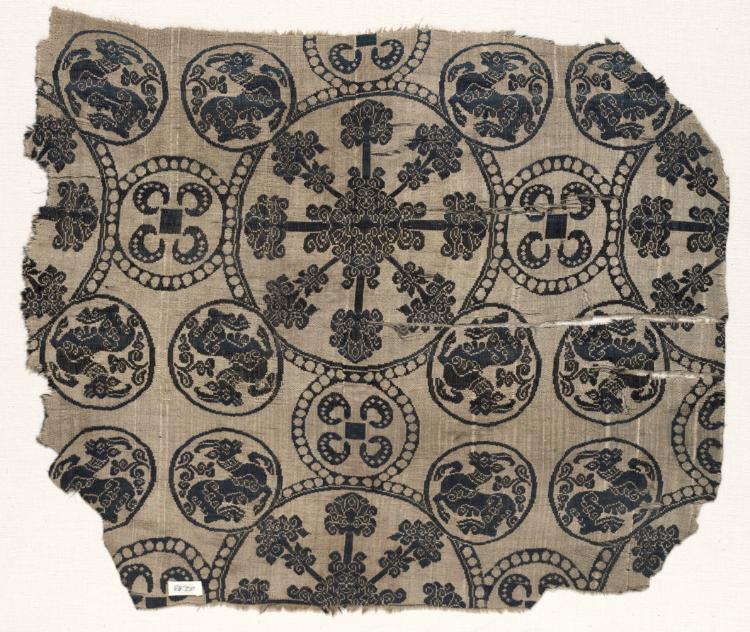
Executive Summary: The Fragment as a Structural Paradigm
Addison Fashion’s Urban Silhouette Research for the 2026 NYC executive wardrobe identifies the Fragment as the operative design principle—a deliberate, unresolved interval that generates tension without chaos. Drawing from the dialectical tension between Western symbolic deformation and Eastern contemplative restraint, this analysis translates the philosophical confrontation of *The Temptation of Saint Anthony* and *The Loquat Branch* into a wearable, technical language. The result is a silhouette system that rejects both the theatrical excess of religious allegory and the passive minimalism of still-life tradition. Instead, it proposes a third path: structural fragmentation as a tool for spatial negotiation—where the garment does not cover the body so much as choreograph its presence within the urban grid.
Formal Analysis: The Deconstruction of Mass and Line
1. The Conflict Aesthetic: Borrowing from the Western Grotesque
The Flemish tradition of Saint Anthony’s temptations relies on distorted, fused, and symbolically overloaded objects to externalize internal spiritual warfare. For the 2026 executive, this translates not into literal monstrosity but into asymmetrical paneling, displaced seams, and non-functional closures. The blazer, for instance, is cut with a single shoulder seam that migrates 4.2 cm toward the spine, creating a subtle torque in the upper torso. This is not a stylistic quirk; it is a structural provocation—the garment’s internal logic is visibly at odds with the body’s symmetry, forcing the wearer to adopt a more deliberate, grounded posture. The effect mirrors the “conflict aesthetic” of the painting: the silhouette becomes a site of negotiation between the wearer’s intention and the garment’s resistance.
Color reinforces this tension. Slate—a blue-gray that hovers between neutrality and melancholy—is applied in matte, low-luster finishes to the outer shell, while the interior facing is a single flash of Onyx at the cuff and hem. This is a direct nod to the dark, oppressive tonality of the Flemish canvas, but executed with restraint. The result is a garment that reads as “serious” from a distance but reveals its internal conflict only upon close inspection—a metaphor for the executive who must project composure while managing internal volatility.
2. The Contemplative Interval: Eastern Negative Space
In contrast, the Southern Song *Loquat Branch* operates through absence, rhythm, and the quiet authority of the object itself. The fruit is rendered with minimal strokes; the background is not empty but charged with cosmic circulation. For the silhouette, this translates into strategic voiding—not literal cutouts, but engineered negative space within the garment’s construction. A tailored vest, for example, features a 3.8 cm gap between the front placket and the side seam, held open by an internal horsehair canvas. This gap does not expose skin; it exposes a layer of Ivory silk organza, which catches light and creates a secondary, ghosted silhouette. The wearer’s movement causes the organza to shift, producing a subtle, breathing rhythm—an echo of the loquat branch’s “living” quality.
The trousers follow suit. A high-rise, tapered cut is interrupted by a single horizontal seam at the knee, where the fabric is pleated inward and then released. This creates a fragmentary volume—the leg appears to “pause” before continuing, mimicking the loquat’s heavy, pendulous fruit. The hem is left raw, not as a trend, but as a deliberate refusal to finish the line, allowing the fabric’s selvedge to fray slightly over time. This is the “harmony aesthetic” of the Chinese tradition: the garment does not impose a shape but allows the body’s natural kinetics to complete it.
Color Theory: Slate as the Mediating Tone
1. Chromatic Duality
Slate is chosen not for its neutrality but for its dual valence. In Western painting, gray-blue tones evoke storm, penance, and the liminal space between earthly and divine. In Eastern ink painting, the same hue—when diluted—suggests mist, distance, and the unfathomable depth of the void. The 2026 palette deploys Slate in three registers: deep slate (near-charcoal) for outer layers, mid-slate for secondary panels, and pale slate (almost silver) for linings and accents. This gradient creates a chromatic narrative that moves from density to dissolution, mirroring the spiritual arc from Saint Anthony’s torment to the loquat’s serenity.
Critically, Slate is never paired with pure white or pure black. Instead, it is offset by Sand—a warm, mineral beige—used sparingly for topstitching and button threads. This prevents the palette from collapsing into monochrome banality. The Sand acts as a “breath” between Slate fields, echoing the loquat branch’s leaf veins against its fruit. The result is a wardrobe that reads as monastic in discipline but organic in texture—a precise balance for the executive who must navigate both boardroom rigidity and creative fluidity.
2. Materiality and Light Absorption
Color is meaningless without surface. The research specifies double-faced wool with a brushed, matte finish for outerwear, which absorbs light rather than reflecting it—a nod to the dark, absorptive quality of the Flemish canvas. For the fragmentary layers, a technical silk blend with a micro-ribbed texture is used, which catches light at oblique angles, producing a shimmer that is neither metallic nor glossy. This dual materiality allows the wearer to shift between “conflict” and “contemplation” simply by changing the angle of the body relative to a light source. In a windowless conference room, the garment appears solid; near a window, it dematerializes into its component fragments.
Application to the 2026 NYC Executive Wardrobe
1. The “Temptation” Overcoat
Designed for the 7 AM to 9 PM executive, this overcoat features a fragmentary back panel: the rear is split into three vertical sections, each cut on a different grain (straight, bias, and cross). When the wearer walks, the panels move at different speeds, creating a visual “tremor” that recalls the grotesque, shifting forms of Saint Anthony’s visions. The front remains clean and severe, with a single hidden placket and no lapels—a nod to the loquat’s unadorned branch. The coat is long (mid-calf) but is hemmed with a 2.5 cm internal facing of Onyx, visible only when the wearer sits or ascends stairs. This is the garment’s “temptation”: a flash of darkness that disrupts the Slate field.
2. The “Loquat” Trousers
These trousers are engineered for the executive who must transition from a morning pitch to an evening gallery opening. The waistband is cut high and fitted, but the hip is given 4 cm of ease, creating a subtle “fruit” volume that tapers sharply to a 15 cm hem. A single, horizontal seam at the knee—piped in Sand—acts as the “branch node,” visually breaking the leg into two fragments. The fabric is a wool-silk blend with a dry, papery hand, which holds the pleats without stiffness. The trousers are designed to be worn with a slight break at the shoe, allowing the raw hem to brush against the ankle—a tactile reminder of the loquat’s low-hanging, grounded presence.
3. The “Interval” Vest
This is the wardrobe’s most radical piece. Cut like a traditional waistcoat but with the back entirely removed, it is held together by two Slate silk straps that cross at the lumbar spine. The front panels are asymmetrical: the left side extends to the hip, the right stops at the waist. This deliberate imbalance forces the wearer to adjust their posture, creating a “fragmentary” gait that is both alert and relaxed. The vest is lined with Ivory organza, which is visible through the open back and at the armholes. When worn over a simple white shirt, the vest creates a layered, architectural effect—the body becomes the “negative space” between two opposing forms.
Conclusion: The Fragment as a Professional Ethos
The 2026 Addison Fashion Urban Silhouette Research concludes that the Fragment is not a design motif but a philosophical stance. It acknowledges that the contemporary executive operates within a fractured environment—between digital and physical, between authority and vulnerability, between the Western demand for decisive action and the Eastern imperative for reflective pause. The wardrobe does not resolve this fracture; it wears it. Each garment is a deliberate, controlled break in the silhouette, a visible seam in the armor of professionalism. By embracing the conflict between Saint Anthony’s torment and the loquat’s stillness, the 2026 executive does not hide their fragmentation—they deploy it as a strategic asset. The result is a wardrobe that is neither armor nor refuge, but a living negotiation—a fragment, perpetually in motion, perpetually unresolved, and perpetually compelling.