Urban Form: Bowl
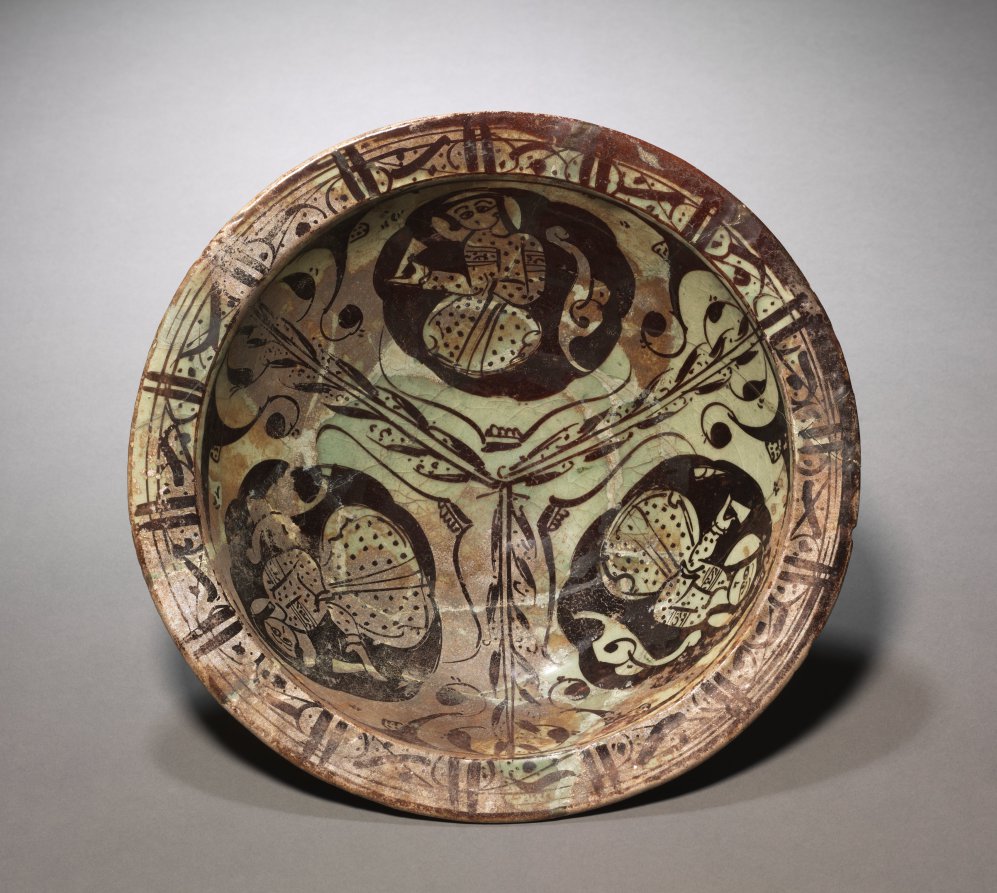
Structural Poetics: The Bowl as Architectural Tectonic
The bowl, in its most reductive reading, is a vessel—a concave volume defined by an external boundary and an internal void. Yet within the Addison Fashion research framework, the bowl transcends its utilitarian origin to become a study in negative space as power. The 2026 executive silhouette, informed by this object, does not drape the body; it contains it. The bowl’s geometry is not a circle but a series of interrupted arcs, each segment negotiating gravity and lift. In the urban context, this translates to a shoulder line that is neither padded nor dropped, but sculpted from the inside out—a continuous curve that begins at the nape, sweeps across the deltoid, and terminates in a clean, unhemmed edge that mimics the bowl’s rim. The fabric, typically a dense wool or bonded technical jersey, is cut to hold its own shape, creating a micro-architecture that stands independent of the wearer’s posture. This is not clothing; it is a portable enclosure, a private sanctuary against the city’s visual noise.
Geometric Integrity: From Concavity to Command
The bowl’s internal DNA, as articulated in the comparative study of the Bodhisattva and the bovine-headed amulet, reveals a dualistic tension: the serene, idealized form versus the anomalous, protective hybrid. For the executive silhouette, this translates into a dual-volume strategy. The primary volume—the coat or jacket—adopts the bowl’s outer shell: a clean, unbroken expanse that reads as monolithic from the front. However, the secondary volume, introduced at the sleeve or side seam, borrows from the amulet’s disruptive logic. A sharp, angular gusset, reminiscent of the bovine head’s horned profile, cuts into the otherwise fluid perimeter. This is not ornamentation but functional disruption—a structural seam that allows for arm movement while visually fracturing the silhouette’s calm. The result is a garment that commands attention not through embellishment but through tectonic contrast: the smooth, contemplative surface of the Bodhisattva’s robe meets the jagged, protective energy of the amulet’s form. The wearer becomes a walking dialectic—serene authority with an edge of unpredictable force.
Urban Materiality: Slate as the New Neutral
Color, in this research, is not a mood but a material property. Slate—the chosen hue—is the color of wet pavement, of corporate glass at dusk, of the city’s unspoken code. It is not a gray but a composite tone, absorbing hints of blue, charcoal, and even a faint green undertone, depending on the light’s angle. In fabric, slate demands a surface that plays with reflection without becoming shiny. A double-faced cashmere, brushed to a matte finish, achieves this. Alternatively, a technical shell with a micro-ribbed texture—reminiscent of the bowl’s ceramic striations—offers a more aggressive urban read. The materiality must echo the bowl’s paradox: it is both fragile (ceramic, easily shattered) and enduring (fired, permanent). For the executive, this translates into garments that are deliberately heavy yet fluid, constructed with a weight that anchors the wearer to the ground, while the internal lining—a silk or cupro—provides a frictionless glide against the body. The bowl’s rim, often the thinnest point, becomes the garment’s hemline: a precise, laser-cut edge that requires no folding, no stitching, only a clean termination of material.
The 2026 Silhouette: A Study in Contained Expansion
The definitive Addison silhouette for 2026 is oversized but not amorphous. It is a study in contained expansion, where the bowl’s internal void is translated into a garment’s ease. The chest and back are cut with an exaggerated fullness—up to 12 centimeters of additional ease at the bust and shoulder blade—yet the waist is subtly cinched, not through a belt but through a hidden interior seam that pulls the fabric inward. This creates a profile that is simultaneously voluminous and defined, echoing the bowl’s external curve and internal concavity. The sleeve, set low on the shoulder, falls in a continuous line to the wrist, where it is gathered into a narrow cuff—a nod to the amulet’s seated figure, grounded and stable. The overall effect is one of architectural poise: the wearer appears to be moving through space within a controlled envelope, their gestures amplified by the garment’s volume, their stillness rendered monumental. This is not a silhouette for the timid; it is a declaration of urban sovereignty, a visual assertion that one’s presence is not to be overlooked.
Conclusion: The Bowl as a Bridge Between Sacred and Secular
Just as the two Buddhist artifacts—the Bodhisattva and the bovine-headed amulet—serve distinct yet complementary functions, the bowl-inspired executive silhouette operates on dual registers. It is a tool for professional authority, its clean lines and substantial weight projecting competence and control. Simultaneously, it functions as a personal talisman, its internal ease and precise construction offering a sense of protection and grounding amidst the city’s chaos. The bowl, in its simplicity, holds everything; the garment, in its complexity, holds the wearer. The 2026 Addison collection does not merely dress the executive; it encases them in a philosophy of form—where every curve is intentional, every seam is structural, and every color is a material truth. This is the new urban uniform: not a suit, but a portable architecture for the modern sovereign.