Urban Form: Covered Teapot
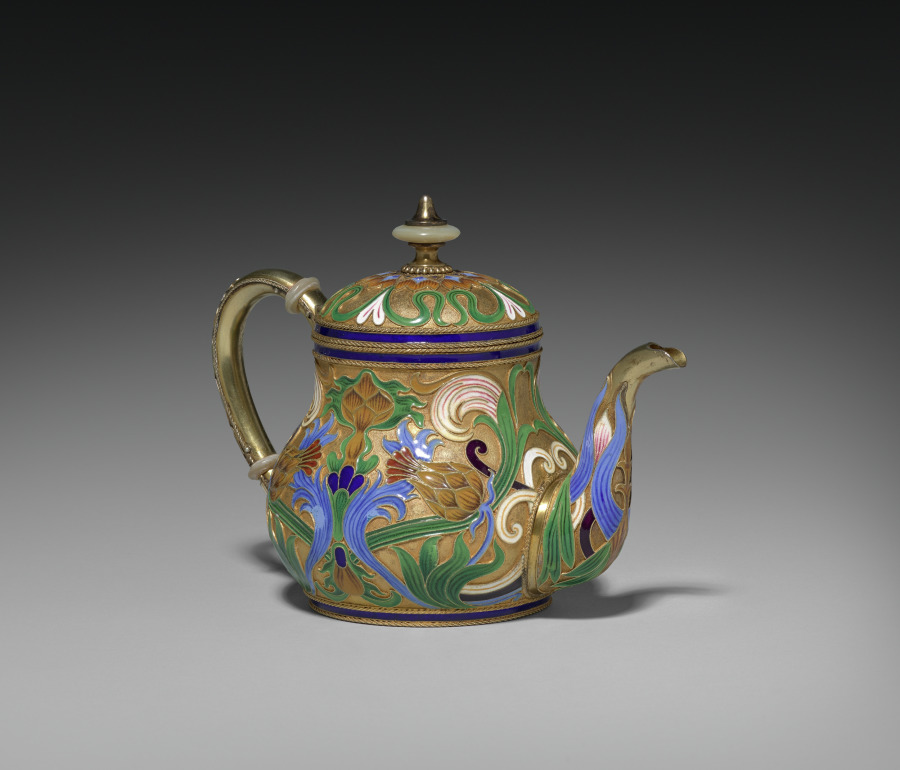
Technical Analysis: Architectural Silhouette Derived from Ritual Object
The provided artifact—a Covered Teapot—and the accompanying discourse on Buddhist iconography present a profound case study in contained volume, symbolic form, and functional duality. For the Addison Fashion 2026 executive silhouette, this is not a narrative to be illustrated, but a structural logic to be excavated. The analysis pivots on a core principle: the sanctity of the contained form. The teapot, like the discussed Bodhisattva and bovine-headed amulet, is a vessel—both literal and metaphorical. Its geometric integrity offers a blueprint for a silhouette defined by intentional enclosure, calibrated revelation, and a materiality that speaks of urban monasticism.
Deconstruction of Geometric Integrity: The Vessel as Armature
The primary geometric assertion of a covered teapot is the closed, continuous curve. Its form is predicated on containment, a self-sufficient volume where the handle and spout are not mere appendages but integral, tension-generating extensions of the body's sphere or ovoid. This mirrors the "self-contained" dignity of the Bodhisattva icon, where every limb and adornment exists in a state of resolved equilibrium within the defined spatial field. For the 2026 silhouette, this translates to a rejection of deconstruction for its own sake. Instead, we propose architectural tailoring that builds from the core torso as a central vessel. Seamlines will follow and accentuate the natural curve of the spine and ribcage, creating a sleek, unbroken shell. The shoulder line, critical to this architecture, will be precisely defined—neither aggressively broad nor softly sloping—acting as the "lid" to the torso's vessel, establishing a clean, authoritative terminus.
The concept of the "cover" is paramount. In the artifact, the cover ensures integrity and heat retention, a functional secrecy. In the bovine-headed amulet, the "cover" is its miniature, concealable scale—a private power. For the executive silhouette, this manifests as strategic occlusion and layered revelation. This is not about bulk, but about calculated planes. A single, severe button closure on a hip-length coat; a high, structured neckline that rises to the jaw; a jacket fastened with a single, substantial closure at the sternum, leaving a precise vertical slit of the underlying garment. These are sartorial "covers" that create a sense of self-possession and withheld narrative, crucial for the urban executive's psychic space.
Structural Poetics: Tension Between Sanctum and Interface
Structural poetics arise from the dialogue between the teapot's serene body and its functional protrusions—the spout and handle. This creates a poetry of directed force. The handle invites engagement, the spout facilitates controlled release. Similarly, the Bodhisattva's mudra (hand gesture) is both an internal state and an external communication. The 2026 silhouette will incorporate this principle through articulated sleeve heads and asymmetric seam detailing that suggest mobility within stillness. A tailored jacket may feature a seam running from the collarbone, over the shoulder, and down the back, mimicking the armature of a handle's connection—aesthetic, but revealing an understanding of tension and support.
The poetics of the bovine-headed amulet—its hybrid nature and personal scale—inform the detail as talisman. This is where minimalism is imbued with personal significance. A placket constructed from a technically advanced, subtly textured fabric, visible only upon movement; a lining in a mineral hue that references the Slate exterior but is known only to the wearer; a closure made of a single, cold-forged metal alloy, its form abstracted from a ritual object. These are the "private iconographies" of the garment, the functional details elevated to protective, personal symbols within the clean, public facade.
Urban Materiality: The Mineral Patina of Discipline
The designated color, Slate, is not a mere hue but a material statement. It is the color of compressed time, of stratified rock, of weathered urban infrastructure. It possesses a cool, mineral sophistication that aligns with the "cold" analysis demanded. This materiality will be expressed through fabrics that possess intrinsic structure and a muted, complex surface interest. Think: double-faced wool with a microscopic herringbone weave that catches light like shale; technical matte jacquards with geometric patterns so subtle they are perceived as texture, not motif; compressed, non-lustrous silks that drape with weight and precision, akin to poured liquid slate.
The materiality must also speak to the duality of the sacred and the utilitarian, as seen in the two Buddhist icons. The outer shell of a garment will employ these advanced, performance-oriented wools and technical blends—materials for the public sphere, offering protection and presenting a flawless facade. Against the body, against the "vessel" of the self, materials will shift towards ultra-fine merino or thermoregulating micro-modal—the modern equivalent of sanctified, personal comfort. The intersection of these two material realms at the precise points of closure and opening (cuffs, neckline, hem) becomes a critical design focus, requiring flawless, nearly invisible construction.
Defining the 2026 Executive Silhouette
The resultant silhouette for 2026 is one of contained potential. It is tailored, but not restrictive; minimalist, but deeply considered; urban, but with a monastic focus. The shape is defined by the integrity of the torso as a central volume, with limbs articulated cleanly from it. Outerwear will feature strong, unbroken lines and decisive closures. Dressing will involve single-layer statements or precise two-layer systems where the underlayer is revealed only through controlled apertures—a high slit, a deep V-neckline under an open coat.
This silhouette rejects the fluidity of overt romanticism and the aggression of extreme oversized proportions. It occupies the disciplined space of the Tailored, informed by the geometric purity of the ritual vessel. It is a silhouette for an executive who operates as a self-contained unit of focus and capability, whose power is derived from internal integrity and calibrated external interface. Like the covered teapot, it is a form that holds its contents—the individual—with reverence and purpose, presenting to the world an architecture of serene, impenetrable authority. The urban environment is its temple; the garment, its disciplined and protective cell.