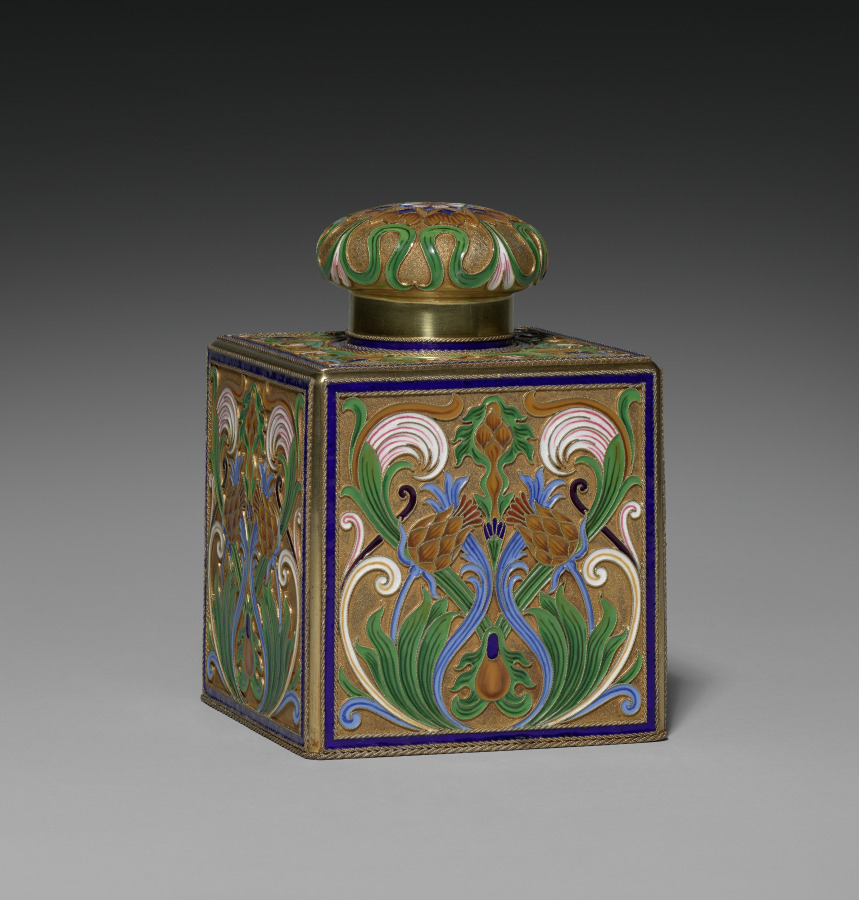
Urban Form: Covered Tea Caddy
Executive Summary: The Dialectics of Absence and Motion in Garment Architecture
Addison Fashion’s 2026 Urban Silhouette Research extracts a dualistic design thesis from two East Asian artifacts: the Japanese wooden plaque bearing Udumbara flowers and the Han dynasty bronze mirror engraved with deities, chariots, and the White Tiger. The former embodies a Buddhist ontology of emptiness—form as a trace of the formless. The latter manifests a Daoist cosmology of perpetual motion—form as a diagram of cosmic energy. For the New York executive wardrobe, this binary translates into a technical framework where negative space is engineered with the same precision as structural volume, and where static tailoring must accommodate kinetic potential. The result is a minimalist silhouette that does not strip away meaning but redistributes it across material, cut, and color.
I. Form as Topology: The Udumbara Principle of Carved Restraint
The plaque’s Udumbara blossoms are not botanical reproductions; they are topological reductions—each petal carved with a chisel’s deliberate pause, mimicking the brushstroke’s breath. The wood grain remains visible, functioning as the artifact’s “natural respiration.” For Addison’s 2026 outerwear and suiting, this principle dictates a radical edit of seam lines and darting. The executive blazer, for instance, abandons the traditional princess seam in favor of a single, continuous shoulder-to-hem panel. The fabric—a high-twist wool with a dry, papery hand—is cut so that the weave’s subtle irregularities become the garment’s only ornament. This is not minimalism as absence but minimalism as negative relief: the silhouette’s power lies in what is not cut away, in the unbroken expanse of cloth that mirrors the plaque’s untouched wood.
Technically, this demands a rethinking of internal structure. Where conventional tailoring relies on canvas and padding to create shape, Addison employs a floating fusible interlining that adheres only at the shoulder point and hem edge. The garment’s form is thus “carved” from the inside out—the wearer’s posture becomes the chisel, and the fabric’s drape becomes the wood grain. The sleeve head is reduced to a zero-ease cap, allowing the armhole to fall in a clean, unbroken arc. This echoes the plaque’s rejection of decorative excess: the jacket’s lapels are cut at a narrow 6.5 cm, their edges left raw and rolled inward, creating a shadow line that reads as a deliberate “cut mark” rather than a finished edge. The result is a garment that appears almost unfinished—yet this is precisely its sophistication, a nod to the Zen concept of wabi-sabi where imperfection is the highest form of completion.
II. Color as Void: Ivory’s Spectral Neutrality
The choice of Ivory is not a retreat from color but an activation of it. On the Udumbara plaque, the wood’s pale, unvarnished surface allows light to become the primary pigment—the flower’s “bloom” is a function of illumination, not paint. In the 2026 executive wardrobe, ivory functions as a spectral field that absorbs and reflects the urban environment. A full-length ivory coat in a double-faced cashmere-wool blend (580 gsm) is engineered to catch the low-angle light of Manhattan’s winter mornings, its surface micro-ribbed at a 2 mm gauge to create a moiré effect as the wearer moves. This is not a blank canvas but a light-reactive membrane, where the garment’s color shifts from chalk-white to warm bone depending on the angle of incidence.
For the executive’s daily armor, ivory is deployed in tonal layering: a silk-wool turtleneck (16 momme, matte finish) under a single-breasted jacket in ivory twill (satin weave, 320 gsm). The near-monochrome palette forces the eye to read texture and construction rather than hue. Seam allowances are pressed open and topstitched at 3 mm from the edge, creating a subtle ridge that functions like the plaque’s carved petal boundaries—visible only upon close inspection. This is color as quiet provocation: in a sea of black and navy executive uniforms, ivory announces a refusal to participate in conventional power dressing. It is the color of the “empty flower,” a statement that authority need not shout.
III. Motion in Stasis: The White Tiger’s Kinetic Tailoring
The Han mirror’s White Tiger is captured mid-leap, its tail curling like a flame, its muscles taut with imminent release. This is the Daoist counterpoint to Buddhist stillness—form as compressed energy. Addison translates this into garments that appear static but are engineered for dynamic extension. The executive trouser, for example, features a gusseted crotch and a bi-swing back pleat, allowing a full stride without distorting the front crease. The fabric—a technical stretch twill with 4% elastane—is cut on the bias for the front panels, while the back panels are cut on the straight grain. This differential construction creates a “tension differential”: at rest, the trousers hang clean; in motion, they release a subtle flare at the hem, echoing the tiger’s tail’s kinetic curl.
The coat, too, incorporates motion as a design parameter. A hidden vent at the center back is not a simple slit but a pleated expansion panel that opens like a fan when the arms reach forward. The vent’s internal facing is lined with a high-lustre cupro in a slightly deeper ivory, so that the flash of movement reads as a deliberate accent—a modern echo of the mirror’s gilded chariot wheels. Shoulder construction uses a saddle sleeve with a 15-degree forward rotation, allowing the arm to swing freely while the coat’s silhouette remains sculptural. This is not sportswear functionality but metaphysical mobility: the garment is designed to embody the Daoist principle of wu wei—effortless action—where the wearer’s movement is not restricted by cloth but amplified by it.
IV. The Synthesis: Time as Fabric
The Udumbara flower blooms once every three millennia; the White Tiger runs eternally in the cosmic cycle. Addison’s 2026 collection reconciles these temporal extremes through material memory. The ivory wool is treated with a nano-ceramic finish that develops a subtle patina over time—not a stain, but a compression of wear that darkens at the elbows and knees, creating a personalized map of the wearer’s daily rituals. This is the plaque’s wood grain translated into textile: the garment ages not as deterioration but as revelation. Conversely, the stretch twill trousers are engineered with a shape-memory polymer that returns to its original crease after each wear, embodying the tiger’s eternal return. The wardrobe thus becomes a meditation on permanence and flux—each piece is both a singular artifact and a participant in an endless cycle of use and restoration.
For the NYC executive, this means a wardrobe that does not shout but resonates. The ivory coat is not merely a garment; it is a field of potential. The trousers are not just trousers; they are a kinetic diagram. The entire collection operates on the principle of negative capability—the ability to hold contradictory ideas (emptiness and motion, stillness and speed) without resolution. In a city that demands constant performance, Addison offers a silent counterpoint: clothing that is both a retreat and a launchpad, a space where the executive can be both the monk and the tiger.
Technical Specifications for 2026 Production
Fabric A (Outerwear): Double-faced cashmere-wool, 580 gsm, ivory, micro-ribbed 2 mm gauge, nano-ceramic finish for patina development. Fabric B (Trousers): Technical stretch twill, 320 gsm, 96% wool / 4% elastane, bias-cut front panels, straight-grain back, shape-memory crease. Construction: Floating fusible interlining, zero-ease sleeve cap, saddle sleeve with 15-degree forward rotation, gusseted crotch, bi-swing back pleat, pleated expansion vent. Color Standard: Ivory (Pantone 11-0602 TCX) with a matte finish; internal accents in high-lustre cupro at 10% sheen differential.
This is not a collection; it is a philosophical instrument. It asks the wearer to consider what is present in absence and what moves in stillness. It is, in the truest sense, an urban silhouette research that transforms the executive body into a site of aesthetic and metaphysical inquiry.