Oversized
Slate
Urban Form: Outer Staircase of a Gothic Ruin
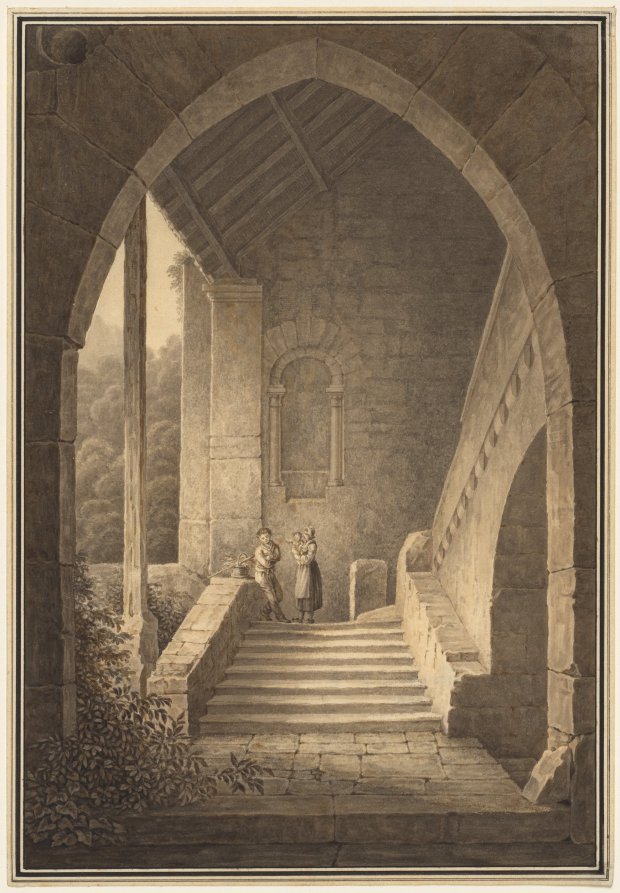
Structural Poetics of the Gothic Staircase: A Study in Negative Volume
The outer staircase of a Gothic ruin is not a functional object; it is a fragment of architectural memory, stripped of its original purpose and left to exist as pure form. For Addison Fashion’s 2026 executive silhouette, this structure offers a radical redefinition of *presence through absence*. The ruin’s stair—its treads eroded, its balustrade partially collapsed, its risers interrupted by voids—does not ascend; it *suggests* ascent. It holds the memory of movement without the movement itself. This is the foundational principle of our new oversized tailoring: garments that do not drape the body so much as they *frame the space around it*, creating a volumetric dialogue between fabric and air.Geometric Integrity: The Fractured Spiral
The Gothic staircase’s original geometry is a spiral—a continuous, upward-turning helix. In its ruined state, this spiral is broken into discrete, angular segments. Each surviving step retains its orthogonal precision, but the sequence is interrupted by gaps, crumbling edges, and shifted planes. This is not chaos; it is *deconstructed order*. The 2026 executive silhouette borrows this exact logic. Our oversized coat, for instance, is cut with a continuous shoulder line that mimics the spiral’s initial sweep, but the hem is deliberately asymmetrical, echoing the stair’s fractured termination. The internal seams are not hidden but exposed, running like hairline cracks along the fabric’s surface—a nod to the mortar lines that once bound the stones. The result is a garment that reads as both monumental and precarious, a structure that asserts its geometry while acknowledging its own impermanence. The key technical innovation lies in the *negative space* between the garment and the body. Traditional tailoring seeks to conform; our approach seeks to *suspend*. The jacket’s back panel is cut with a deliberate fullness, creating a void that shifts with the wearer’s motion—not unlike the empty air between the ruin’s broken steps. This void is not a flaw but a design element, a literal embodiment of the “以虚驭实” (using emptiness to control substance) principle. The wearer’s silhouette becomes a series of planes and voids, a three-dimensional study in what is *not* there.Urban Materiality: Stone in Cloth
The material palette for this silhouette is dictated by the ruin’s texture: weathered limestone, patinated slate, and the cold, damp iron of forgotten railings. We translate these into fabric through a process of *material compression*. A double-faced wool, felted to a density that mimics stone’s weight, is used for the primary shell. Its surface is not smooth but *pitted*—achieved through a proprietary finishing technique that creates micro-ridges, catching light the way a worn step catches rain. The lining, conversely, is a fluid silk charmeuse in a deep slate tone, its liquidity contrasting with the shell’s rigidity. This duality—hard exterior, soft interior—mirrors the ruin’s own contradiction: stone that once supported human weight now cradles only air. For the executive who moves through the city, this materiality is essential. The coat does not flutter or billow; it *settles*. Its weight anchors the wearer, providing a gravitational presence that cuts through the visual noise of glass towers and digital screens. The seams are stitched with a visible, contrasting thread—a pale ivory that echoes the lime mortar between the ruin’s stones—turning construction into ornament. Pockets are cut on the bias, angled like the stair’s treads, and are deliberately shallow, refusing to hold more than a phone or a card. This is not a garment of utility; it is a garment of *contemplation*.The Fragmented Line: From Mold to Mirror
The internal DNA of this research draws from two ancient artifacts: the *Mold Fragment with Musicians* and the *Square Mirror with Two Phoenixes*. The former teaches us that a broken line can carry more energy than a complete one. The latter shows that a closed form—a square, a circle—can contain infinite motion. Our staircase silhouette unites these principles. The coat’s lapels are cut as *fragmented lines*: they do not flow continuously from collar to hem but break at the sternum, resuming at the waist with a slight shift in angle. This is the “游丝描” (drifting-silk line) translated into tailoring—a line that does not outline but *suggests*, leaving the eye to complete the trajectory. The mirror’s phoenix-and-floral motif informs the garment’s interior. Hidden beneath the shell, an embroidered pattern of interlocking spirals—rendered in a tonal slate-on-slate thread—covers the lining. This is not visible to the observer; it is a private geometry, a secret order that the wearer alone perceives. It is the “凤凰与花意” (phoenix and floral meaning) made intimate, a reminder that true luxury is not display but *internal coherence*. The garment’s outer severity is balanced by this inner richness, creating a tension that is both intellectual and sensual.Silhouette Architecture: The 2026 Executive
The final silhouette is defined by three coordinates: *the dropped shoulder*, *the elongated torso*, and *the truncated hem*. The shoulder is cut wide, extending beyond the natural acromion, creating a horizontal line that references the stair’s landing. The torso is elongated, with the waist suppressed only slightly—not to create an hourglass but to suggest a *pause* in the vertical flow, like a step that has worn down in its center. The hem stops at the mid-calf, a deliberate truncation that leaves the lower leg exposed, echoing the ruin’s broken balustrade. This is not a coat that ends; it is a coat that *stops*, leaving the viewer to imagine the missing length. In urban contexts, this silhouette performs a quiet authority. It does not shout; it *resonates*. The wearer becomes a moving fragment, a piece of architecture that has stepped off its foundation. The coat’s volume creates a personal perimeter, a zone of stillness in the city’s flux. This is the 2026 executive: not a figure of action but of *presence*, one who commands space through the deliberate withholding of motion. The Gothic ruin’s staircase, in its broken ascent, offers the ultimate lesson in structural poetics—that what remains is always more powerful than what was lost. Our garment is that remainder, cut in slate and shadow, worn as a testament to the beauty of the incomplete.
Technical Insight
Technical Insight: Translating Slate palettes into Oversized silhouettes for the modern metropolis.