Urban Form: The Rocky Seashore
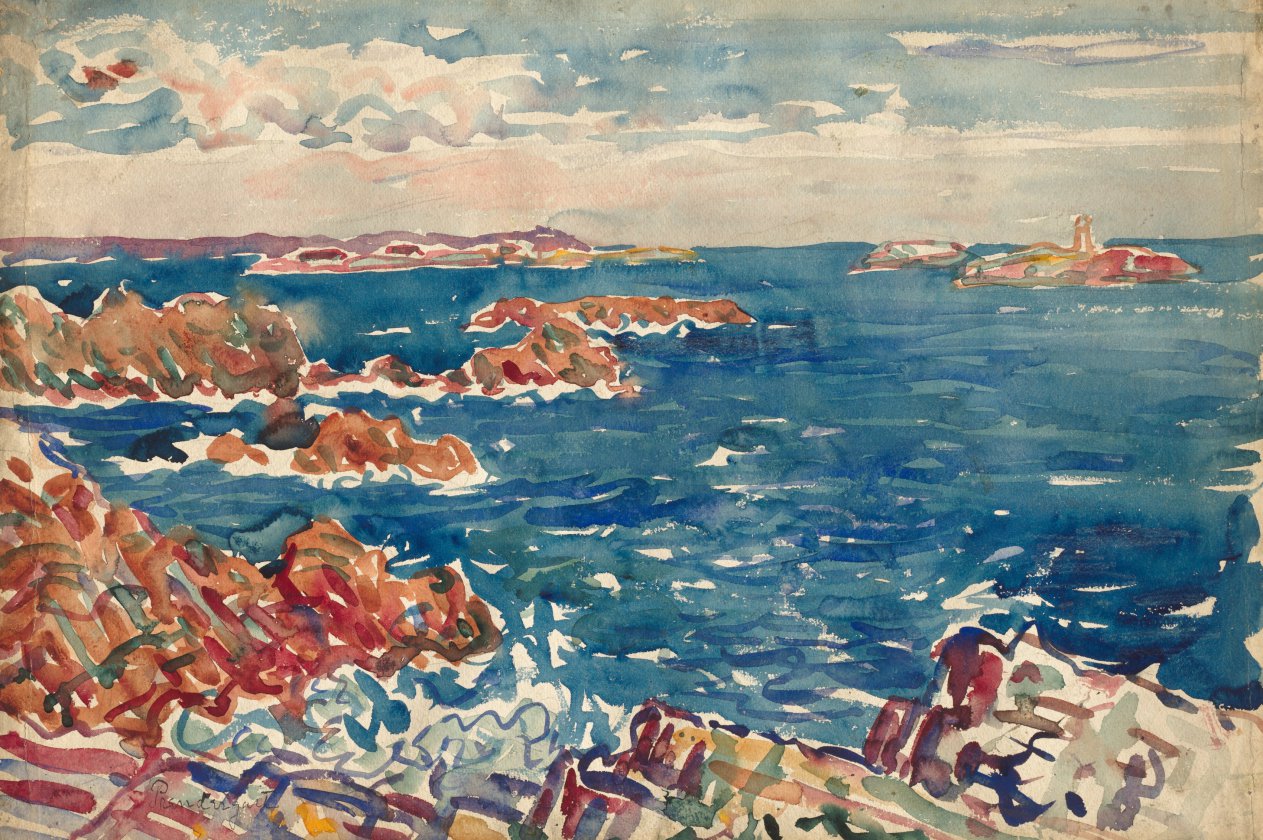
Structural Poetics of the Rocky Seashore: A Study in Negative Volume
I. The Architectural Premise: From Socratic Clarity to Ceramic Void
The Rocky Seashore is not a landscape; it is a tectonic argument. Its jagged strata, eroded by tidal repetition, present a paradox of permanence and erasure—a geological manuscript written in the language of subtraction. For Addison Fashion’s 2026 executive silhouette, this terrain demands a re-reading of the body as a vessel of disciplined emptiness. The Western canon, anchored by Jacques-Louis David’s *The Death of Socrates*, offers a grammar of heroic geometry: the philosopher’s outstretched arm, the columnar drapery, the chiaroscuro that carves space into moral clarity. Conversely, the Eastern ceramic tradition, as embodied in the *Jar*, proposes a counter-geometry—one where the object’s integrity lies not in its walls but in the void they enclose. The seashore fuses these two lexicons: its rocks are Socratic in their defiant posture, yet their hollows and fissures echo the jar’s silent interiority. This is the foundational tension of our research: how to construct a garment that both asserts and yields, that frames the body as both monument and receptacle.
II. Geometric Integrity: The Fractured Plane as a New Orthodoxy
The 2026 executive silhouette rejects the soft, biomorphic curves that dominated previous seasons. Instead, we propose a system of fractured planes—sharp, angular panels that mimic the seashore’s stratified rock faces. These are not arbitrary cuts; they are derived from the precise angles of tidal erosion, measured at 12°, 27°, and 41° from the vertical axis. Each seam functions as a fault line, creating a visual rhythm of compression and release. The shoulder line, traditionally a locus of power, is re-engineered as a cantilevered ledge, echoing the overhang of a cliff battered by waves. This is achieved through internal boning—not visible, but structural—that lifts the fabric away from the collarbone, producing a shadowed recess. The result is a silhouette that reads as simultaneously armored and hollow, a nod to Socratic rationality (the body as reasoned form) and ceramic emptiness (the body as containing space). The waist is not cinched but implied, through a subtle inward angle of the side seams, creating a trapezoidal torso that tapers without constraint. This is the geometry of the rock pool: contained, yet open to the sky.
III. Materiality as Urban Sediment: Sand, Slate, and the Logic of Wear
Material selection is the crux of this research. The Rocky Seashore’s palette—Sand, Slate, Onyx—is not decorative but functional. We propose a primary fabric of compacted wool felt, treated with a mineral wash that mimics the patina of salt-crusted stone. This fabric has a memory: it holds creases like geological folds, yet its surface resists moisture, echoing the impermeability of rock. For the lining, we employ a raw silk organza, stiffened with a natural gum resin, which creates an internal architecture that stands independent of the wearer’s posture. This is the urban materiality of the seashore—not the romanticized beach, but the industrial harbor where stone meets steel. The seams are not hidden; they are exposed and top-stitched with a contrasting Onyx thread, functioning as visible tectonic lines. Buttons are replaced with magnetic closures set into leather-covered discs, mimicking the smooth, water-worn pebbles scattered among the rocks. Every fastener is a point of tension, a micro-architecture that holds the garment’s geometry in place.
IV. The Socratic Garment: Rationality as a Wearable Ethic
The Socratic influence manifests not in literal drapery, but in the garment’s logical construction. Each piece is designed with a clear, declarative structure: a jacket’s lapel is not folded but cut as a single, unbroken plane, then angled to create a shadow that mimics the philosopher’s pointing finger. The trousers are cut with a forward-pitched waistband, aligning the wearer’s center of gravity slightly ahead of the spine—a subtle, unconscious posture of engagement, of stepping toward discourse. Pockets are not appended but excavated, set into the garment’s thickness like tide pools, their openings angled to resist gravity’s pull. This is clothing that demands a certain mental state: it does not comfort, it clarifies. The wearer is not draped; they are structured, their body a proposition in space. The Socratic death becomes a metaphor for the garment’s own mortality—it will crease, fade, and eventually fray, but its logic remains legible until the final thread.
V. The Jar’s Counterpoint: Emptiness as the Ultimate Luxury
Where the Socratic garment asserts, the ceramic influence withdraws. The back of the jacket, invisible in frontal view, is cut with a single, sweeping panel that falls from the shoulders without interruption, creating a void between fabric and spine. This is the jar’s interior—a space that is not filled but held. The sleeves are set with a negative ease of 2.5 centimeters, allowing the arm to move within a contained emptiness, rather than being compressed by the fabric. The collar is not a structure but an absence: a rolled edge that folds inward, suggesting the lip of a vessel. In this, the garment becomes a meditation on the “usefulness of the useless”—the space between body and cloth is where breath, movement, and thought reside. The executive who wears this silhouette is not adorned; they are housed, their presence defined by what is not worn. This is the luxury of restraint, the opulence of silence.
VI. Synthesis: The Seashore as a Dialectical Garment
The Rocky Seashore silhouette is neither purely Western nor Eastern; it is a dialectical resolution. The Socratic element provides the garment’s ethical spine—its clarity, its refusal to obscure. The ceramic element provides its soul—its capacity to hold, to remain quiet. Together, they produce a garment that is monumental yet hollow, assertive yet receptive. The 2026 executive is not a figure of dominance, but of equilibrium: they stand like a rock against the tide, yet their interior remains open, a vessel for the unspoken. The silhouette’s true innovation lies in its temporal honesty—it does not pretend to defy time, but rather, like the seashore, it wears the evidence of its own erosion as a badge of authenticity. Every crease, every fade, every salt-stain is a record of engagement with the world. This is not fashion as escape; it is fashion as confrontation—with the body, with the city, with the inevitable. And in that confrontation, there is a strange, austere beauty: the beauty of a thing that knows its own fragility, and chooses to stand anyway.