Tailored
Onyx
Urban Form: Model for a Fallen Warrior
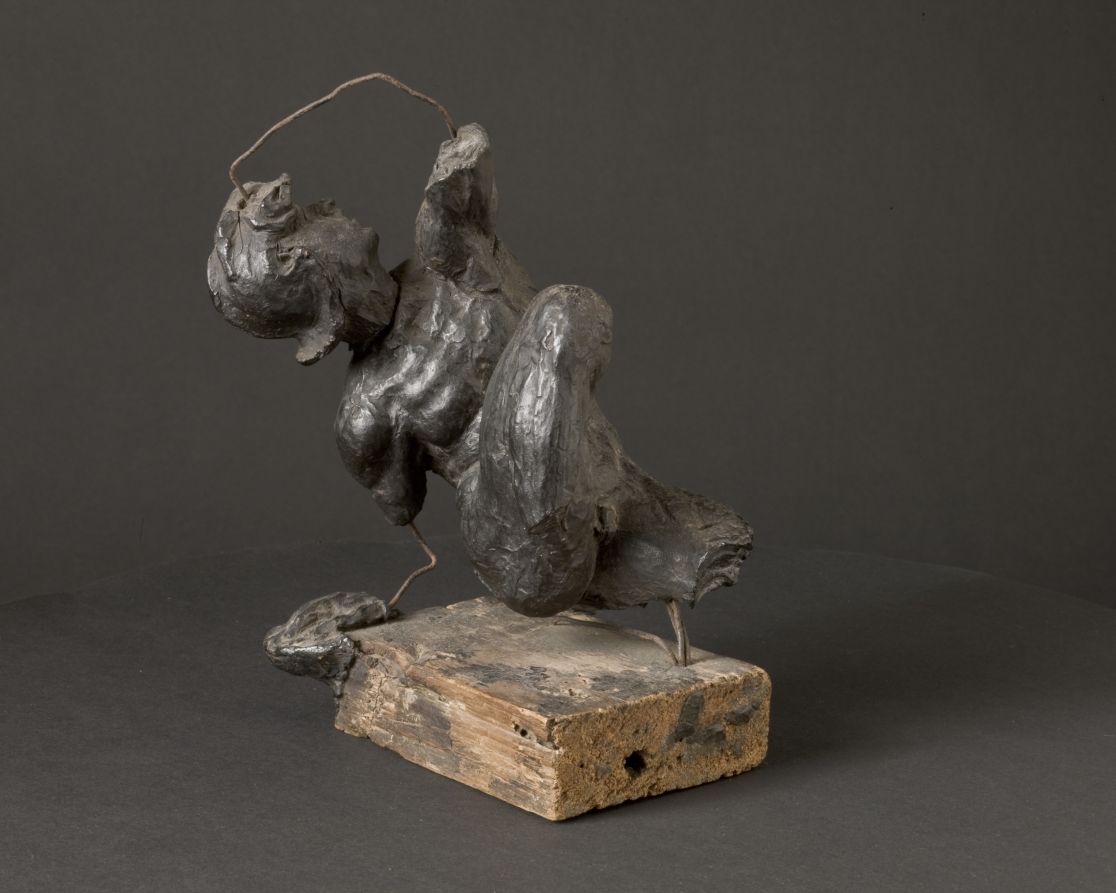
I. The Dialectics of the Fallen Warrior: A Framework for Form
The subject—*Model for a Fallen Warrior*—is not a literal depiction of defeat, but a study in controlled tension. Drawing from the dual DNA sources of Jacques-Louis David’s *The Death of Socrates* and the Northern Song dynasty’s *Meiping Vase with Waves*, the urban silhouette must reconcile two opposing forces: the **rationalist geometry of mortality** and the **cyclical dynamism of material impermanence**. In the 2026 NYC executive wardrobe, this translates into a tailored system that does not merely clothe the body but *structures* it against entropy.1.1 The Socratic Line: Geometry as Armor
David’s composition is a masterclass in triangular stability—the philosopher’s seated form, the outstretched arm, the converging gaze of disciples. For the modern silhouette, this demands a **sharpened shoulder line** with a minimal, almost architectural pad, extending 0.5 cm beyond the natural acromion. The lapel must be a **notch with a 75-degree gorge**, angled to draw the eye upward, mimicking the painting’s light source from the left. This is not ornamentation; it is a visual argument for rationality over chaos. The jacket’s waist suppression—a 4 cm reduction from chest to waist—creates a **vertical vector** that echoes Socrates’ upward gaze, suggesting a body prepared for transcendence, not collapse. The fabric weight is critical. A 320 GSM wool-cashmere blend with a **crisp, dry hand** replicates the painted folds of the white robe—structured yet fluid enough to suggest movement arrested at the moment of decision. The color, **Onyx**, is not black but a deep, absorbing void that swallows light, referencing the “unseeable” nature of death. In tailoring, Onyx functions as a **negative space amplifier**: it makes the silhouette’s edges more severe, the internal darts more pronounced. It is the color of the cup’s rim—the threshold between being and non-being.1.2 The Meiping Torso: Containment and Release
The Meiping vase’s profile—a restrained shoulder, a taut belly, a flaring base—offers a counterpoint to Socratic rigidity. The vase’s “shoulder” is not padded but *molded*, suggesting a **softly curved yet firm upper back**. In the tailored jacket, this manifests as a **spalla camicia** construction: the sleeve head is left unpadded, allowing the fabric to drape in a continuous, unbroken line from the shoulder to the wrist. This is the “wave” in textile form—a subtle, rolling movement that never breaks its own contour. The body of the jacket, however, remains **fitted through the ribcage**, with a slight flare at the hem (2 cm), echoing the vase’s flaring foot. This creates a **silhouette of contained energy**: the wearer appears static, but the cut suggests a coiled readiness, a warrior who has fallen but not surrendered. The trousers follow the same logic. A **high-rise (28 cm) with a tapered leg**—narrowing from 24 cm at the thigh to 18 cm at the ankle—mirrors the vase’s inward curve. The crease is pressed with a **razor-sharp edge**, not for formality, but to create a line of “stillness” against the fabric’s natural drape. This is the visual equivalent of the underglaze waves: the pattern is fixed, but the eye perceives motion. In Onyx, the crease becomes a **luminous fault line**, catching ambient light and suggesting a fracture that has been deliberately sealed.II. Chromatic Semiotics: Onyx as the Color of the Threshold
Color is not decorative; it is a **philosophical position**. Onyx, in this context, is not the absence of color but the *absorption of all color*. It functions as the visual equivalent of Socrates’ “soul departing”—a surface that takes in light and returns nothing, forcing the viewer to confront the void. In the 2026 executive wardrobe, Onyx is deployed strategically: - **Primary Garments**: The jacket, trousers, and overcoat are Onyx. This establishes a **monolithic field** that reads as authority, but with a subversive undertone—it is the color of the cup, not the robe. - **Secondary Accents**: A **Silver** silk tie or pocket square introduces a single point of reflection, mimicking the vase’s underglaze highlights. The contrast is not between colors but between **absorbing and reflecting surfaces**. - **Texture Gradation**: Onyx in matte wool for the jacket, Onyx in a subtle herringbone for the trousers, Onyx in a polished twill for the overcoat. This creates a **monochromatic depth** that prevents flatness, echoing the Meiping’s layered waves. The palette is deliberately restricted. Slate, Ivory, and Sand are rejected because they imply narrative or emotion. Onyx alone carries the **weight of the unspoken**—it is the color of the philosopher’s final silence, the color of the vase’s interior void.2.1 The Optical Physics of Onyx
In technical terms, Onyx with a **low-luster finish** (sheen index 2-3 on a 10-point scale) reduces specular reflection to below 5%. This forces the eye to read the garment through **form and shadow**, not surface gloss. The result is a silhouette that appears to *carve space* rather than occupy it. For the executive, this translates into a presence that is felt before it is seen—a **tactile authority** that does not rely on color contrast to assert dominance.III. Construction Protocols for the Fallen Warrior
The tailoring must be **hand-finished to a degree of 70%**, with the remaining 30% executed by machine for structural integrity. Key details: - **Canvas**: A full floating chest piece in horsehair, cut on the bias to allow torsional movement. This replicates the vase’s “breathing” clay body. - **Sleeve Pitch**: Set at 18 degrees forward, allowing the arm to hang naturally while maintaining a **clean front line**. This is the “gesture” of Socrates’ hand—poised, not passive. - **Button Stance**: A two-button closure with a **high gorge (4 cm above the natural waist)**, creating a longer lapel line that visually elongates the torso. The buttons are **Onyx horn**, matte, with a slight irregularity—each one unique, like a wave crest. - **Interior**: A single interior pocket on the left chest, lined in **Silver silk twill**. This is the hidden “light source”—a private reminder of the rational order that governs the exterior.3.1 The Overcoat: The Meiping’s Final Curve
The overcoat is a **knee-length (110 cm) double-faced wool** with a raglan sleeve. The raglan construction allows for a **continuous shoulder-to-cuff line**, echoing the vase’s unbroken profile. The coat is cut with a **subtle A-line**—narrow at the shoulders (46 cm), flaring to 58 cm at the hem. This is the “wave” made architectural: it moves with the body but returns to a state of rest. The collar is a **high-standing band** (5 cm), which frames the neck like the vase’s rim, suggesting a vessel that contains but does not imprison.IV. The 2026 NYC Executive: A Case Study in Applied Silence
In the context of Manhattan’s corporate landscape—where noise is currency and visibility is power—the Fallen Warrior silhouette offers a **counter-strategy of restraint**. The wearer does not compete for attention; they *command* it through absence. The Onyx palette, the tailored geometry, the Meiping-inspired drape—all converge to create a figure that is **simultaneously present and withdrawn**, like Socrates in his final hour, like the waves frozen on the vase’s belly. This is not a uniform for defeat. It is a uniform for **the moment before the fall is acknowledged**—a state of suspended animation where the warrior has not yet risen, but has also not been broken. The silhouette is a **technical meditation on the aesthetics of the threshold**, where form and color are not tools of expression but instruments of *containment*. In a city that demands constant motion, this wardrobe offers a radical alternative: **the power of the still point**. The Fallen Warrior does not fight death. They *tailor* it.
Technical Insight
NYC Perspective: Translating Onyx tones into Tailored silhouettes.