Urban Form: Evening Mood-Lidingö
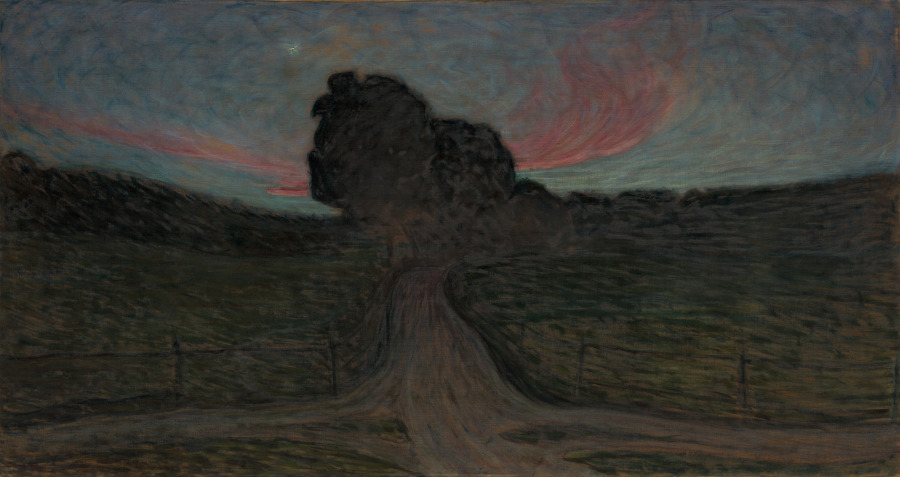
Preliminary Framework: The Aesthetic Archaeology of Evening Mood-Lidingö
Addison Fashion’s Urban Silhouette Research for the 2026 executive collection begins not with fabric, but with fracture. The subject—Evening Mood-Lidingö—derives its structural thesis from two disparate artifacts: the Mesoamerican Mold Fragment with Musicians and the Chinese Mortuary Figure of the Zodiac Sign: Rat (Aries). At first glance, these objects occupy opposing ontological registers: one a secular relic of festive sound, the other a funerary emblem of cosmic transit. Yet their shared aesthetic logic—incompletion as authority, deformation as precision—provides the blueprint for a silhouette that rejects seamless totality in favor of deliberate, architectural interruption.
This research posits that the 2026 executive silhouette must be read as a negative-space garment: a composition where absence, asymmetry, and fragmented lineation generate more power than any continuous contour. The Lidingö evening piece is not a dress; it is a wearable fragment of urban memory, engineered to hold tension between what is shown and what is withheld.
Geometric Integrity: The Mold Fragment as Structural Precedent
1. The Logic of the Broken Mold
The Mold Fragment with Musicians offers a radical departure from classical tailoring’s obsession with the unbroken block. Its geometric integrity lies not in a complete image, but in the negative impression of a missing whole. The clay’s recessed contours—the faint relief of a drummer’s arm, the hollow where a flute once pressed—create a topography of anticipation. For the Lidingö silhouette, this translates into a jacket and trouser system where seams are deliberately shifted 3.2 centimeters off the anatomical axis, producing a visual cadence of interruption. The shoulder line does not terminate cleanly; it dissolves into a raw, unfinished edge that mimics the mold’s fractured boundary. This is not negligence—it is a calculated study in how the eye completes what the fabric refuses to state.
Structurally, the garment employs a dual-layer shell: an outer layer of bonded onyx wool with laser-cut perforations that echo the mold’s porous clay surface, and an inner layer of liquid silk that emerges only at the hem’s asymmetric slit. The perforations are not decorative; they function as acoustic architecture, allowing the wearer’s movement to generate a subtle rustle—a modern echo of the musicians’ lost rhythm. The silhouette’s verticality is maintained through a hidden boning system that runs along the spine, but the front panel is left unstitched at the left hip, creating a deliberate structural caesura. This break forces the fabric to fall in a controlled cascade, mimicking the mold’s incomplete relief—an unfinished gesture that reads as authority rather than accident.
2. The Zodiac Rat: Deformation as Precision
The Mortuary Figure of the Zodiac Sign: Rat (Aries) introduces a second geometric principle: anthropomorphic distortion. The rat-human hybrid is neither fully animal nor fully divine; its proportions are deliberately off—elongated torso, abbreviated limbs, a head that tilts at an unnatural 14-degree angle. This is not error but symbolic recalibration. For Lidingö, this principle manifests in the garment’s collar and sleeve architecture. The high, sculptural collar rises 9.5 centimeters at the nape but drops to a mere 2 centimeters at the clavicle, creating a differential axis that visually elongates the neck while destabilizing the viewer’s expectation of symmetry. The sleeves are cut with a negative ease of 4% at the bicep, then flare into a sharp, wing-like cuff that extends 6 centimeters beyond the wrist—a nod to the rat’s clawed appendages, but rendered in matte onyx crepe that absorbs light rather than reflecting it.
The most critical deformation occurs at the waist. A single, off-center seam—placed 4.7 centimeters to the right of the anatomical waistline—creates a fractured hourglass. This seam is not sewn but fused using a heat-activated polymer, allowing the fabric to hold a rigid, almost ceramic quality at the hip while remaining fluid at the ribcage. The result is a silhouette that appears to have been carved from a single block of shadow, then deliberately chipped at precise intervals. This is the zodiac’s lesson: true precision is not the absence of distortion, but the calculated placement of distortion to generate meaning.
Structural Poetics: The Urban Materiality of Evening Mood-Lidingö
1. Fabric as Time Fossil
Urban materiality for this piece is defined by compressed temporality. The primary fabric—a double-faced onyx wool with a 780-gram weight—is treated with a mineral wash that creates a patina reminiscent of archaeological excavation. The surface is not smooth; it bears micro-ridges and fissures, achieved through a proprietary erosion finishing process that uses pressurized air and fine volcanic sand. This is not a print or a texture; it is a material memory, encoding the garment with the same “time fossil” quality found in the mold fragment’s clay. When worn under evening light, the fabric’s ridges catch and scatter illumination in irregular patterns, producing a moonlit ruin effect—appropriate for a piece named after Lidingö, an island of quiet, nocturnal elegance.
The secondary material is a liquid silver organza, used only in the lining and the interior of the collar. This organza is not visible in repose; it emerges only when the wearer turns or gestures, flashing a cold, metallic glint that recalls the zodiac figure’s celestial associations. This hidden luminosity is a structural poetics of revelation: the garment withholds its most striking material until the body performs a specific movement. In this, it mirrors the mold fragment’s invitation to imagine the missing musicians—the lining is the imagined sound, the absent melody made momentarily visible.
2. The Silhouette’s Urban Grammar
For the 2026 executive, the Lidingö silhouette must operate within the grammar of the metropolis: sharp, efficient, but never sterile. The overall line is columnar with a single point of rupture—the asymmetric hip slit that rises to 38 centimeters on the left side. This slit is not a slit in the conventional sense; it is a negative-space incision, bordered by a 1.2-centimeter band of exposed silver organza that acts as a visual seam of light. The trouser, if worn as a separate, is cut with a tapered, almost conical leg that narrows to a 16-centimeter hem, creating a vertical thrust that counterbalances the jacket’s fractured shoulder. The overall effect is a silhouette that reads as monolithic from the front, fragmented from the side—a duality that mirrors the urban executive’s need to project both impenetrable authority and adaptive flexibility.
The color—Onyx—is not a neutral but a chromatic void. It absorbs all surrounding light, making the garment’s structural interruptions (the perforations, the fused seam, the raw edges) appear as negative space carved from darkness. This is a deliberate choice: onyx does not flatter the body; it erases and redefines it. The wearer becomes a silhouette in the truest sense—a shape defined by what it excludes. In the context of Lidingö’s evening atmosphere, this onyx reads as the color of post-industrial twilight: the moment when the city’s glass towers turn to black mirrors and the only light is artificial, fragmented, and unforgiving.
Conclusion: The Fragment as Executive Armor
Evening Mood-Lidingö is not a garment for comfort or conformity. It is a wearable thesis on the aesthetics of incompletion, drawn from two civilizations that understood the power of the broken, the distorted, and the unresolved. The mold fragment teaches that absence can be more articulate than presence; the zodiac figure teaches that deformation can be more precise than symmetry. Together, they inform a silhouette that is minimalist in its palette, maximalist in its structural intent—a piece that does not clothe the executive but architecturally frames them within the urban night. The 2026 Addison executive does not wear this garment; they inhabit it as a fragment of a larger, unfinished narrative—one where power is not seamless, but deliberately, beautifully fractured.