Urban Form: Cake Basket
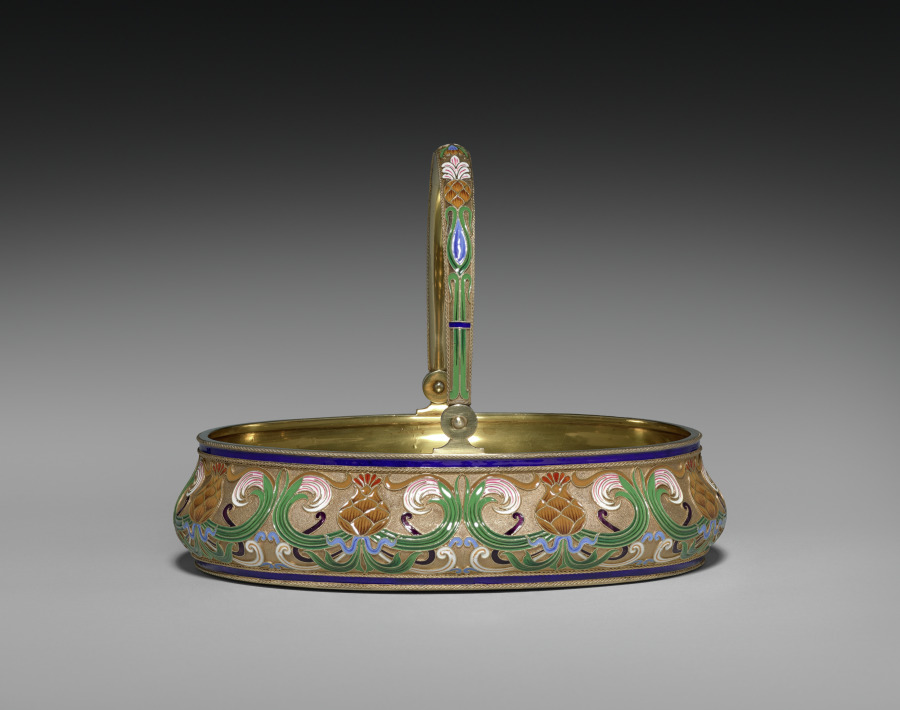
Executive Summary: The Cake Basket as a Study in Negative Space
This Urban Silhouette Research positions the cake basket—an object of utilitarian containment—as the primary formal referent for Addison Fashion’s 2026 executive capsule. The subject is not the basket’s woven texture or its domestic connotations, but its structural logic: a rigid perimeter, a recessed interior, and an unadorned surface that prioritizes function over ornament. Drawing from the dialectic between Jacques-Louis David’s *The Death of Socrates* and the ancient Greek *Jar*, this analysis extracts a dual framework: the former as “complete presence” (narrative, theatrical, heroic), the latter as “silent implication” (durational, hollow, self-sufficient). The cake basket occupies a third position—neither heroic nor purely archaeological—but operational. It is a vessel that performs its purpose without commentary, much like the ideal executive garment in a post-heroic corporate landscape.
Formal Deconstruction: Geometry, Volume, and the Architecture of Containment
The cake basket’s form is defined by three primary vectors: the base plane, the vertical rise, and the open aperture. Unlike the *Jar*, whose belly swells to suggest internal capacity, the cake basket’s volume is shallow and horizontal—a low-profile cylinder or rectangle that prioritizes accessibility over storage. This geometry translates directly into the 2026 executive silhouette through a deliberate suppression of vertical drama. Shoulders are relaxed, not padded; jackets are cropped at the hip, not elongated; trousers are tapered, not flared. The goal is to create a visual “rim” around the body—a clean, continuous line that frames the torso without exaggerating its mass.
Base Plane: The Structured Hem
In the cake basket, the base is the load-bearing element. It must be stable, flat, and unyielding to support the contents. For Addison, this translates into a structured hemline across outerwear and skirts. A 2026 executive blazer will feature a fused canvas hem that holds its shape even when unbuttoned, echoing the basket’s rigid bottom. This is not a soft drape; it is an architectural termination. The hem’s weight anchors the garment, preventing any sense of drift or improvisation. In sand-toned wool or bonded cotton, the hem reads as a deliberate statement of control—a visual equivalent of the basket’s refusal to collapse under load.
Vertical Rise: The Low-Profile Torso
The cake basket’s sides are low, rarely exceeding a 1:2 height-to-width ratio. This proportion is critical. It suggests containment without enclosure, openness without exposure. Applied to the executive wardrobe, this dictates a suppressed waist and a shortened jacket length—ending at the natural hip, never below. The silhouette avoids the elongated, columnar lines of traditional power dressing. Instead, it offers a horizontal emphasis: broad, clean lapels; a straight, unseamed back; and sleeves set with minimal ease. The body inside is not “wrapped” but “placed” within the garment, much as a cake sits within its basket—visible, accessible, yet framed by a defined edge.
Open Aperture: The Neckline and Cuff as Negative Space
The basket’s open top is its most defining feature—an absence that creates utility. In garment terms, this is the neckline and cuff. For 2026, Addison proposes a crew-neck or shallow scoop on knitwear and a straight, unadorned cuff on shirts and jackets. These apertures are not decorative; they are functional voids that allow movement and breath. The skin exposed at the neck and wrist becomes the “cake”—the human element that the garment merely carries. This is a direct inversion of David’s theatrical lighting, which focuses attention on Socrates’ gesture. Here, the garment refuses to direct the eye; it simply provides the boundary within which the wearer operates.
Color Theory: Sand as the Hue of Temporal Residue
The chosen color, Sand, is not a neutral in the passive sense. It is the color of fired clay, of the *Jar*’s surface after centuries of burial, and of the cake basket’s woven straw after repeated use. Sand is the color of material memory—it carries the trace of heat, handling, and time without narrating them. In the 2026 executive palette, Sand replaces the aggressive starkness of white and the somber weight of black. It functions as a chromatic silence, allowing form to dominate. When used in a full monochromatic look—sand blazer, sand trousers, sand knit—the effect is not blandness but compression. The eye reads the silhouette as a single, continuous volume, much like the unbroken surface of a ceramic vessel.
Sand and the Death of Narrative Color
David’s painting uses color to heighten drama: the red drape, the pale flesh, the dark background. Each hue supports the narrative of heroic death. Sand rejects this. It is anti-narrative, anti-symbolic. It does not signify mourning, power, or purity. Instead, it signifies duration—the slow accumulation of dust, the fading of pigment, the patience of an object that outlives its users. For the executive, this is a strategic choice. In a culture of constant visual noise, Sand offers a retreat from semiotic overload. It does not ask to be interpreted; it asks to be inhabited.
Materiality: The Tactile Equivalent of the Basket’s Weave
The cake basket’s surface is not smooth. It is woven, textured, and slightly irregular—each strand visible, each intersection a point of potential stress. Addison’s 2026 fabrications mirror this through slubby linens, raw silks, and compacted wool twills. These materials are not luxurious in the conventional sense; they are honest. They show their construction, their fiber, their origin. This aligns with the *Jar*’s aesthetic: the potter’s fingerprints remain on the clay, the wheel’s striations are faintly visible. The garment, like the basket, should not hide its making. Seams are exposed on the interior, buttons are natural horn or corozo, and linings are omitted in favor of a clean, self-faced finish. This is not cost-cutting; it is a philosophical choice to foreground structure over concealment.
Silhouette Application: The 2026 Executive Uniform
Translating the cake basket into a complete wardrobe requires a disciplined edit. The capsule comprises four pieces: a cropped single-breasted jacket in sand wool, a high-rise straight-leg trouser in matching fabric, a boxy crew-neck knit in sand cashmere, and a flat-front skirt at knee length. Each piece shares the same formal DNA: a defined perimeter, a suppressed interior volume, and an unadorned surface. The jacket’s hem sits at the hip bone, echoing the basket’s rim. The trouser’s rise is high, but the leg is straight—no taper, no flare—creating a columnar base that grounds the silhouette. The knit is intentionally shapeless, draping from the shoulders without darting, its sleeves ending at the wrist bone to expose the hand as the only expressive element. The skirt is a study in restraint: no slit, no pleat, no pocket. It is a flat plane that wraps the lower body, its hem hitting just below the knee to maintain the horizontal line.
Layering Logic: The Basket’s Interior
Layering is not about warmth but about creating internal voids. The knit is worn directly against the skin, the jacket over it, and the trouser or skirt as the base. There is no third layer; the body’s heat is trapped in the space between knit and jacket, much as the cake sits in the basket’s hollow. This is a radical departure from the layered, armored looks of previous seasons. It requires the wearer to accept a degree of exposure—the neck, the wrist, the ankle—as part of the design. This exposure is not vulnerability but availability: the body is present, not hidden, and the garment’s role is to frame that presence without embellishing it.
Conclusion: The Basket as a Model for Post-Heroic Power
David’s Socrates dies with a gesture toward the heavens; the *Jar* holds its silence for millennia. The cake basket does neither. It is used, emptied, and reused—its meaning is in its function, not its symbolism. For the 2026 executive, this is the ultimate form of authority: not to perform power through narrative or ornament, but to exist as a reliable container for action. The Sand-toned, minimalist silhouette is not a retreat from style but a refinement of it—a reduction to the essential, where every line is load-bearing and every void is intentional. The cake basket teaches us that the most profound statement is often the one that simply holds its shape.