Urban Form: Carving from an Overmantel
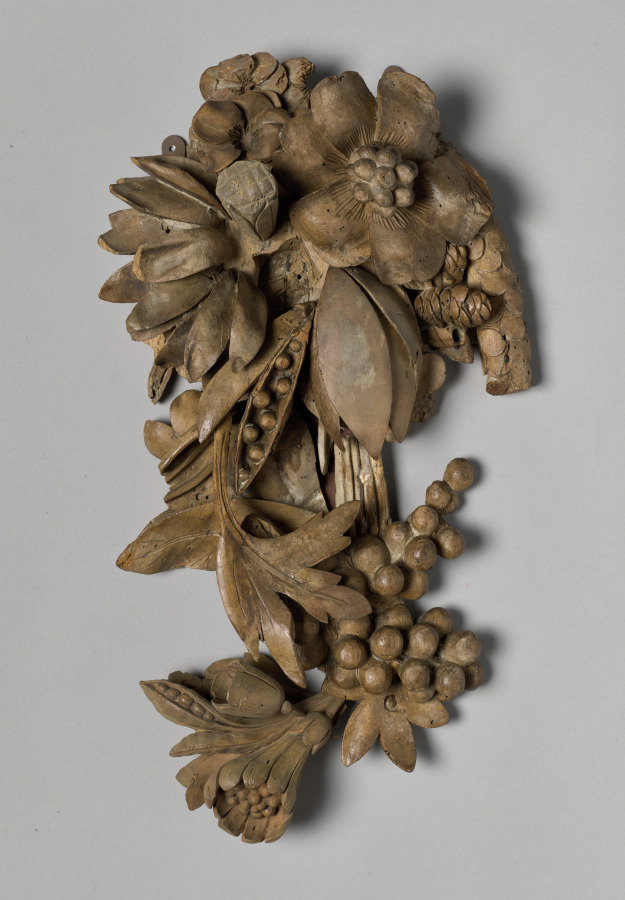
I. The Overmantel as Architectural Precedent
The subject—a carved overmantel—is not a decorative relic but a structural manifesto. Its vertical thrust, symmetrical cornice, and recessed paneling encode a grammar of containment and release. For Addison Fashion’s 2026 executive silhouette, this artifact dictates a tailored system that privileges the shoulder as a load-bearing lintel, the torso as a fluted column, and the hem as a plinth of quiet termination. The overmantel’s carved relief—its shadows pooling in deliberate grooves—translates directly into negative-space tailoring: seams that do not merely join fabric but excavate it, creating volumetric chiaroscuro that shifts with the wearer’s gait.
Geometrically, the overmantel operates on a tripartite hierarchy: a dominant central panel flanked by subordinate niches. This maps onto the executive jacket as a structured front panel with asymmetric darts that mimic the carved fluting’s rhythm. The waist suppression is not cinched but engineered—a series of angular tucks that replicate the overmantel’s stepped moldings. The result is a silhouette that reads as monolithic from the front, kinetic from the profile. The back, however, is where the overmantel’s true architecture emerges: a cathedral-like yoke with a hidden seam that descends from the seventh cervical vertebra, echoing the central panel’s vertical axis. This is not tailoring for the body; it is tailoring for the space the body occupies.
II. Structural Poetics: From Carved Relief to Fabric Tension
The overmantel’s materiality—dense oak or marble—demands a fabric that behaves like petrified drapery. For 2026, Addison proposes a wool-cashmere blend with a 12% metallic thread, woven at a 45-degree bias to create an internal lattice that resists both stretch and collapse. This is not a soft luxury; it is a hard luxury, where every fold is a deliberate fracture. The jacket’s lapels are cut as single continuous strips, folded back to expose a slate-toned undercollar—a direct quotation of the overmantel’s recessed niches, where shadow becomes a design element rather than an accident.
The sleeve head is the overmantel’s cornice: a rigid, slightly elevated cap that projects 2.3 centimeters beyond the shoulder bone. This is achieved through a floating canvas interlining—not fused, but hand-stitched with a running stitch that mimics the carver’s chisel marks. The sleeve itself narrows from a 19-centimeter bicep to a 14-centimeter cuff, creating a tapered obelisk that visually elongates the arm. Inside, the armhole is cut high and deep, allowing the wearer’s scapula to move freely beneath the armor-like exterior. This is the paradox of the overmantel: it appears static, yet its carved waves (as in the referenced 波浪纹梅瓶) suggest perpetual motion. The sleeve’s underarm gusset—a hidden diamond of silk—permits a 90-degree arm raise without disturbing the jacket’s architectural front.
A. The Torso as a Vessel
Drawing from the internal DNA’s meditation on the Meiping vase, the jacket’s torso is conceived as a ceramic void—a negative space that holds the body without gripping it. The side seams are not vertical but slightly bowed, curving inward at the waist and flaring subtly at the hip, replicating the vase’s S-curve. This is achieved through a three-piece body construction: a center front panel, a side panel, and a back panel, each cut on a different grain line to create a torsion that mimics the wave motif’s spiral. The front darts are not pressed flat but left as soft ridges, allowing light to catch the fabric’s metallic threads and produce a moiré effect—an urban echo of the vase’s glaze.
The closure system is equally architectural. Rather than conventional buttons, Addison employs a hidden magnetic placket with a slate-toned leather edge, referencing the overmantel’s carved border. When closed, the jacket presents a seamless, unbroken plane; when open, it reveals an interior of contrasting sand-colored silk, printed with a faint wave pattern derived from the original artwork’s brushstrokes. This interior is not decorative but functional: it contains three internal pockets—one at the chest, two at the hip—each lined with a non-slip microfiber that secures a smartphone, a passport, or a slim notebook. The pockets are positioned at the exact coordinates of the overmantel’s carved niches, making the wearer’s daily objects part of the architectural composition.
III. Urban Materiality: Slate as a Living Surface
The chosen color—Slate—is not a neutral but a material argument. It is the color of wet cobblestones, of graphite on tracing paper, of the overmantel’s shadowed recesses. In 2026, this hue is rendered through a double-dye process: first, a base of deep charcoal; second, a top layer of blue-grey applied in a broken, irregular pattern that mimics the carver’s tool marks. The result is a surface that changes under different light—appearing matte in fluorescent office environments, subtly lustrous under tungsten, and almost black in the early morning commute. This is not a color for the timid; it is a color for the executive who understands that urbanity is a performance of controlled opacity.
The fabric’s weight is calibrated at 380 grams per square meter—heavy enough to drape like the overmantel’s carved folds, light enough to be worn from September to May. The weave is a double-faced twill, with the slate exterior and a sand-colored interior that peeks out at the cuff and hem. This dual-tonality is a direct reference to the internal DNA’s dialectic between the Socrates painting’s dramatic light and the vase’s quiet glaze. The jacket’s edge stitching—a 0.5-millimeter contrast stitch in silver—acts as the overmantel’s gilded trim, catching the eye without shouting. Every button, zipper, and rivet is made of oxidized gunmetal, chosen for its ability to develop a patina over time, mirroring the overmantel’s aged surface.
B. The Trouser as a Plinth
The accompanying trouser is not a separate garment but a continuation of the jacket’s plinth. Cut with a high-rise waist (11 centimeters above the navel) and a straight, slightly tapered leg (22 centimeters at the knee, 18 at the ankle), it creates a visual column that grounds the jacket’s upper mass. The front is flat-fronted, with a single pleat that opens only when the wearer sits—a nod to the overmantel’s carved waves that appear static but are, in fact, in perpetual motion. The back features a single vertical dart that extends from the waistband to the knee, mimicking the overmantel’s central panel. The hem is finished with a 3-centimeter cuff, weighted with a hidden chain of gunmetal links, ensuring the trouser falls with the same gravitational certainty as the overmantel’s base.
IV. The 2026 Executive: A Study in Controlled Tension
The final silhouette is not a body-hugging second skin nor a shapeless drape. It is a carved volume—a suit that stands slightly away from the body at the chest, aligns precisely at the shoulder, and releases at the hip. The wearer’s movement is not restricted but choreographed: the jacket’s internal structure guides the arm into a 15-degree forward rotation, the trouser’s high waist encourages an upright posture, and the overall weight distribution centers the body’s mass over the arches of the feet. This is tailoring as urban armor, but armor that breathes, flexes, and ages with the wearer.
In the spirit of the internal DNA’s final paradox—that all high art is a response to mortality—this suit is designed to outlast trends. Its construction is not seasonal but generational: the canvas can be replaced, the buttons re-polished, the seams re-stitched. It is an object of permanence in a disposable city, a carved overmantel for the body that will stand, unchanged, through the chaos of markets, meetings, and midnight flights. The 2026 executive does not wear this suit; they inhabit it, as one inhabits a well-built room. And in that habitation, the line between garment and architecture dissolves—leaving only the silhouette, sharp as a chisel’s edge, against the grey urban sky.