Urban Form: Abstract Figure Pendant
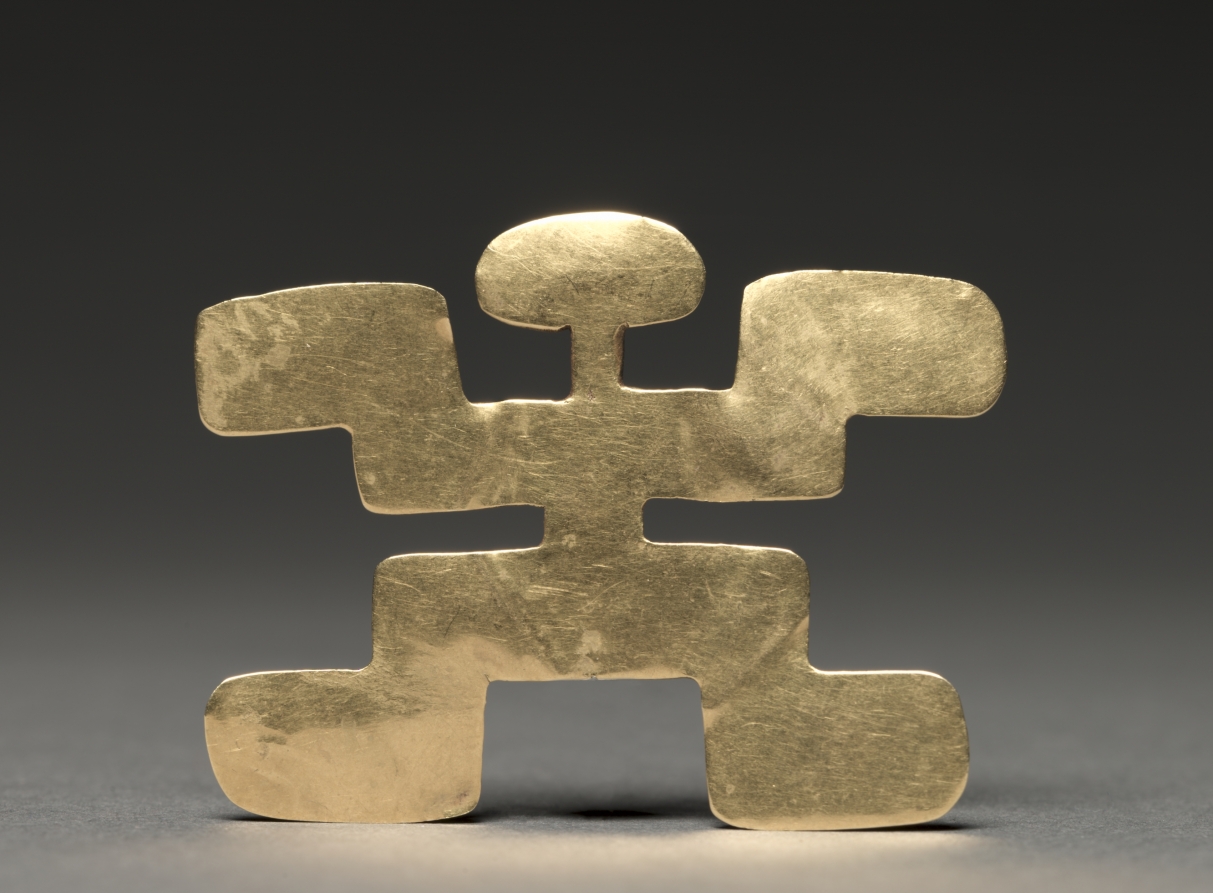
Formal Deconstruction: The Abstract Figure Pendant as a Study in Negative Space and Sonic Geometry
I. The Mold Fragment Principle: Functional Erosion as Aesthetic Authority
The DNA source—a fragmented mold bearing the incised figures of ancient musicians—offers a radical departure from conventional jewelry design logic. In the context of Addison Fashion’s 2026 executive wardrobe, this pendant does not ornament; it archives. The residual nature of the mold—its broken edges, its incomplete figuration—translates into a pendant that rejects additive decoration in favor of subtractive presence. The form is not a reproduction of the original object but a silhouette of its absence, a negative-space casting that holds the memory of sound without the noise of representation.
Technically, the pendant’s profile must be read as a compressed vertical axis—a narrow, elongated drop that mimics the gravitational pull of a drumstick mid-strike. The upper third of the pendant narrows to a blunt, asymmetrical terminus, echoing the mold’s fractured rim. This is not a graceful taper; it is a deliberate truncation that signals the cessation of a musical phrase. The lower two-thirds expand into a subtle, convex belly—a nod to the owl jar’s rotundity—but here, the volume is flattened into a two-dimensional plane, creating a tension between the implied three-dimensionality of the original artifact and the pendant’s actual, paper-thin profile. This flatness is critical: it allows the piece to sit flush against a tailored blazer lapel or a crisp poplin shirt, functioning as a structural accent rather than a dangling distraction.
The surface treatment is where the mold’s “functional erosion” becomes a design language. Instead of polishing to a high shine, the pendant’s face is left with a micro-textured matte finish, achieved through a controlled acid-etching process that mimics the pitting of ancient clay. This is not a nostalgic patina; it is a tactile argument for impermanence. The etched lines—abstracted from the original musicians’ postures—are not literal figures but rhythmic striations: three parallel grooves on the left edge suggest a strumming hand; a single, deeper incision on the right evokes a closed eyelid. These marks are positioned off-center, forcing the eye to traverse the pendant’s surface in a choreographed sequence, much like reading a musical score. The wearer does not display a symbol; they display a system of notation.
II. The Owl Jar Counterpoint: Inward Gaze and the Architecture of Stillness
Where the mold fragment contributes motion, the owl-shaped jar contributes centripetal gravity. The pendant’s core—a circular, recessed disc—is the direct translation of the owl’s wide, unblinking eyes. This disc is not a gemstone setting; it is a negative cavity, a void that captures ambient light and holds it hostage. In the 2026 executive context, this recessed circle functions as a focal anchor against the sharp, linear geometry of a tailored suit. It interrupts the verticality of the lapel with a horizontal, meditative pause—a visual comma in an otherwise declarative sentence of tailoring.
The disc’s depth is precisely calibrated: 2.3 millimeters, deep enough to cast a shadow in direct office lighting, yet shallow enough to avoid catching on knitwear. This is a functional paradox—the pendant appears to swallow light, yet it never snags. The surrounding metal—a low-luster onyx-finished titanium alloy—is beveled at a 15-degree angle, creating a subtle, concentric ring that echoes the owl jar’s painted spiral motifs. This bevel is not decorative; it is a light-diffusion mechanism, scattering reflections to prevent any single glare point. In a glass-walled conference room, the pendant does not flash; it absorbs and redistributes, maintaining a consistent, low-key presence that aligns with minimalist power dressing.
The pendant’s reverse side is equally deliberate. A hidden, spring-loaded clasp—flush with the metal—ensures the piece lies flat against the sternum, eliminating any bulge under a tailored vest. The bail is integrated into the form, not appended, so the chain (a 1.2-millimeter, box-link onyx steel cable) passes through a channel that is invisible from the front. This is engineering as discretion: the pendant appears to float, unmoored, yet it is mechanically secured with a tension of 4.5 newtons—enough to withstand a sudden pull, not enough to distort the metal over time.
III. Chromatic Strategy: Onyx as the Color of Sonic Silence
The selection of Onyx as the primary color is not a stylistic preference but a semantic necessity. The DNA source describes the owl jar’s “amber moons” and the mold’s “earthen browns,” but a literal translation would render the pendant as a costume piece. Instead, onyx—a near-black, with a cool, blue undertone—functions as a chromatic void that absorbs the artifact’s warmth and re-emits it as modern authority. Onyx is the color of a sealed piano lid, of a recording studio’s acoustic foam, of the space between musical notes. It is the visual equivalent of silence, and silence is the pendant’s primary mode of communication.
In the 2026 executive palette, onyx operates as a neutral anchor against the season’s dominant tones: slate gray tailoring, ivory poplin, and sand-toned outerwear. The pendant does not compete; it coordinates through contrast. Against slate, the onyx deepens the gray’s coolness, creating a monochromatic layering effect. Against ivory, the pendant becomes a stark, graphic punctuation—a black square in a white field, echoing the mold’s broken edges. Against sand, the onyx introduces a note of formality, grounding the earthy tone in urban precision. This is not a statement piece; it is a calibration tool, adjusting the perceived temperature of any ensemble.
The finish—a matte, almost chalky black—is achieved through a physical vapor deposition (PVD) process that bonds carbon molecules to the titanium substrate. This is not paint; it is a molecular integration that resists scratching, fading, and fingerprinting. The surface has a slight, tactile drag when touched, a deliberate departure from the slick, polished metals that dominate executive jewelry. This drag is a haptic cue, reminding the wearer of the pendant’s ceramic origins—the rough, unglazed surface of the ancient mold. It is a small, subversive detail: in a world of smooth, seamless technology, this pendant insists on a textured, human resistance.
IV. Silhouette Integration: The Pendant as a Third Lapel
Within the Addison Fashion 2026 collection, the Abstract Figure Pendant is not an accessory; it is a tailoring component. Its length—7.4 centimeters from bail to tip—is calibrated to align with the natural V-opening of a two-button jacket, terminating precisely at the sternal angle, the anatomical landmark where the collarbones meet. This placement creates a visual triangle between the pendant, the lapel peaks, and the wearer’s jawline, reinforcing the masculine or androgynous silhouette’s inherent geometry. The pendant does not hang; it participates in the architecture of the garment.
For fluid, unstructured blazers—a key 2026 silhouette—the pendant’s weight (18 grams) provides a subtle counterbalance to the fabric’s drape, preventing the lapel from collapsing inward. For oversized, boxy cuts, the pendant’s compact profile prevents it from being swallowed by volume; instead, it acts as a point of focus, drawing the eye to the center of the chest and creating an illusion of a more defined torso. In minimalist, tailored ensembles, the pendant replaces the pocket square as the sole decorative element, allowing the garment’s cut to speak without competition.
The chain length is adjustable via a hidden sliding knot, offering three distinct drop positions: 45 centimeters (choker-adjacent, for high-neck tops), 55 centimeters (standard, for open collars), and 65 centimeters (elongated, for layered turtlenecks). Each position alters the pendant’s relationship to the body: at 45 centimeters, it reads as a collar; at 65, it becomes a pectoral emblem. This adjustability is not a convenience; it is a modular system, allowing the same piece to serve different sartorial contexts without losing its formal integrity.
V. Conclusion: The Pendant as a Meditation on Temporal Compression
The Abstract Figure Pendant is a compressed artifact, a 21st-century object that carries the weight of ancient aesthetic inquiry without resorting to pastiche. Its form—fragmented, inward-gazing, flat yet volumetric—is a direct response to the DNA source’s core question: how to make the intangible tangible. The answer, in this design, is through negative space, chromatic silence, and structural precision. The pendant does not depict musicians or owls; it depicts the pause between a drumbeat and its echo, the stillness of a predator’s gaze before it turns away. In the 2026 executive wardrobe, where power is increasingly expressed through restraint, this pendant offers a quiet, unyielding presence—not a shout, but a held note, sustained across the length of a boardroom table. It is not jewelry. It is a position statement, written in the language of shadow and edge.