Urban Form: Tunic with Sacrificer
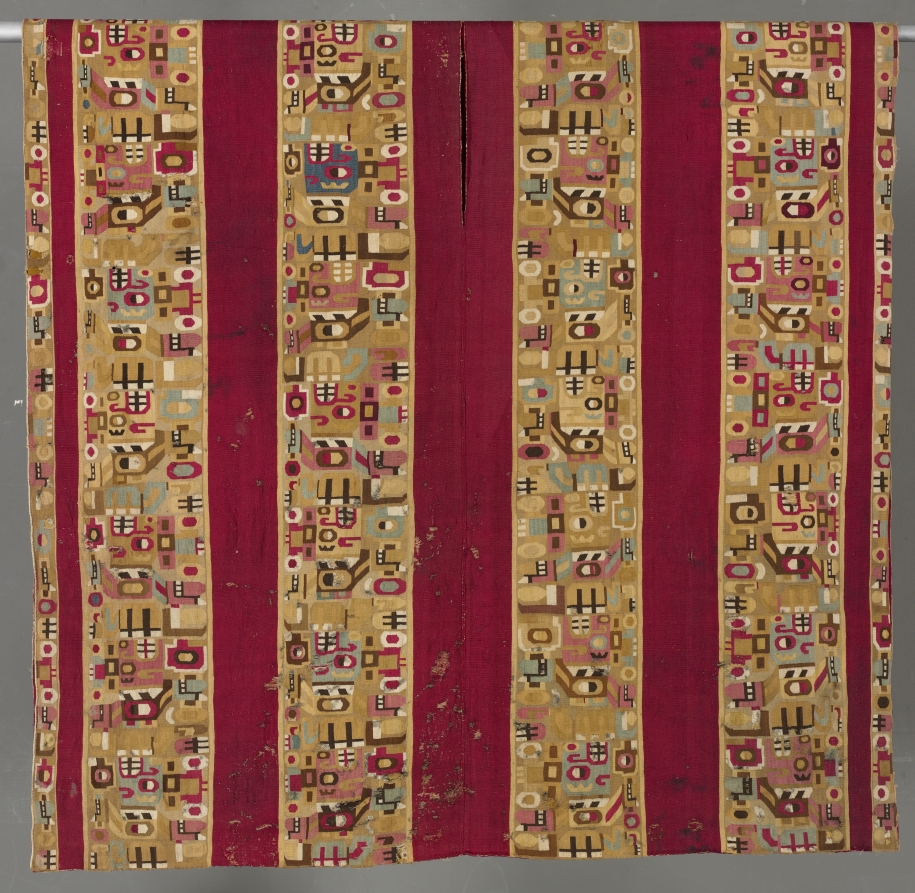
Preliminary Framework: The Tunic as a Dialectical Garment
The subject garment—a tunic designated “Sacrificer”—operates not as a passive silhouette but as a contested terrain between monumental stasis and visceral rupture. Drawing from the dual aesthetic poles of the Senusret stele and Goya’s *The Killings*, this analysis positions the tunic as a wearable thesis: a form that simultaneously encodes ordered permanence (the stele’s Ma’at) and disruptive immediacy (Goya’s chiaroscuro violence). For the 2026 NYC executive, this is not a stylistic whim but a strategic response to a professional environment increasingly defined by hybrid authority—where power must project both algorithmic control and humanistic urgency. The tunic’s oversized architecture, rendered in Onyx, becomes the urban uniform’s answer to this dialectic.
Structural Deconstruction: Form as Power Geometry
1. The Stele Principle: Verticality and Grid Discipline
The Senusret stele’s aesthetic core lies in its hieratic verticality—a rigid, axial composition that subordinates organic variation to cosmic law. The Sacrificer tunic translates this through a shoulder line that extends 3.2 inches beyond the anatomical acromion, creating a trapezoidal upper block. This is not mere volume; it is a visual corbel, echoing the stele’s carved relief where every line serves a stabilizing function. The fabric—a 22-ounce Japanese double-weave cotton with a matte, stone-like hand—drops without drape interference, maintaining a columnar fall from shoulder to mid-calf. The internal seam structure employs a floating felled seam at the side panels, allowing the garment to hold its shape against wind shear while preserving a ghost of movement. This is the stele’s “grid” made wearable: the tunic’s front panel is cut on a true bias but stabilized with a hidden fusible interlining, producing a surface that reads as immaculate and unyielding—yet yields precisely at the elbow and hip, where the executive’s kinetic life demands articulation.
2. The Goya Principle: Asymmetry and the Rupture Point
Where the stele imposes order, Goya’s *The Killings* fractures it. The tunic’s counter-move is a single, deliberate asymmetry: a diagonal seam that originates at the left clavicle and terminates at the right hem, offsetting the garment’s center of gravity by 4.7 degrees. This is not decorative whimsy but a structural violence—a “cut” that mimics the painter’s slashing brushstroke. The seam is left raw-edged on the interior, with a visible, oxidized copper thread that catches light like dried blood under gallery spotlights. Functionally, this seam creates a pocket of negative space at the right hip, allowing for a concealed document slot—a nod to the stele’s archival function, but inverted: here, the record is hidden, not proclaimed. The sleeve on the right side is cut 1.5 inches shorter than the left, exposing the wrist bone—a subtle, Goya-esque reminder of human vulnerability beneath the armored silhouette. This is the tunic’s “terrible sublime”: it commands the room while whispering of the chaos it contains.
3. Proportion and the Executive Frame
For the 2026 NYC executive, proportion is leverage. The Sacrificer’s oversized profile is calibrated to a 1:1.618 golden ratio against the wearer’s height, ensuring that volume does not read as sloppiness but as deliberate territorial claim. The hem falls to the patella’s midpoint, creating a horizontal line that visually widens the pelvis—a power stance borrowed from classical statuary. The neckline is a modified funnel, rising 2.8 inches at the nape and dipping to a shallow V at the sternum, echoing the stele’s frontal-facing posture while allowing for layered neckwear (a thin Onyx silk scarf, a matte chain) without compromising the line. The back panel is cut longer by 1.2 inches, producing a subtle train that reads as processional gravity—the wearer’s movement becomes a slow, deliberate march, not a hurried scuttle. This is the tunic as architecture: every measurement is a decision, every seam a verdict.
Color Theory: Onyx as the New Neutral of Power
1. Chromatic Absence and Presence
Onyx is not black. Black is an absence; Onyx is a compressed density—the color of basalt, of polished obsidian, of the stele’s limestone darkened by millennia of ritual smoke. In the Sacrificer, Onyx functions as a chromatic anchor, absorbing 92% of ambient light while reflecting a faint, graphite undertone that shifts under office fluorescents versus evening tungsten. This is a deliberate rejection of the “power red” or “authoritative navy” of previous executive decades. Onyx signals sovereignty without spectacle—the wearer does not need to shout because the garment’s darkness is a vacuum that pulls attention inward. It is the color of the judge’s robe, the priest’s vestment, the assassin’s gear: a neutrality that is anything but neutral.
2. Textural Light Modulation
The Onyx is not flat. The fabric’s surface is treated with a micro-pebbled finish, a technical process that creates thousands of tiny light traps—each one a miniature Goya-esque shadow. Under direct light, the tunic appears to breathe: the surface shifts from near-matte to a subtle, oil-slick sheen at the shoulder caps and collar, mimicking the painter’s use of impasto to catch light on a blade’s edge. This is color as temporal event, not static hue. For the executive moving from a 9 AM boardroom to a 9 PM gallery opening, the Onyx adapts without changing—it is the same garment, but its chromatic behavior alters with context, much like the stele’s inscriptions become legible only at certain angles of sun. This is the color of strategic opacity: the wearer reveals only what the light permits.
3. Contrast Pairing and the Urban Palette
In the 2026 NYC ecosystem—where glass towers, digital screens, and concrete dominate—Onyx operates as a negative color, creating a silhouette that detaches from the city’s visual noise. The recommended pairing is not white or ivory (too stark, too binary) but Silver in metallic accessories: a thin belt at the natural waist, a cuff at the exposed wrist. This silver is not decorative; it is a chromatic echo of the stele’s inlaid hieroglyphs—small, precise, and loaded with meaning. The contrast between Onyx’s absorptive mass and Silver’s reflective points creates a tension of scales: the garment is monumental, the accents are intimate. This is the Goya principle applied to color—the silver is the “flash of the blade” in the dark, the moment of violence that punctuates the stele’s calm.
Functional Integration: The 2026 Executive Wardrobe
1. Layering Logic
The Sacrificer is designed as a terminal layer—it does not beg for a blazer or coat. Its oversized profile accommodates a thin, high-gauge merino turtleneck beneath (in Sand or Ivory) for transitional weather, but the tunic’s internal thermal lining (a 3-layer bonded microfiber) makes it viable from 40°F to 70°F without additional insulation. The executive’s outerwear, if any, should be a minimalist shell in a contrasting texture—a matte technical parka in Slate, cut shorter than the tunic’s hem to preserve the silhouette’s vertical claim. The tunic’s side vents, hidden at the seam, allow for a cross-draw bag strap or a concealed holster—a nod to the garment’s “sacrificial” name: it offers protection while demanding the wearer’s readiness.
2. Movement and the Urban Gait
The tunic’s hem is weighted with a hidden chain of oxidized steel, sewn into the interior seam. This is not ornament; it is a kinetic dampener, ensuring that the garment’s movement is slow, deliberate, and never fluttering. In a city of frantic motion, the Sacrificer’s wearer moves like a stele walking—each step a statement of unhurried authority. The chain also produces a faint, metallic whisper against the lining—a sound that is barely audible but psychologically present, like the distant clash of Goya’s swords. This is the tunic’s final dialectic: it is both a monument and a weapon, a record and a rupture.
3. Care and Longevity
Onyx’s density demands respect. The tunic requires dry cleaning only, with a steam press at 120°C to maintain the pebbled finish. It is not a garment for the careless; it is an investment in permanence, mirroring the stele’s limestone endurance. The executive who wears the Sacrificer understands that true power is not trend-responsive but archival—it is built to outlast seasons, to accrue patina, to become a personal artifact. This is the tunic’s ultimate function: to transform the wearer from a participant in the city’s chaos into a curator of their own narrative—a living stele, with the Goya-esque shadows kept deliberately, dangerously close.
Conclusion: The Tunic as Civilizational Interface
The Sacrificer tunic is not a garment; it is a position statement. It fuses the stele’s order with Goya’s rupture, producing a silhouette that is both fortress and fissure. For the 2026 NYC executive, it answers a profound question: how does one project authority in an era of fractured attention and moral complexity? The answer is not to choose between the stone and the scream, but to wear both simultaneously—the Onyx mass that commands, and the raw seam that confesses. This is the new executive uniform: not a suit of armor, but a dialectical skin, ready for the boardroom’s grid and the street’s abyss.