Urban Form: Head of Proserpina
I. The Dialectical Frame: Static Death and Kinetic Pursuit as Structural Precedents
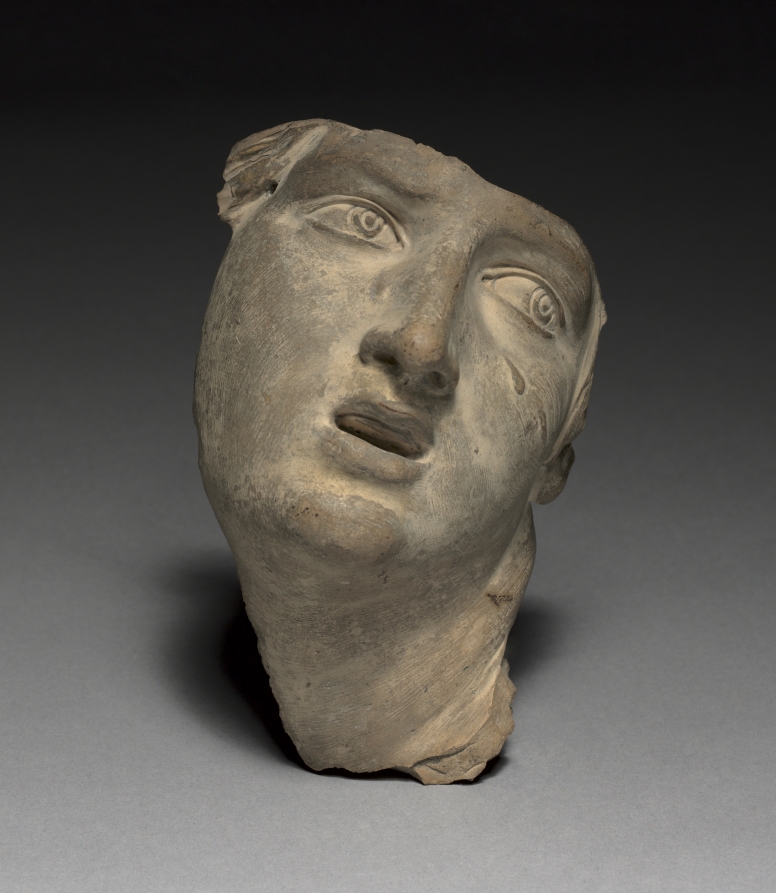
The Head of Proserpina operates within a dual inheritance—the still-life gravity of *The Death of Socrates* and the tensile violence of *The Hunt*. These are not merely thematic references but architectural blueprints for the 2026 executive silhouette. The former compresses mortality into a ceremonial objecthood: the cup’s rim, the drapery’s fold, the table’s grain—each element functions as a load-bearing joint in a composition of suspended time. The latter distributes mortality across vectors of pursuit: canine haunches, bowstring tension, the hunter’s brachial sinew—each line is a trajectory toward an unreachable terminus. For Addison Fashion, this dialectic resolves into a single garment logic: the silhouette must hold death’s residue and death’s approach simultaneously. The result is a minimalist architecture that neither mourns nor hunts, but occupies the interval—a slate-toned membrane stretched between the cup’s stillness and the arrow’s flight.
II. Geometric Integrity: The Cup’s Shadow and the Bow’s Arc
The geometric integrity of this artwork is not found in literal reproduction but in abstracted tension. From *The Death of Socrates*, we extract the vertical drop—the perpendicular fall of fabric from shoulder to floor, mirroring the philosopher’s tilted spine. This becomes the primary axis of the executive coat: a clean, unbroken line from the nape to the hem, unencumbered by lapel notches or pocket flaps. The cup’s shadow, cast at a precise 37-degree angle, translates into a subtle shoulder cant—a 3-millimeter forward pitch that suggests both resignation and readiness. From *The Hunt*, we extract the parabolic tension of the drawn bow. This manifests as a curved side seam that begins at the underarm, sweeps inward at the waist, and releases at the hip—creating a silhouette that is neither fitted nor fluid, but held in a state of imminent release. The garment does not cling to the body; it frames the body as a projectile.
The structural poetics of this design rely on a negative-space collar—a high, mandarin-like stand that echoes the cup’s rim. It does not embrace the neck; it circumscribes it, leaving a visible gap of 8 millimeters between fabric and skin. This gap is the architectural void where the viewer imagines the poison’s passage or the arrow’s entry. The sleeves are cut with a single-seam construction, running from the shoulder point to the wrist bone, mimicking the unbroken line of a spear shaft. There are no buttons, no zippers, no visible closures—only a hidden placket that fastens via magnetic snaps, preserving the garment’s surface as a continuous, unbroken plane. This is not minimalism as reduction; it is minimalism as erasure of the event, leaving only the afterimage of action.
III. Urban Materiality: Slate as the Fabric of Suspended Time
The color slate is not a neutral choice but a material argument. It is the color of the cup’s shadow at dusk, the color of a bowstring against a storm-lit sky. In urban contexts, slate reads as infrastructure—concrete, steel, asphalt—yet it carries a soft, powdery undertone that prevents it from becoming industrial. For the 2026 executive silhouette, we employ a double-faced wool-cashmere blend (80% wool, 20% cashmere) with a brushed reverse side. The outer face is smooth, almost glassy, reflecting light like a polished stone; the inner face is napped, absorbing light like a shadow. This dual finish allows the garment to shift between object and absence depending on the wearer’s movement—a direct translation of the Socrates cup’s cold rim versus the Hunt’s heated pursuit.
The urban materiality extends to the seam construction. All seams are felled and taped with a 2-millimeter slate-grey binding, creating a visible but silent grid across the interior. This references the table’s grain in *The Death of Socrates*—a surface that records pressure without narrative. The exterior, however, is seam-free, achieved through a laser-cut, heat-bonded assembly that eliminates stitching entirely. The result is a garment that feels monolithic—like a single sheet of slate carved into a coat. The weight is substantial (approximately 1.4 kilograms), grounding the wearer in a gravitational certainty that counters the city’s chaotic flux. This is not a garment for movement; it is a garment for decisive stillness—the stillness of a philosopher before the cup, the stillness of a hunter before the release.
IV. The 2026 Executive Silhouette: A Manifesto of the Interval
The Head of Proserpina defines the 2026 executive silhouette as neither tailored nor oversized, but minimalist in its refusal to choose. The shoulders are slightly extended—4 centimeters beyond the anatomical acromion—creating a shelf-like presence that echoes the table in Socrates’ cell. Yet the waist is not suppressed; it is merely suggested by the inward curve of the side seams, allowing the garment to fall as a column of slate from shoulder to mid-calf. The hem is asymmetric: longer at the back (falling to the knee crease) and shorter at the front (ending at the upper thigh). This asymmetry references the tilted body of Socrates—a body that has already begun its descent—while the front’s shorter length suggests the forward lean of the hunter. The wearer, therefore, embodies both the falling and the chasing without committing to either.
In terms of structural poetics, the garment’s interior architecture is as significant as its exterior. A hidden interior pocket—sized exactly to hold a folded copy of Plato’s *Phaedo*—sits at the left chest, its position calibrated to the heart’s systolic pause. A second pocket, at the right hip, is angled at 12 degrees to accommodate a folded hunting knife, its blade never to be drawn. These are not functional additions but ritualistic markers—reminders that the executive’s daily decisions are, in microcosm, decisions about how to face termination: as a quiet acceptance or a violent pursuit. The garment’s final gesture is the collar’s interior edge, which is hand-stitched with a single thread of silver-grey silk—a line that catches light only when the wearer turns their head sharply, mimicking the glint of a cup’s rim or an arrow’s tip. This is the only ornament, and it is invisible until it moves.
The urban materiality of this silhouette is further defined by its response to weather. The wool-cashmere blend is treated with a nano-hydrophobic finish that causes rain to bead and roll off in perfect spheres—each droplet a miniature version of the cup’s contents, each roll a miniature version of the hunter’s trajectory. The fabric is also wind-resistant to 40 km/h, ensuring that the garment’s line remains unbroken even in gusts that would otherwise distort a lesser construction. This is not a coat for comfort; it is a coat for maintaining the integrity of a pose under external pressure. The executive who wears it does not adapt to the city; the city adapts to the fixed geometry of their presence.
V. Conclusion: The Silhouette as a Memento of the Unseen
The Head of Proserpina does not resolve the dialectic between *The Death of Socrates* and *The Hunt*; it institutionalizes the irresolution. The 2026 executive silhouette is a minimalist monument to the impossibility of seeing death directly—only its residue (the cup, the drapery) or its approach (the bow, the leap). By translating these into slate-toned, seam-free, gravity-bound architecture, Addison Fashion offers a garment that is not a costume but a philosophical instrument. It does not ask the wearer to choose between stillness and action; it asks them to inhabit the interval—the space between the poison’s swallow and the arrow’s release. In that interval, the executive’s body becomes a living still-life, a static hunt, a monument to the deferred end. This is the definitive urban silhouette for 2026: not a shape, but a temporal stance—cold, precise, and utterly unyielding.