Minimalist
Sand
Urban Form: Architectural Sculpture: Face of Time (Kala-mukha)
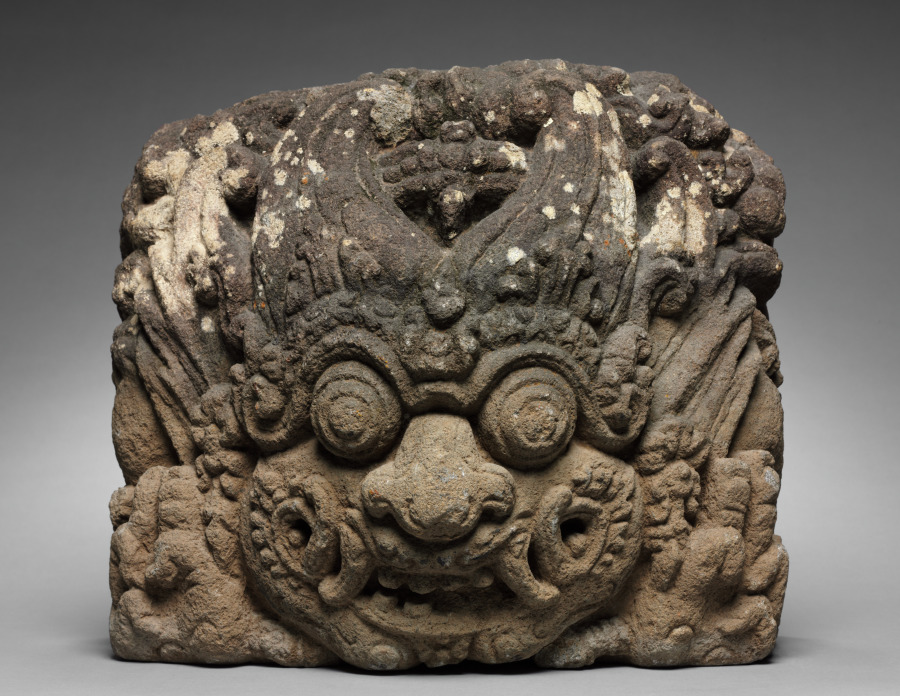
I. The Dialectics of Containment: From Attic Vessel to Architectural Garment
The conceptual foundation of the *Kala-mukha* (“Face of Time”) research begins not with fabric, but with a confrontation between two opposing modes of material expression: Jacques-Louis David’s *The Death of Socrates* and an anonymous Greek *Jar*. The former is a theatrical declaration—a painted narrative that seizes the instant of mortality and renders it monumental. The latter is a silent, utilitarian object whose meaning resides in its hollowness. For Addison Fashion’s 2026 executive silhouette, this dialectic is not an art-historical curiosity; it is the operative blueprint for a new structural poetics. The *Jar*—with its fired clay, its geometric banding, its unassuming shoulder and foot—offers a more rigorous model for contemporary dress than David’s heroic canvas. Where the painting externalizes emotion through chiaroscuro and gesture, the vessel internalizes time through patina and void. The garment we propose is not a costume of mourning, nor a monument to stoic virtue. It is a wearable architecture of emptiness: a shell that does not illustrate death, but *contains* the possibility of it. This is the “Face of Time” made tangible—not as a grimace, but as a composed, unblinking surface.II. Geometric Integrity: The Vessel’s Canon as Tailoring Logic
The *Jar*’s profile—a continuous curve from lip to belly to base—is not arbitrary. It follows a logic of radial symmetry, where every tangent anticipates the next. Translating this into a tailored garment requires a radical simplification of the human form’s natural asymmetry. The 2026 executive silhouette therefore abandons the anatomical contortions of traditional suiting. There is no darted waist, no padded shoulder, no lapel that folds like a rhetorical question. Instead, the jacket is constructed as a series of flat, intersecting planes—each panel cut with the precision of a potter’s wheel. The shoulder seam becomes a “lip,” rolled outward with a crisp, ceramic finish. The sleeve, set with a zero-ease cap, drops vertically from this lip, creating a continuous column that recalls the vessel’s side wall. The body of the jacket is cut with a subtle A-line, widening imperceptibly toward the hem—not to flatter the hips, but to echo the *Jar*’s gentle swelling. This is not a silhouette that follows the body; it is one that *houses* it. The interior is deliberately overfinished, with all seam allowances bound in sand-toned silk, so that the garment’s “empty” space—the void between fabric and flesh—becomes as deliberate as the vessel’s hollow core.Structural Poetics of the Seam
In David’s painting, the folds of Socrates’ robe are rhetorical devices, directing the eye toward the raised hand and the cup. In our construction, seams are not rhetorical; they are load-bearing. Each seam is a line of tension, a place where the fabric’s weave is compressed into a new geometry. We employ a double-stitched, felled seam—reminiscent of ceramic scoring—that does not lie flat but stands slightly proud, casting a hairline shadow. This shadow is the garment’s “time face”: a subtle acknowledgment that even the most perfect object bears the trace of its making. The collar is not a collar; it is a *rim*. Cut from a single piece of bonded wool, it folds over itself with the precision of a thrown pot’s edge. There is no interfacing, no fusible—only the material’s own memory, trained through steam and pressure to hold a curve that never relaxes. This rim does not frame the face; it *finishes* the vessel. It is the point where the garment’s interior void meets the exterior world, and it is left deliberately unadorned—no buttons, no pins, no metal. The closure is a hidden placket, secured by interior toggles, so that the front surface remains as uninterrupted as the *Jar*’s painted belly.III. Urban Materiality: Sand as the Color of Silence
The palette for this silhouette is Sand—not as a beige compromise, but as a geological statement. Sand is the residue of time, the pulverized memory of mountains. It is the color of the *Jar*’s unglazed base, the shade of sun-bleached plaster on a Mediterranean wall, the tone of David’s shadowed background before the light strikes Socrates’ chest. In urban environments, Sand reads as neither aggressive nor recessive; it is the color of infrastructure—concrete, limestone, dust. It does not shout; it *persists*. For fabric, we specify a double-faced wool with a compact, dry hand—almost mineral in its texture. The weave is a plain twill, but the finishing process includes a light sanding that raises a microscopic nap, diffusing light like the surface of a fired pot. This is not a soft, drapey cloth. It is a cloth that *stands*, that holds a crease with the rigidity of a ceramic wall. The trousers, cut as a straight, full-length column, break just above the shoe—not with a casual fold, but with a deliberate, architectural pause. The hem is weighted with a hidden lead cord, so that the leg falls with the same gravitational certainty as the *Jar*’s base.The Void as Luxury
Luxury in this system is not measured by ornament or volume. It is measured by the precision of the empty space. When the wearer moves, the garment does not flutter or cling; it shifts as a single mass, revealing a sliver of lining—a flash of raw silk in the same Sand tone—before closing again. This is the *Jar*’s “emptiness” made kinetic: the interior void is not hidden, but *glimpsed*. It is a reminder that the garment, like the vessel, is defined by what it does not contain. The final detail is the interior label: not a brand name, but a single line of text, embroidered in tone-on-tone thread: *“It does not explain death; it only carries.”* This is not a slogan; it is a specification. It refers to the *Jar*’s silent endurance, its refusal to narrate. The 2026 executive who wears this garment is not performing heroism or mourning. They are performing *capacity*—the ability to hold time, to absorb the city’s noise, and to remain, like the vessel, unbroken.IV. Conclusion: The Face of Time as a Worn Geometry
The *Kala-mukha* silhouette is not a trend; it is a theorem. It proposes that the most profound response to mortality is not dramatic expression, but structural integrity. David’s Socrates reaches toward the heavens; the *Jar* simply stands. Our garment does the latter. It is a shell of Sand-toned wool, cut with the logic of a potter’s wheel, finished with the silence of a sealed tomb. It does not ask to be seen; it asks to be *occupied*. In the urban landscape—where every surface competes for attention—this silhouette offers a counterpoint: a form so resolved that it becomes invisible, a void so precise that it becomes presence. This is the Face of Time, not as a grimace, but as a perfectly empty curve.
Technical Insight
Technical Insight: Translating Sand palettes into Minimalist silhouettes for the modern metropolis.