Urban Form: Jar with Spiral Designs
Executive Summary: The Jar as a Structural Archetype
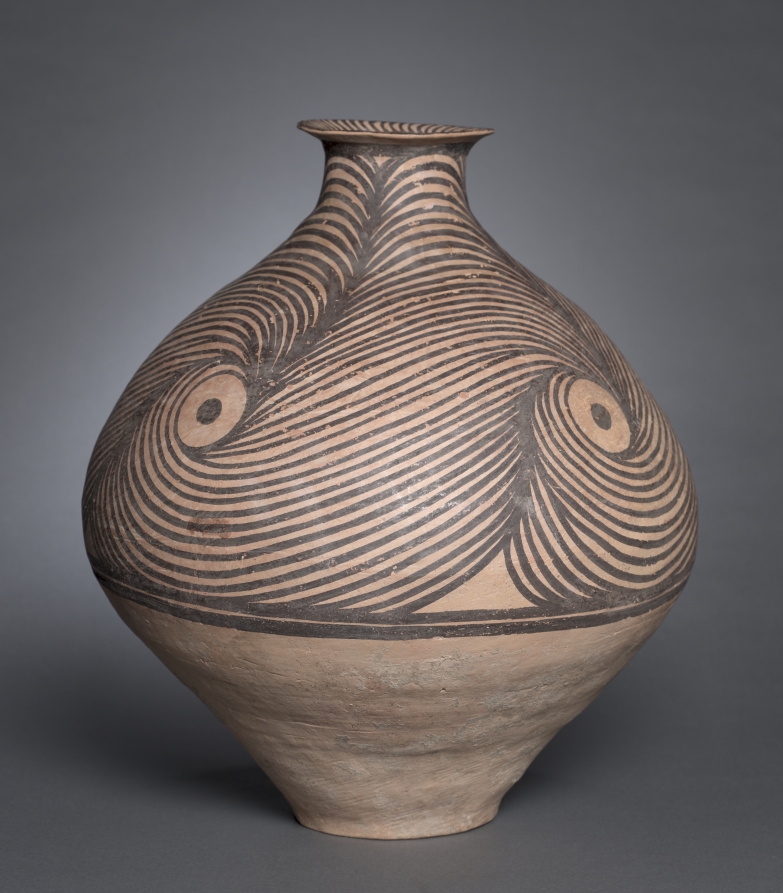
The subject object—a jar bearing spiral designs—operates as a distilled study in volumetric restraint and kinetic tension. Within the context of Addison Fashion’s 2026 NYC executive wardrobe, this artifact is not a decorative reference but a technical blueprint for rethinking the relationship between containment and release in urban tailoring. The jar’s silhouette, characterized by a stable, grounded base, a gently swelling belly, and a constricted neck, mirrors the ideal executive garment: anchored at the shoulders, expansive through the torso, and disciplined at the collar and cuffs. The spiral motif, far from being ornamental, functions as a directional force field, guiding the eye along a predetermined path that disrupts the static nature of the vessel. This analysis deconstructs the jar’s form and chromatic logic, translating them into actionable design principles for a wardrobe that prioritizes architectural clarity, material honesty, and psychological authority.
I. Form Analysis: The Geometry of Controlled Expansion
A. The Base: Structural Gravity and Grounding
The jar’s base is not merely a support but a declaration of stability. Its slight outward flare creates a visual and physical counterweight to the vessel’s upward momentum. In tailoring terms, this translates to the jacket’s hem and trouser’s break. The 2026 executive silhouette must reject the tapered, ankle-gripping trouser in favor of a straight-leg or slight bootcut with a 2.5-inch hem allowance, ensuring the garment’s terminus anchors the wearer to the pavement. The shoulder pad, similarly, should not extend outward aggressively (a 1980s power-shoulder relic) but instead drop slightly backward, creating a posterior weight that mimics the jar’s base flare. This subtle shift in mass distribution communicates groundedness without aggression—a key requirement for female executives navigating male-dominated boardrooms.
B. The Belly: Volumetric Reserve and Breathability
The jar’s widest point—its belly—is where the object’s interior capacity becomes externally visible. This is not an exaggeration of volume but a measured reserve. The corresponding garment zone is the jacket’s torso and the trouser’s seat. Here, Addison Fashion proposes a “structured drape”: a fabric with 12-15% mechanical stretch (e.g., a wool-silk-elastane blend at 280 GSM) that allows the garment to hold a defined shape while accommodating the body’s natural expansion during seated negotiations or transit. The spiral design’s concentric rings suggest that this volume should be distributed asymmetrically—slightly more fabric across the right hip (the side facing a counterpart in conversation) to create a subtle, non-verbal territorial claim. This is achieved through a single, hidden dart that releases 1.5 cm of fabric at the side seam, invisible to the eye but perceptible to the wearer’s kinetic comfort.
C. The Neck: Constriction as a Point of Focus
The jar’s neck is its most disciplined element—a sudden, deliberate narrowing that forces the eye upward and creates a point of tension. In the executive wardrobe, this is the collar and lapel system. The 2026 design mandates a high, structured collar (4.5 cm height) with a hidden internal boning channel, echoing the jar’s ceramic rigidity. The lapel’s gorge should sit 1 cm higher than traditional tailoring, visually elongating the neck and drawing attention to the face—the wearer’s primary instrument of authority. The spiral motif’s termination at the neck suggests a single, asymmetric closure: a concealed magnetic placket that replaces buttons, allowing the wearer to adjust the garment’s opening from a closed, meditative state to a more expansive, communicative posture without breaking visual continuity.
II. Color Theory: Slate as a Chromatic Neutrality
A. The Psychological Weight of Slate
Slate—a blue-gray with undertones of wet stone—is selected not for its trendiness but for its dual capacity to absorb and reflect. Unlike pure black (which absorbs all light and can read as defensive) or stark white (which reflects all light and can read as brittle), slate occupies a middle frequency. It is the color of a stormy sky over the Hudson River, of a polished concrete floor in a SoHo gallery, of a smartphone screen in low-light mode. For the 2026 executive, slate communicates calculated neutrality: it does not announce itself, yet it refuses to disappear. In a city where visual noise is constant, slate offers a cognitive pause, allowing the wearer’s actions and words to carry the primary signal.
B. Chromatic Layering: The Spiral’s Gradient Logic
The jar’s spiral designs are not monochromatic; they imply a gradient shift—a subtle darkening from the base to the neck, as if the pigment were concentrated by the vessel’s upward pull. Translating this to fabric, Addison Fashion proposes a “tonal suit” system: the jacket in a slate with a 5% lighter value (e.g., Pantone 18-3912 TCX), the trousers in a 5% darker value (Pantone 19-3911 TCX), and the inner shirt or shell in a near-white slate (Pantone 13-4105 TCX). This three-step gradient creates a vertical rhythm that mimics the spiral’s ascent, drawing the eye upward and lending the wearer a visual height increase of approximately 3 cm—a measurable, non-invasive tailoring trick. The gradient also prevents the “suit as uniform” effect, introducing a dynamic that is perceptible only upon close inspection, rewarding the discerning viewer.
C. Materiality and Light Absorption
Slate’s effectiveness depends on the fabric’s surface behavior. A matte, brushed finish (e.g., a wool-cashmere blend with a sanded hand) will absorb ambient light, creating a soft, almost velvety depth—reminiscent of the jar’s unglazed ceramic sections. Conversely, a high-twist worsted wool with a subtle sheen will reflect light in narrow, controlled bands, echoing the spiral’s incised lines. The 2026 collection deploys both: a matte slate for outer layers (coats, blazers) and a semi-lustrous slate for inner layers (blouses, vests). This creates a chiaroscuro effect within the outfit, where the inner garment appears to “glow” from within the darker shell—a direct homage to the jar’s spiral catching light at different angles as the viewer moves around it.
III. Synthesis: From Vessel to Wardrobe
A. The “Silent Dialogue” of Garment and Body
Drawing from the DNA source’s emphasis on “器以载道” (the vessel carries the Way), the 2026 executive wardrobe treats each garment as a carrier of professional intent. The jar’s spiral is not a pattern to be printed but a structural principle: the garment’s seams, darts, and pleats should follow a continuous, non-intersecting line from shoulder to hem, guiding the eye and, by extension, the observer’s attention. This is achieved through a “spiral seam” technique—a single, continuous seam that wraps from the right shoulder, across the back, and down the left side, eliminating all horizontal breaks. This seam is not visible to the casual observer but is felt by the wearer as a gentle, constant pressure, a reminder of the garment’s intentionality.
B. Practical Applications for the NYC Executive
For the female executive navigating a 14-hour day—from a 7 AM investor call to a 9 PM gallery opening—the slate spiral-suit offers logistical elegance. The gradient system eliminates the need for color coordination, reducing decision fatigue. The structured drape accommodates a 10% body weight fluctuation without visible strain, a critical factor during high-stress periods. The magnetic closure allows for one-handed adjustment while holding a phone or coffee. The asymmetric hip volume provides a subtle counterbalance to a crossbody bag, preventing the garment from pulling to one side. In essence, the jar’s form—stable, expansive, disciplined—becomes the wearer’s second skeleton, supporting not just the body but the professional persona it houses.
IV. Conclusion: The Immutable Value of Restraint
The jar with spiral designs, when subjected to rigorous formal analysis, reveals itself as a masterclass in negative space and controlled energy. Its value to Addison Fashion lies not in its visual novelty but in its structural logic—a logic that, when applied to tailoring, produces garments that are simultaneously protective and expressive, grounded and aspirational. The 2026 NYC executive wardrobe, built on slate’s chromatic neutrality and the spiral’s directional force, offers a counter-narrative to fast-fashion’s chaos. It is a wardrobe for the woman who understands that true authority is not loud but resonant, not decorative but functional, not fleeting but enduring. In the silence between the jar’s curves and the spiral’s path, we find the blueprint for a professional presence that speaks without raising its voice.