Urban Form: Waist Cloth (Kain Panjeng)
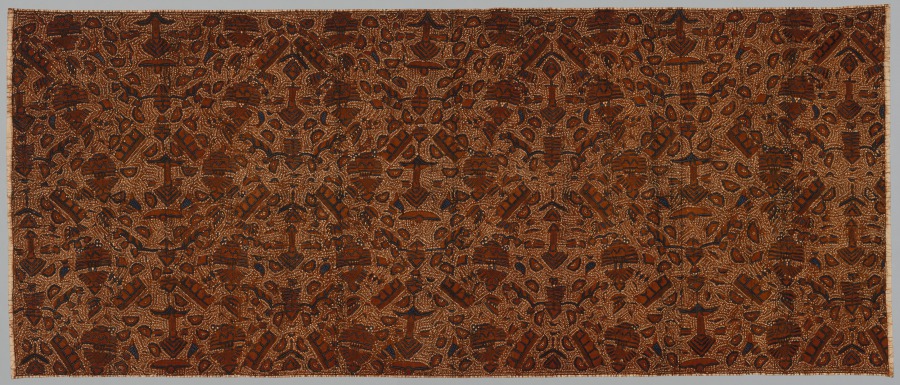
Technical Analysis: The Waist Cloth as Architectural Silhouette
The provided artifacts—the Bodhisattva and the Amulet in the Form of a Seated Figure with Bovine Head—present a profound dialectic between transcendent idealism and grounded, functional symbolism. For Addison Fashion’s 2026 executive silhouette, this duality is not a contradiction but a foundational blueprint. It informs a sartorial philosophy where the waist cloth, or kain panjeng, ceases to be mere drapery and evolves into a structured, minimalist armature. This analysis will deconstruct the geometric integrity of these artifacts and articulate their translation into an urban silhouette defined by structural poetics and severe materiality.
Geometric Integrity: The Armature of Silence and Power
The Bodhisattva exemplifies geometric integrity through its principle of “silent authority.” Its form is a study in controlled, centralized geometry. The seated posture establishes a stable, triangular base, from which the torso rises as a vertical column, subtly modulated by the gentle taper of the shoulders and the inward curve at the waist. This is not the geometry of the rigid grid, but of the contemplative axis. The drapery, while flowing, is carved with a linear precision that follows and accentuates this central column, creating a visual pathway upward. The hands (mudras) introduce precise, angular or circular gestures—points of focused geometric punctuation within the serene field of the form. The silhouette is thus one of contained potential, a vessel defined by its calm, unwavering boundaries.
Conversely, the Bovine-Headed Amulet presents a hybrid geometry of consolidated power. The fusion of the bovine skull—a dense, volumetric, and angular form—with the disciplined, seated human body creates a compact, talismanic geometry. It is a geometry of compression and symbolic efficiency. The power lies in its condensed, almost cubic massing, where disparate forms are synthesized into a single, potent object. This speaks to a silhouette built not on elongation, but on strategic density and a deliberate, weighted presence.
Defining the 2026 Executive Silhouette: Structural Poetics
The 2026 executive silhouette for Addison Fashion emerges from the intersection of these two geometric principles. It is a minimalist architecture for the urban environment, where poetics are derived from structure itself.
The core silhouette is an evolution of the Bodhisattva’s columnar form, rendered in the language of modernist tailoring. Imagine a single-breasted jacket or coat, cut with absolute precision from a rigid, slate-grey wool-cashmere composite. Its geometry is defined by a vertical seam that runs from the sternum to the hem, not as a decorative element, but as a structural spine, echoing the central axis of the sacred figure. The shoulders are exact, slightly squared but not exaggerated, forming a clean horizon line. The waist is not cinched through traditional tailoring, but defined through planar reduction—the front panels subtly curving inward, guided by the geometry of the seated figure’s repose.
Here, the waist cloth is re-engineered. It is no longer a soft wrap but a structured obi-form in a matte technical leather or dense, felted wool. Its function is architectural: to anchor the torso, introducing a horizontal band that contrasts the vertical drive of the garment. It fastens with a magnetic or minimalist hook closure, a nod to the amulet’s function as a sealed, protective form. This band creates a focal point of condensed density, directly referencing the hybrid power of the bovine-headed figure. The drape of the traditional kain is translated into a single, sharp fold or a precise, angled overlap, its geometry fixed and intentional.
Urban Materiality: The Vessel of Atmosphere
The materiality required to realize this silhouette is cold, sophisticated, and resonant with urban poetics. The primary shade is Slate—a color that embodies the quiet authority of stone, the haze of the urban horizon, and the solemnity of the Bodhisattva’s metallic alloy. It is neither black nor grey, but a mineral hue with depth and silence.
Materials are selected for their textural integrity and monolithic presence. Key fabrics include: Compressed wool gabardine with a hard finish, capable of holding razor-sharp seams. Fused technical jersey with minimal stretch, providing a second-skin base layer that echoes the amulet’s intimate, protective function. Matte calf leather or rubberized cotton for the structured waist element, adding a tactile, dense contrast. Brushed metallic hardware in darkened silver or iron, appearing not as ornament, but as functional, load-bearing components—the rivets and joints of this sartorial architecture.
The material dialogue is one of weight versus elevation. The heavy, tactile waist band grounds the silhouette, while the precise, lean lines of the outer shell aspire upward. This creates a tangible tension, a physical manifestation of the artifact duality: the spiritual ascent (Bodhisattva) anchored by the talismanic, earthly power (Amulet).
Conclusion: The Silent Armature
The definitive 2026 executive silhouette for Addison Fashion is a silent armature. It is a garment that performs the dual functions illuminated by the artifacts: it serves as a visual object for contemplative austerity (the Bodhisattva’s silent authority), while functioning as a personal, modern talisman of composed power (the Amulet’s condensed hybridity). Its geometric integrity is absolute, born from the analysis of sacred forms and distilled into urban essentialism. It rejects fluidity for defined planes, and ornament for structural truth. This is minimalist luxury redefined: not as the absence of detail, but as the heroism of exactitude, where every seam, fold, and material intersection is a deliberate act of carrying an invisible, formidable interiority—a contemporary vessel for a poised and potent executive spirit.