Minimalist
Onyx
Urban Form: Water Jar (Olla) with Rainbird
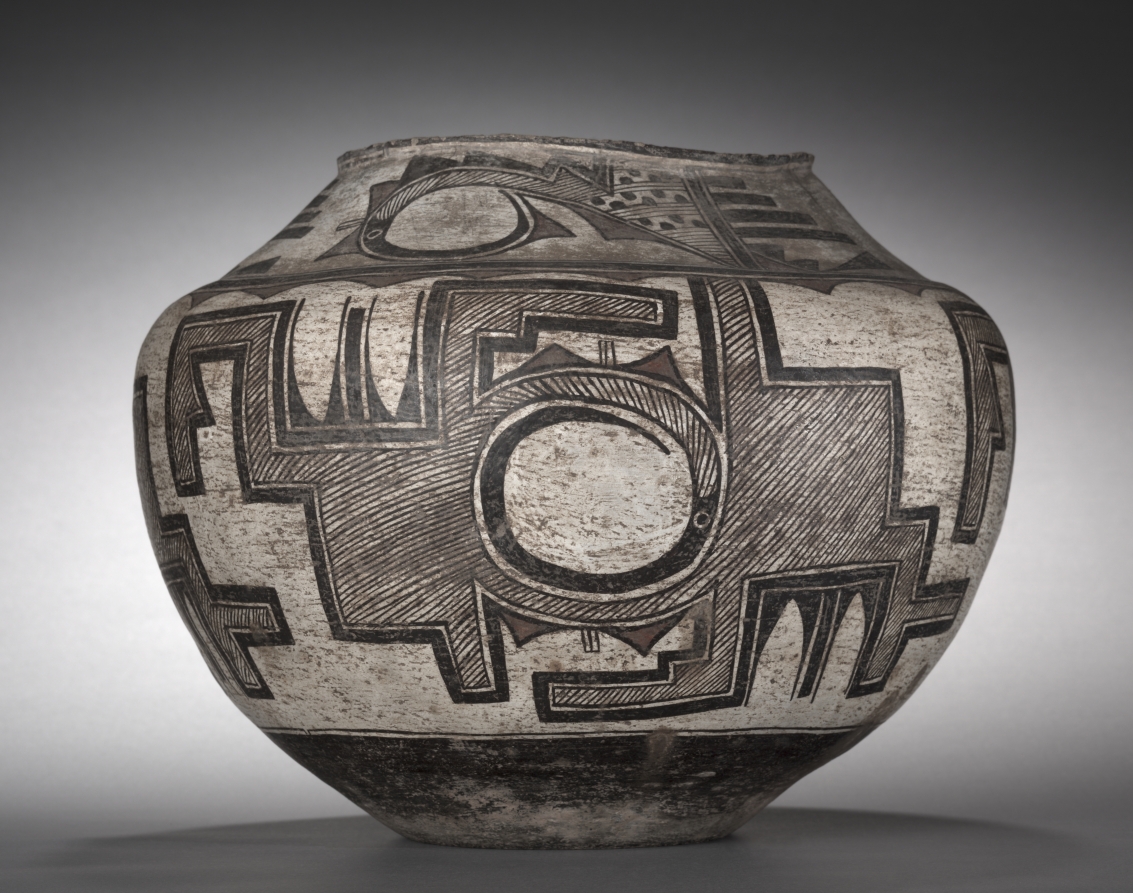
Formal Deconstruction: The Olla as a Study in Contained Volume and Asymmetric Gravity
The water jar, or *olla*, with its integrated rainbird, presents a compelling departure from the Western canon of rigid, symmetrical vessel design. Unlike the amphora’s bilateral clarity or the hydria’s functional tripartite division, the olla operates on a principle of **organic containment**—a bulbous, near-spheroidal body that swells outward from a narrow, unglazed base, then contracts sharply at the neck. This is not a silhouette of architectural precision but of **hydraulic tension**: the form appears to hold water not through structural rigidity but through the sheer gravitational logic of its mass. The rainbird—a small, often zoomorphic spout—disrupts the vessel’s otherwise continuous curvature, introducing a **directional vector** that reads as both functional and sculptural. For the 2026 NYC executive wardrobe, this translates into a radical reconsideration of the tailored jacket. The traditional shoulder—structured, padded, and symmetrical—gives way to a **dropped, extended shoulder line** that mimics the olla’s upper swell. The garment’s body, rather than being cut to skim the torso, is drafted with a **subtle, continuous convexity** from the underarm to the hip, echoing the vessel’s widest point. This is not an oversized silhouette in the conventional sense; it is a **volume that is internally disciplined**—the fabric is cut with a single, unbroken seam from shoulder to hem, allowing the material to fall in a controlled, almost liquid drape. The rainbird’s protrusion finds its sartorial analogue in an **asymmetric closure**—a single, off-center placket or a concealed magnetic fastening that shifts the visual axis, creating a point of tension that prevents the garment from reading as merely “relaxed.”Color as Material Logic: Onyx and the Politics of Non-Color
The olla’s surface—typically unglazed terracotta or a matte, burnished slip—offers a lesson in **chromatic restraint**. Its color is not applied but inherent, a function of clay and firing temperature. This is the philosophical root of the Onyx selection for this capsule. Onyx, in this context, is not a flat black but a **depth-charged, mineral dark** that absorbs and reflects light unevenly, depending on the weave and finish. For the executive wardrobe, this demands a move away from synthetic, high-shine blacks toward **wool melton, double-faced cashmere, or technical cotton with a matte, slightly irregular surface**. The color must read as *earned*, not dyed—a pigment that emerges from the material’s own molecular structure. The rainbird, often glazed in a contrasting celadon or iron-oxide red, introduces the principle of **strategic chromatic interruption**. In the 2026 wardrobe, this is not a literal color block but a **tonal shift within the same family**—a deep onyx jacket paired with a charcoal-on-black ribbed knit, or a trouser with a subtle, tonal pinstripe that only catches light at a specific angle. The interruption is not decorative but **functional**: it directs the eye to the point of articulation, much as the rainbird directs water flow. This is the antithesis of the “pop of color” trend; it is a **monochromatic system with internal gradients**, designed for environments where authority is communicated through nuance, not volume.Compositional Logic: From Radial Symmetry to Controlled Asymmetry
The olla’s composition, while organic, is not chaotic. Its base, though narrow, provides a **stable fulcrum**; its shoulder, though broad, is balanced by the constricted neck. This is a study in **counterpoised masses**—the visual weight of the lower body is offset by the upward thrust of the spout. In garment construction, this translates to a **recalibration of the waist-to-hip ratio**. The 2026 executive trouser, for instance, is cut with a **high, contoured waistband** that sits at the natural waist, then releases into a **slight, tapered flare** from the knee downward. This creates a silhouette that is neither peg-legged nor wide-legged but **dynamically balanced**—the volume at the hem counterweights the fitted waist, producing a walking line that is both grounded and fluid. The rainbird’s placement—often at the vessel’s shoulder, slightly off-center—informs the **positioning of pockets, vents, and closures**. A single, deep patch pocket is set at a deliberate angle on the left chest, not for utility but to **disrupt the eye’s habitual scanning pattern**. A back vent is cut not at the center seam but shifted two inches to the right, creating a subtle, kinetic asymmetry when the wearer moves. These are not stylistic quirks but **compositional decisions rooted in the olla’s logic of functional asymmetry**—every deviation from symmetry serves a purpose, whether directing water, balancing mass, or, in the case of the garment, guiding the viewer’s perception of the wearer’s form.Material Translation: The Olla’s Porous Surface and the Future of Technical Textiles
The unglazed olla is a **breathing vessel**—its porous walls allow for evaporative cooling, a passive thermal regulation system that predates modern climate control. This principle is directly applicable to the 2026 executive wardrobe, which must function across microclimates: the over-cooled boardroom, the humid subway platform, the sun-blasted street. The response is not a high-tech membrane but a **return to natural, breathable substrates with engineered weaves**. A double-faced fabric—wool on the exterior, a fine, open-weave cotton or Tencel on the interior—mimics the olla’s dual function: a protective exterior and a moisture-wicking, temperature-regulating inner layer. The construction technique is equally critical: **unlined jackets with taped, exposed seams** allow for air circulation while maintaining a clean, minimalist interior. This is not a rejection of technology but a **synthesis of ancient material intelligence and modern textile engineering**.Conclusion: The Olla as a Blueprint for Executive Restraint
The water jar with rainbird is not a decorative object but a **system of resolved tensions**—mass and void, containment and release, symmetry and deviation. Its translation into the 2026 NYC executive wardrobe demands a similar rigor. The silhouette is not merely “minimalist” but **structurally intentional**, with every seam, dart, and closure serving a compositional or functional purpose. The color is not “black” but **Onyx**, a hue that carries the weight of mineral depth and the discipline of non-color. The result is a wardrobe that does not shout but **resonates**—a quiet, authoritative presence that, like the olla itself, holds its contents with quiet, unyielding integrity. In a market saturated with performative luxury and logo-driven excess, this is the ultimate differentiator: **form as function, color as material truth, and silhouette as a statement of internal order**.
Technical Insight
NYC Perspective: Translating Onyx tones into Minimalist silhouettes.