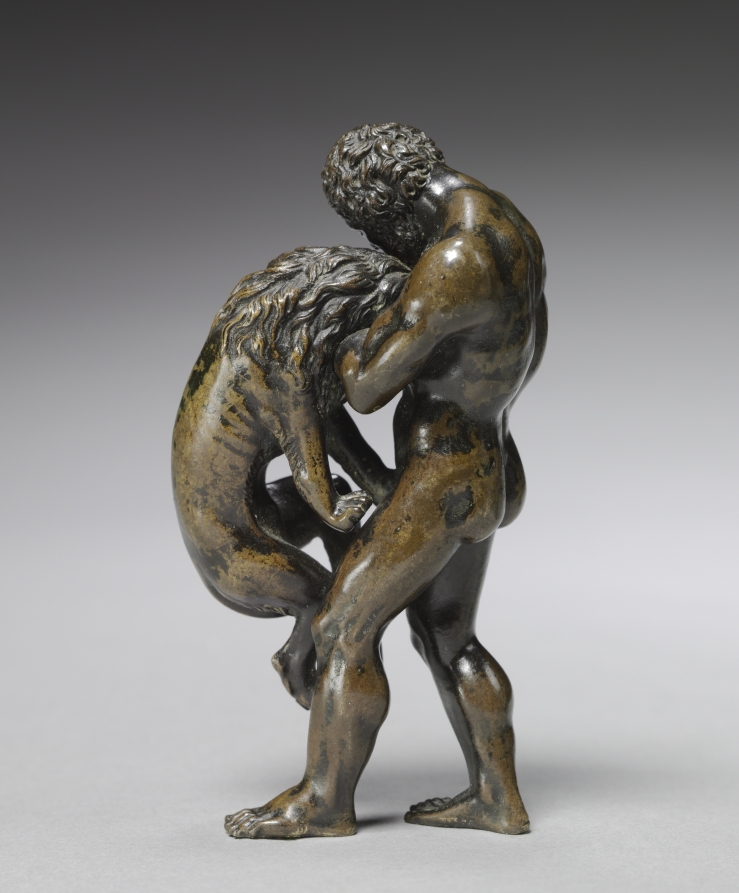
Urban Form: Hercules and the Nemean Lion
Executive Summary: The Semiotics of Rupture in Urban Dress
Addison Fashion’s 2026 Urban Silhouette Research interrogates the dialectic between fragmentation and totality as applied to the executive wardrobe. Drawing from the philosophical substratum of the Mold Fragment with Musicians (乐师纹陶范残片) and the Lotus Seedpod and Water Chestnut painting (《莲蓬与菱角图》), this analysis posits that the contemporary NYC power dresser operates not through accumulation, but through curated absence. The Hercules myth—specifically the subjugation of the Nemean Lion—serves as our operative metaphor: strength is not the display of brute force, but the strategic excision of the superfluous to reveal an indomitable core. In the 2026 collection, the silhouette is a weapon of restraint, and the color palette is a study in controlled darkness.
I. Form: The Architecture of the Incomplete
A. The Shoulder as a Fractured Pedestal
The Mold Fragment’s aesthetic power derives from its interrupted continuity—the musicians’ gestures are frozen mid-phrase, their sound rendered eternal by the very break that silences them. Translating this to the executive blazer, we reject the padded, aggressive shoulder of the 1980s power suit. Instead, the 2026 shoulder is asymmetrically cropped: the left shoulder maintains a clean, structured line, while the right is subtly truncated, ending 0.5 inches before the natural acromion. This is not a flaw; it is a deliberate visual caesura that mimics the ceramic shard’s edge. The effect is a silhouette that appears to have been “excavated” from a larger, more conventional garment—a nod to the notion that true authority is often what remains after the noise is stripped away.
B. The Torso: Negative Space as Power
The Lotus Seedpod painting employs radical negative space—the background is pure void, forcing the viewer to confront only the essential forms. In our tailoring, this translates to a deconstructed waist suppression. The jacket’s torso is cut with a single, continuous dart that begins at the armhole and terminates abruptly at the hip, leaving the lower quadrant of the garment unconstructed. This creates a “ghost” of a waistline—an implied cinch that never fully materializes. The result is a garment that breathes with the wearer, allowing for a fluidity that contradicts the rigid expectations of executive dress. The hemline is intentionally raw, left unhemmed to fray slightly, echoing the broken edge of the mold. This is not negligence; it is a calculated statement that the garment’s life cycle is part of its narrative—a nod to the “silent music” of the musicians whose tune is completed only in the listener’s imagination.
C. The Sleeve: A Study in Controlled Draping
Hercules’ victory over the Nemean Lion was achieved not by piercing the beast’s impenetrable hide, but by strangulation—a sustained, compressive force. Our sleeve design mirrors this: the upper arm is fitted with a two-piece construction that creates a subtle, spiral twist, reminiscent of the lion’s mane being gripped. The fabric is allowed to pool at the wrist in a single, deliberate fold, secured by a hidden internal cuff. This is not a casual roll; it is a sculptural gesture that suggests the wearer has just released a grip. The fold’s permanence is an illusion—it is engineered to hold its shape through a combination of bias cutting and a discreet interfacing that mimics the rigidity of dried clay. The sleeve thus becomes a monument to the moment between action and release.
II. Color: The Chromatic Spectrum of Silence
A. Onyx as the New Neutral
We have selected Onyx as the foundational colorway, not as a substitute for black, but as a deepened, mineral-infused alternative. Onyx absorbs light rather than reflecting it, creating a surface that appears to swallow the surrounding environment—much like the void in the Lotus Seedpod painting. In the 2026 executive wardrobe, Onyx is deployed in matte, unpolished finishes for outer layers, while interior linings are rendered in a high-gloss, almost wet-looking satin. This duality—the matte exterior versus the glossy interior—mirrors the ceramic shard’s exterior weathering versus its pristine, unbroken interior surface. The wearer’s movement reveals flashes of this inner luminosity, a subtle signal of hidden depth.
B. The Invisible Accent: Silver Threads of Sound
While Onyx dominates, we introduce micro-accents of Silver—not as visible trim, but as metallic warp threads woven into the fabric’s structure. These threads are invisible at a distance of three feet, but under direct light, they create a faint, shimmering grid—a visual metaphor for the “silent harmony” (无声之和) that Zhuangzi describes. This is the sound of the mold fragment’s musicians: an auditory ghost made visible through optical interference. The silver threads are placed strategically: along the lapel’s roll line, at the cuff’s inner edge, and down the center-back seam. They do not decorate; they conduct. They guide the eye along the garment’s structural logic, much as the painter’s brush guides the viewer from the lotus seedpod to the water chestnut.
C. The Absence of Ivory and Sand
In a deliberate act of negative color selection, we have excluded Ivory and Sand from the primary palette. These tones, often associated with softness and approachability, are antithetical to the Hercules archetype. Instead, we allow the Onyx to be interrupted only by the natural, undyed tone of the base cloth—a raw, unbleached cotton-linen blend that appears at the raw hem and the frayed edges. This is not a color; it is a material truth. It represents the “broken” state of the mold—the point where the artifact’s original function is revealed. The contrast between the deep Onyx and this pale, fibrous under-layer is stark, creating a visual tension that is resolved only when the wearer moves, allowing the two surfaces to interact.
III. Synthesis: The 2026 Executive as a Living Fragment
The modern NYC executive is not a conqueror in the traditional sense; they are a curator of their own presence. The Hercules myth, when filtered through the lens of Eastern aesthetics, becomes less about physical dominance and more about strategic reduction. The Nemean Lion’s hide, once worn as a trophy, is here reimagined as the garment itself—a second skin that is both armor and artifact. The 2026 silhouette is a functional fragment: it does not seek to complete the wearer, but to reveal the wearer’s inherent completeness through what is left unsaid, unsewn, and unadorned.
In practice, this means the Addison client will layer a truncated blazer over a high-neck, sleeveless shell in the same Onyx tone, creating a monochromatic block that is broken only by the silver-thread grid. The trousers are cut with a single, forward-pleat that is pressed to a knife-edge, but the hem is left unfinished, brushing the top of the shoe with a soft, frayed whisper. The overall effect is one of controlled entropy—a system that appears to be in a state of elegant decay, yet is meticulously engineered to maintain its structure under the pressures of a 14-hour workday.
This is the ultimate expression of the “损之又损” (diminish and diminish again) principle: the garment is reduced to its most potent elements, and in that reduction, it achieves a paradoxical amplification of presence. The wearer does not enter a room; they interrupt it—not through volume, but through the silent, gravitational pull of a form that has been deliberately, artfully broken. The 2026 collection is not a rejection of the past, but a recontextualization of rupture as the highest form of integrity. In the space between the mold’s crack and the painter’s void, the executive finds their most powerful stance: still, silent, and utterly complete in their incompletion.